This is why an egg breakfast should ideally be paired with fiber-rich ingredients.
Examples include:
-
Whole-grain toast.
-
Oatmeal.
-
Tomatoes and leafy greens.
-
Beans or lentils.
-
Fresh fruit.
-
Avocado.
-
Vegetables such as mushrooms, peppers, and spinach.
Combining protein with fiber can create a more balanced breakfast than relying on eggs alone.
The difference between a satisfying breakfast and a restrictive one
Some people try to control their weight by eating as little as possible in the morning.
This can backfire if the meal is too small to meet their needs. They may become very hungry later and find it difficult to make balanced choices.
A good breakfast should provide adequate nourishment, not simply delay hunger.
Eggs can be useful, but they should be part of a flexible eating pattern that allows for different appetites, schedules, and health needs.
Chapter 4: Are Eggs Good or Bad for Your Heart?
The question of eggs and heart health has caused confusion for generations.
Egg yolks contain dietary cholesterol, and cholesterol is associated with cardiovascular disease when levels in the blood are too high. For many years, this led people to believe that eating eggs regularly would automatically raise cholesterol and increase the risk of a heart attack.
Nutrition science now offers a more nuanced picture.
Dietary cholesterol and blood cholesterol are related, but they are not the same thing. The effect of eating cholesterol-containing foods varies between individuals, and the overall composition of the diet is extremely important.
Understanding the cholesterol in an egg
A large egg yolk contains roughly 200 milligrams of cholesterol, although the exact amount can vary.
That is a significant amount compared with many other foods. But eating cholesterol does not translate directly into an identical increase in blood cholesterol.
The liver produces cholesterol naturally because the body needs it to build cell membranes, make certain hormones, and produce substances involved in digestion.
For many people, the amount of cholesterol obtained from food has a smaller influence on blood cholesterol than the overall balance of fats in the diet, particularly saturated and trans fats.
This is one reason modern nutrition advice tends to consider the entire eating pattern rather than judging a food based on a single nutrient.
Why saturated fat also matters
A breakfast containing eggs may be very different depending on what is served alongside them.
Consider two meals.
The first includes boiled eggs, tomatoes, spinach, and whole-grain toast. The second includes eggs cooked in a large amount of butter, several slices of bacon, processed sausage, and white bread.
Both contain eggs, but their nutritional profiles are not the same.
The second meal may contain considerably more saturated fat and sodium because of the processed meats, added fats, and other ingredients.
Saturated fat can raise LDL cholesterol in many people. LDL is often called "bad" cholesterol because elevated levels can contribute to plaque buildup in the arteries.
This means that people concerned about heart health should look at the whole breakfast rather than focusing only on the egg.
What does research say about eating one egg a day?
Research on egg consumption and cardiovascular health has produced mixed findings.
Harvard's Nutrition Source summarizes observational research suggesting that moderate egg consumption, including around one egg per day, has not been associated with a higher risk of heart disease in some large studies of generally healthy people.
The Mayo Clinic also notes that most healthy people can include up to seven eggs per week without an increased risk of heart disease, although individual circumstances matter.
These findings should not be interpreted as proof that every person can safely eat unlimited eggs. Observational studies cannot establish cause and effect with certainty, and people differ in how their blood cholesterol responds to dietary cholesterol.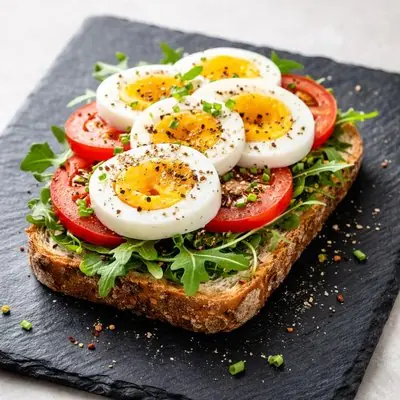
People who may need more caution
Some people should discuss egg consumption with a healthcare professional, particularly if they have:
-
High LDL cholesterol that is difficult to control.
-
Familial hypercholesterolemia or another inherited cholesterol disorder.
-
Established cardiovascular disease.
-
Diabetes together with other cardiovascular risk factors.
-
A medically prescribed dietary plan that limits cholesterol or saturated fat.
People with these conditions do not necessarily need to eliminate eggs completely. The appropriate amount depends on their medical history, blood test results, overall diet, and treatment plan.
A doctor or registered dietitian can help determine whether whole eggs, egg whites, or another protein source is more appropriate.
Why the foods eaten with eggs can matter as much as the eggs
A common breakfast combination includes eggs, bacon, sausage, cheese, and buttered toast.
For some people, this may be an occasional meal. But eating large portions of processed meat and high-sodium foods regularly can make it harder to follow a heart-supportive diet.
A more balanced combination could include eggs with vegetables, beans, fruit, or whole-grain bread.
This approach provides protein while also increasing fiber and reducing reliance on processed meats.
Should everyone stop worrying about egg yolks?
No. But people should avoid treating the yolk as either a dangerous substance or a nutritional miracle.
It contains cholesterol, but it also provides choline, vitamin B12, selenium, and other nutrients.
For many healthy adults, moderate egg consumption can fit into a varied diet. For people with specific medical concerns, individualized guidance is more useful than a universal rule.
The best question is not simply, "Are eggs good or bad?" It is, "How do eggs fit into my overall diet and health needs?"
Chapter 5: The Best Ways to Prepare Eggs for Breakfast
The nutritional value of eggs can be influenced by how they are prepared and what ingredients are added.
An egg is naturally rich in protein and several nutrients, but cooking methods can introduce extra calories, sodium, and saturated fat.
The goal is not to make every breakfast completely fat-free or tasteless. It is to choose preparation methods that support the overall balance of the meal.
Boiled eggs: A simple option
Boiling is one of the easiest ways to prepare eggs without adding oil or butter.
Hard-boiled eggs can be prepared in advance and stored safely in the refrigerator, making them convenient for busy mornings. They can be eaten with whole-grain toast, fresh vegetables, or fruit.
Soft-boiled eggs are another option, although food-safety considerations are important. People at higher risk of foodborne illness should choose fully cooked eggs rather than runny preparations.
Boiled eggs are also easy to portion. Someone can prepare one or two eggs and combine them with other foods according to appetite and dietary needs.
Poached eggs: A lighter preparation
Poaching involves cooking an egg in hot water rather than frying it in a pan with added fat.
This method can be useful for people who prefer a soft texture and want to limit added butter or oil.
Poached eggs can be served over whole-grain toast or alongside cooked vegetables. They also work well with beans or a small portion of avocado.
As with other preparations, cooking the egg thoroughly is important for people who need to avoid undercooked foods.
Scrambled eggs: Watch the additions
Scrambled eggs can be a nutritious breakfast, but the ingredients used during preparation make a difference.
A small amount of oil or a nonstick pan can help limit added fat. Vegetables such as spinach, mushrooms, onions, and peppers can add fiber and micronutrients.
Cheese, cream, butter, and processed meats can increase the energy, saturated fat, and sodium content of the meal.
There is no need to avoid these ingredients entirely, but large amounts can change an otherwise simple breakfast into a much heavier meal.
Omelets: A convenient way to add vegetables
An omelet can combine protein with a variety of vegetables in one dish.
Spinach, tomatoes, mushrooms, peppers, onions, and herbs all work well. A small amount of cheese can add flavor, while beans or whole-grain toast can make the meal more substantial.