Chapter 1: What Really Happens Inside Your Body When You Sleep on Your Right Side?
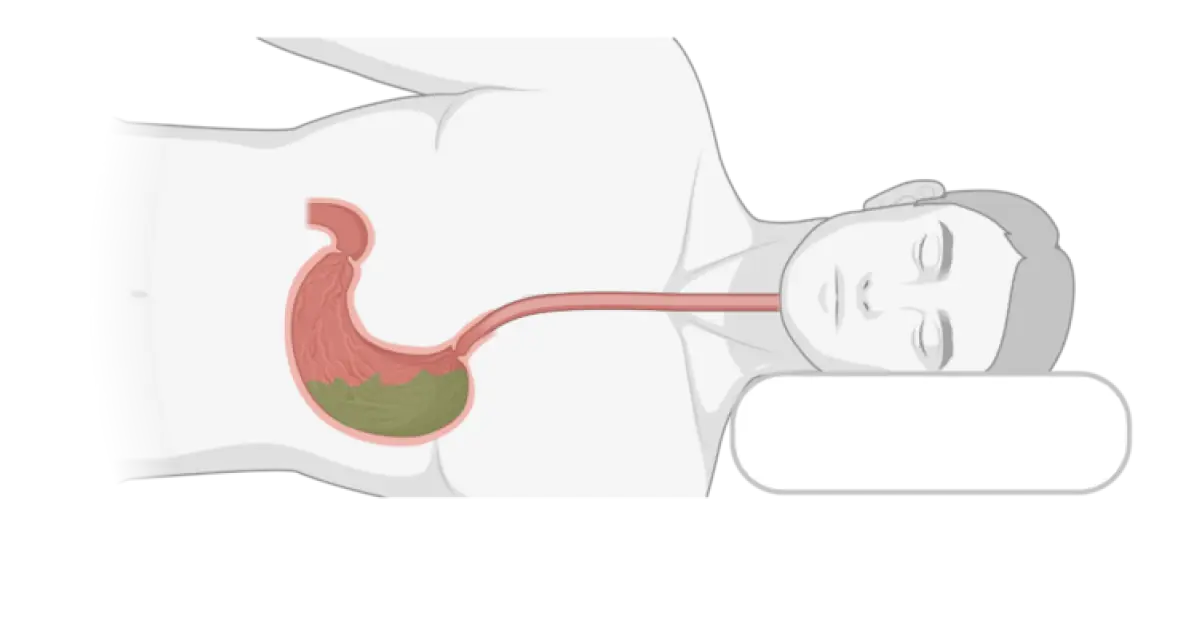
Most people choose their sleeping position without thinking twice. Some prefer lying on their backs, others curl up on their stomachs, while millions naturally turn onto one side and remain there for much of the night.
For many people, sleeping on the right side feels comfortable and completely natural. It may even be the position they have preferred for decades.
However, doctors and researchers have discovered an interesting relationship between sleeping position and the movement of stomach acid. In particular, sleeping on the right side may increase nighttime acid reflux in people who are prone to heartburn.
This does not mean that everyone who sleeps on the right side is damaging their body. Instead, it highlights how body position can influence certain digestive processes while we rest.
Understanding the relationship between the stomach and esophagus
To understand why sleeping position matters, it helps to know how the digestive system works.
After food is swallowed, it travels down a muscular tube called the esophagus. This tube connects the throat to the stomach.
At the lower end of the esophagus is a muscular structure known as the lower esophageal sphincter.
It functions somewhat like a small valve. It opens to allow food and liquid to enter the stomach and normally closes afterward to help prevent stomach contents from traveling backward.
The stomach produces acid and digestive enzymes that help break down food. Its protective lining is designed to tolerate this acidic environment.
The esophagus, however, does not have the same level of protection.
When stomach contents repeatedly move upward into the esophagus, they can cause irritation and inflammation.
This process is known as gastroesophageal reflux.
Occasional reflux can happen to almost anyone. However, frequent or troublesome reflux may indicate gastroesophageal reflux disease, commonly known as GERD.
Why the right side may encourage nighttime reflux
The stomach is not positioned symmetrically inside the abdomen.
Its shape, connection to the esophagus, and relationship with surrounding organs mean that changing body position can influence how stomach contents move.
When someone lies on their right side, the anatomical relationship between the stomach and the connection to the esophagus may make it easier for gastric contents to reach the lower esophageal sphincter.
When someone lies on their left side, the stomach's position generally places the main pool of gastric contents below the esophageal opening.
Gravity and anatomy can therefore work together to reduce the likelihood of acid moving upward.
This is not simply a theory based on the appearance of the digestive system.
A study published in the American Journal of Gastroenterology examined 57 patients using simultaneous monitoring of sleep position and esophageal acidity.
Researchers found that acid exposure was significantly shorter when participants slept on their left sides than when they slept on their right sides or backs.
The study also found that acid cleared from the esophagus more quickly in the left-side position.
PubMed+1
These findings help explain why some people experience more heartburn when sleeping on their right sides.
Why symptoms may become worse at night
During the daytime, people spend much of their time sitting, standing, walking, or moving around.
Gravity helps keep stomach contents in their normal position.
At night, however, lying down removes much of this gravitational assistance.
Saliva production and swallowing also decrease during sleep. These processes normally help clear small amounts of acid that enter the esophagus.
As a result, nighttime reflux can sometimes last longer and become more uncomfortable.
People may experience:
-
A burning sensation behind the breastbone.
-
An acidic or sour taste in the mouth.
-
A sensation of liquid coming back into the throat.
-
Coughing during the night.
-
Disrupted sleep.
-
A sore or irritated throat upon waking.
Not everyone experiences all these symptoms, and nighttime coughing or throat discomfort can have many other causes.
Is sleeping on the right side dangerous?
This is where an important distinction must be made.
Sleeping on the right side does not automatically damage the stomach, heart, kidneys, or other organs.
It does not mean that someone who has slept this way for years has caused permanent harm.
The evidence mainly concerns people who experience acid reflux, especially nighttime GERD symptoms.
Johns Hopkins Medicine explains that right-side sleeping can worsen heartburn in susceptible individuals and that changing to the left side may provide relief.
Johns Hopkins Medicine+1
For people without reflux problems, the right side may remain a perfectly comfortable sleeping position.
The real lesson is that sleeping position can influence certain health conditions, and adjusting it may help when specific symptoms are present.
Image 1: Side sleeping is a natural and comfortable position, but the choice of side may matter for people experiencing nighttime reflux.
Chapter 2: Why Sleeping on the Left Side May Be Better for Digestion
If sleeping on the right side can aggravate nighttime reflux, does that mean everyone should switch to the left?
For people who regularly experience heartburn, the left side is often worth trying.
This recommendation is supported by research into the anatomy of the stomach and the movement of acid during sleep.
However, its benefits should be understood correctly. Left-side sleeping does not magically improve every digestive process, cure stomach diseases, or guarantee that someone will never experience heartburn again.
Its most clearly established benefit concerns reducing nighttime exposure of the esophagus to stomach acid.
1. Gravity helps keep stomach contents away from the esophagus
The stomach is shaped somewhat like a curved pouch, with its entrance and exit positioned at different points.
When a person lies on the left side, the stomach's anatomy generally makes it less favorable for stomach contents to move toward the esophageal opening.
This can reduce the amount of acid reaching the esophagus.
By contrast, lying on the right side may position the stomach contents in a way that makes reflux more likely.