Water Chestnut (Trapa natans): 7 Potential Health Benefits You Should Know
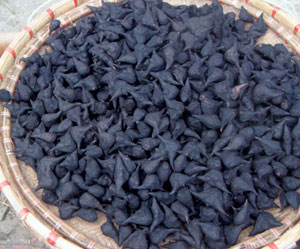
Have you ever seen this unusual, horn-shaped fruit and wondered what it was?
Known as water chestnut, water caltrop, or “singhara,” Trapa natans is an aquatic plant whose fruits have been eaten in parts of Asia for generations. Despite its unusual appearance, the edible kernel contains carbohydrates, fiber, minerals, vitamins, and various plant compounds that have attracted scientific interest.
But what can eating water chestnuts actually do for your body?
Here are 7 potential benefits worth knowing about.
1. It Provides Useful Nutrients
Water chestnut is primarily a carbohydrate-rich food, making it a source of dietary energy.
Research has found that water chestnut fruits contain carbohydrates, dietary fiber, protein, minerals, and small amounts of vitamins and other plant compounds. The exact nutritional profile can vary depending on the variety and whether the fruit is fresh or dried.
A 2024 study comparing red and green varieties found differences in their protein, fiber, mineral, vitamin, and energy content.
2. It Contains Antioxidant Compounds
One of the most interesting features of water chestnut is its collection of naturally occurring phytochemicals.
A 2024 study published in Foods found phenolic compounds and flavonoids in water chestnut extracts. The green variety showed particularly strong antioxidant activity in laboratory tests.
Antioxidants help protect cells from oxidative stress. However, there is an important distinction: antioxidant activity measured in a laboratory does not automatically mean that eating the food prevents or treats a disease in humans.
More clinical research is needed to establish specific health effects.
3. It Can Contribute to Dietary Fiber Intake
Water chestnut contains dietary fiber, although the amount varies among varieties and preparation methods.
Fiber is an important part of a healthy diet because it supports normal digestive function and can contribute to overall gut health.
In the 2024 comparison study, the green water chestnut variety contained about 2.21% dietary fiber in the tested samples.
Adding naturally fiber-containing foods to a balanced diet can therefore be one way to increase overall fiber intake.
4. It Provides Important Minerals
Water chestnut contains several minerals, including potassium, phosphorus, calcium, iron, magnesium, and other trace minerals.
In the 2024 study, potassium was the most abundant mineral among those measured in both the red and green varieties. The researchers also detected calcium, phosphorus, iron, manganese, copper, and zinc.
These minerals play many important roles in the body, including supporting normal nerve, muscle, bone, and metabolic functions.
Of course, eating water chestnut alone cannot provide all the nutrients your body needs. Variety remains important.
5. It Contains Vitamin C and Other Vitamins
Water chestnut is not just a source of starch and minerals.
Researchers have detected vitamin C, vitamin B6, vitamin B2, vitamin B3, vitamin A, and beta-carotene in different water chestnut varieties.
The 2024 study found that the green variety contained higher levels of vitamin C, vitamin B6, vitamin A, and beta-carotene than the red variety tested.
These nutrients are involved in normal immune function, metabolism, vision, and other physiological processes.
6. Its Plant Compounds Are Being Studied for Anti-Inflammatory Effects
![MẸO] Cách Luộc Củ Ấu Ngon Ngọt Bùi, Không Bị Sượng](https://bepmina.vn/wp-content/uploads/2020/09/cach-luoc-cu-au.jpg)
Water chestnut contains various bioactive compounds, including phenolics and flavonoids, that have demonstrated antioxidant and other biological activities in laboratory research.
Reviews of Trapa natans have discussed potential antioxidant and anti-inflammatory properties.
However, this is where it's important to separate potential from proven treatment.
There is not enough high-quality human clinical evidence to say that eating water chestnut can treat arthritis, diabetes, cancer, or other diseases.
Think of it as a nutritious food—not a replacement for medical treatment.
7. It May Be a Useful Addition to a Balanced Diet
Perhaps the biggest advantage of water chestnut is also the simplest: it can be a nutritious food choice.
Depending on the variety and preparation, it provides carbohydrates, fiber, minerals, vitamins, and plant compounds.
It can be eaten fresh after appropriate cleaning and preparation, or cooked and incorporated into different dishes. In some cultures, dried water chestnut is also ground into flour and used in traditional foods.
A Few Things to Keep in Mind
Water chestnut is sometimes promoted online as a “miracle food” for diabetes, weight loss, high blood pressure, cancer, or other diseases.
That goes beyond what current evidence can support.
Some laboratory studies have found interesting biological effects from Trapa natans extracts, including antioxidant activity and effects on glucose-related pathways. For example, researchers have isolated compounds from the plant's pericarps with hypoglycemic activity in experimental research.
But laboratory or animal findings are not the same as proven benefits in humans.
If you have diabetes, kidney disease, or another medical condition that requires dietary restrictions, it's best to consider portion size and your overall diet rather than assuming a single food will provide a therapeutic effect.
So, Is Water Chestnut Worth Eating?
For most people, water chestnut can be an interesting addition to a varied diet.
Its nutritional value, fiber, minerals, vitamins, and antioxidant-related plant compounds make it a food worth knowing about. Scientific research is also continuing to investigate its potential biological properties.
But the healthiest approach is simple:
Enjoy it as food—not as medicine.
And if you find a bag of these unusual horn-shaped fruits, now you know that they aren't just strange-looking aquatic seeds. They are a traditional food with a surprisingly interesting nutritional profile.
Sources
- Rehman AU, Khan AU, Sohaib M, Rehman H. Comparative Analysis of Nutritional Properties, Phytochemical Profile, and Antioxidant Activities between Red and Green Water Chestnut (Trapa natans) Fruits. Foods. 2024;13(12):1883.
- Biochemical analysis of two varieties of water chestnuts (Trapa sp.). PubMed.
- Trapa bispinosa Roxb.: A Review on Nutritional and Pharmacological Aspects.
- Water chestnut (Trapa natans L.): Nutritional, phytochemical and pharmacological aspects—An Overview. 2024.