For generations, people have wondered whether a woman's breast size can reveal something about her intimate anatomy. Some believe that women with larger breasts have different vaginal structures, while others assume that smaller breasts indicate particular characteristics of the reproductive system. These ideas are often repeated in casual conversations, popular culture, and online discussions.
But how much truth is there behind these assumptions?
The human body is remarkably complex, and its different features are influenced by a combination of genetics, hormones, age, health, and individual development. Although breasts and the reproductive organs are both influenced by hormones, that does not mean their size, shape, or physical characteristics are directly connected.
In fact, medical science does not support the idea that breast size can reliably predict a woman's vaginal size, shape, depth, tightness, or other intimate anatomical characteristics.
Understanding why requires looking at how the breasts develop, how the female reproductive system is structured, and what actually determines the differences between women's bodies.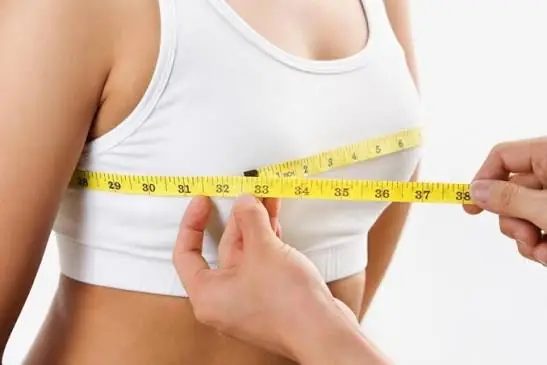
1. Understanding What Determines Breast Size
Breast size varies considerably from one woman to another. Some women naturally develop a fuller chest, while others have smaller breasts throughout their lives. Both are normal variations of human anatomy.
Breasts are made up of several types of tissue, including glandular tissue, fatty tissue, connective tissue, blood vessels, and nerves.
Glandular tissue is responsible for producing milk during breastfeeding. Fatty tissue surrounds the glandular structures and contributes significantly to the overall size and shape of the breasts. Connective tissue provides support and helps maintain their structure.
The proportion of these tissues differs between individuals.
For example, two women may have similar body weights but noticeably different breast sizes because their bodies distribute fat differently. One may naturally store more fatty tissue in the chest area, while another may store more around the hips, thighs, or abdomen.
Several factors influence breast development:
Genetics: Heredity plays an important role in determining breast size, shape, and tissue composition. Women may inherit certain physical characteristics from their biological relatives, although the result is not always identical.
Hormones: Estrogen, progesterone, and other hormones influence breast development, particularly during puberty, menstruation, pregnancy, and menopause.
Body composition: Because fatty tissue contributes to breast volume, changes in body fat can affect breast size. However, the relationship is not identical for everyone.
Age: Breast tissue changes throughout life. The breasts may become fuller during certain stages and lose some firmness or volume as women grow older.
Pregnancy and breastfeeding: Hormonal changes during pregnancy prepare the breasts for milk production. Breast size may increase temporarily or change after breastfeeding.
These factors explain why breast size can vary significantly without necessarily indicating anything unusual about a woman's reproductive organs.
2. What Determines the Size and Structure of the Vagina?
To understand why breast size cannot reveal intimate anatomy, it is important to distinguish the different parts of the female reproductive system.
The vagina is an internal muscular canal that connects the cervix, which is the lower part of the uterus, to the vaginal opening.
It is made of flexible, elastic tissues and muscular layers. Its structure allows it to accommodate different physiological functions, including menstruation, sexual activity, and childbirth.
The vagina is not a rigid tube with one fixed measurement. Its dimensions and shape can vary naturally, and its tissues can expand and contract.
Several factors influence vaginal structure and function:
Individual anatomy: Every woman has a unique anatomical structure. Differences in vaginal length, width, tissue elasticity, and pelvic anatomy are normal.
Hormonal levels: Estrogen helps maintain the thickness, moisture, and elasticity of vaginal tissues. Changes in estrogen levels, particularly during menopause, can affect these characteristics.
Age and life stage: Vaginal tissues may change over time. Hormonal transitions, pregnancy, childbirth, and menopause can influence their condition.
Pelvic floor muscles: These muscles support the bladder, uterus, and bowel and surround the openings of the pelvic region. Their strength, coordination, and ability to relax influence pelvic floor function.
Pregnancy and childbirth: Vaginal childbirth can stretch the vaginal tissues and pelvic floor muscles. Recovery varies from woman to woman, and some changes may persist.
These factors are much more relevant to vaginal anatomy than breast size.
Importantly, the vagina should not be confused with the vulva. The vulva refers to the external genital structures, including the labia, clitoris, and vaginal opening. These external structures also vary considerably in appearance.
3. Is There a Scientific Connection Between Breast Size and Vaginal Size?
This is the central question, and the scientific answer is straightforward: breast size is not a reliable indicator of vaginal size or structure.