Chapter 1: What Exactly Is the Unusual Meat in the Photograph?
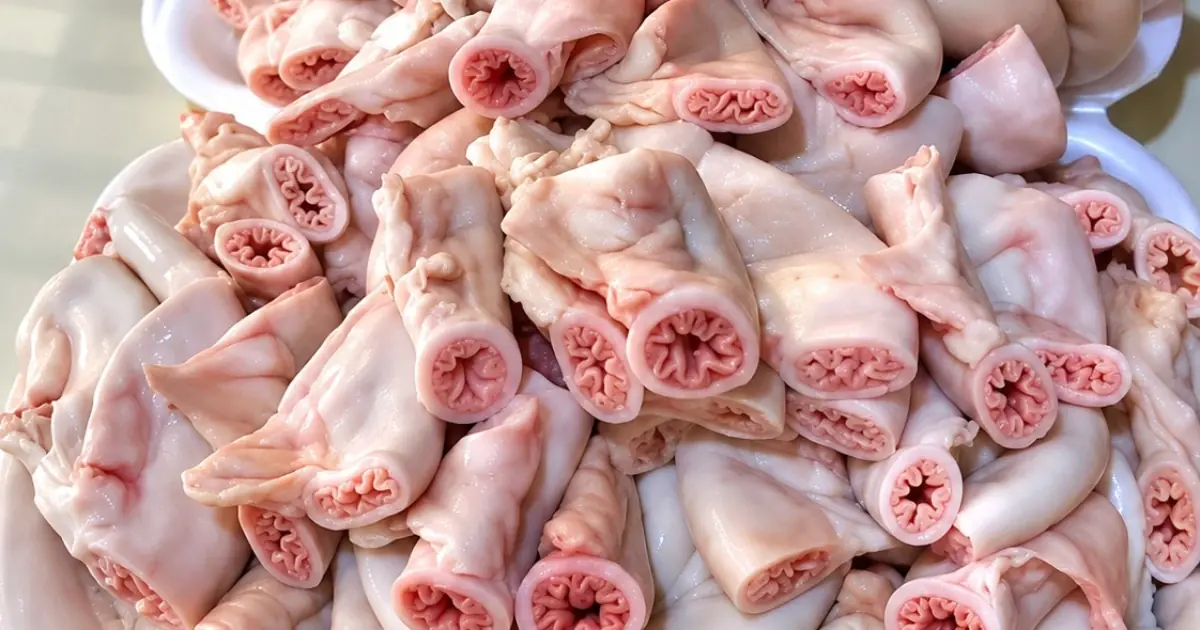
A photograph of an unusual meat product can quickly attract attention, especially when it shows something that most shoppers would not immediately recognize. The image accompanying this article is a good example. A large white tray is filled with pale pink and cream-colored tubular pieces, many of which have been cut into short sections.
Their interiors display unusual folds and circular patterns. Some pieces appear smooth on the outside, while others have thicker walls and irregular shapes.
For someone accustomed to buying familiar cuts such as pork chops, chicken breast, or beef steak, the sight may raise an obvious question: What exactly are these pieces?
The most likely explanation is that they are cleaned animal intestines, probably a form of pork offal.
Pork intestines are widely consumed in different parts of the world. In English-speaking countries, they are commonly called chitterlings or chitlins, while other markets use names such as pork guts, pork large intestine, and pork bung, depending on the particular section.
However, these names do not always refer to exactly the same anatomical part.
The digestive system of a pig contains several sections, including the small intestine, large intestine, and rectum. Each section has a different structure, thickness, and texture.
Small intestines are generally narrower and more delicate. Large intestines are usually thicker, with a more substantial wall. Certain sections near the end of the digestive tract may have particularly thick and distinctive structures.
This explains why products sold under the general name of pork intestines can look quite different from one another.
The unusual patterns visible in the photograph are particularly interesting.
When an intestine is cut across its width, the internal surface can reveal natural folds and ridges. These structures are part of the digestive tract rather than artificial patterns added during food processing.
The folds help increase the internal surface area in sections of the digestive system and are associated with the movement and processing of digestive contents.
Depending on the species and the section being examined, the internal structure can look remarkably complicated.
That is why a tray of cleaned intestines may appear very different from ordinary cuts of meat.
There is another important point: these products are classified as edible offal. Offal refers to edible animal organs and other internal parts that are processed for human consumption.
The category includes liver, kidneys, heart, stomach, tongue, and intestines.
Although some shoppers prefer conventional muscle meat, offal has a long culinary history. It is used in traditional dishes across Asia, Europe, Africa, and the Americas.
One reason these products may surprise shoppers is that they are not always displayed in the same way as ordinary meat.
They may be sold whole, folded, coiled, cut into smaller sections, frozen, or packaged after cleaning. Some markets display them alongside other organ meats, while others place them in specialized refrigerated sections.
Their appearance can also change considerably after processing.
Raw intestines are often pale pink, cream-colored, or light beige. After cooking, they may become darker, firmer, and more compact.
The photograph appears consistent with this type of product, but it is not possible to establish whether every piece comes from the same animal or the same section of the digestive tract simply by looking at it.
Consumers should therefore rely on product labels, packaging information, and the seller's description rather than assuming that the appearance tells the whole story.
The surprising truth is that the product may not be an unusual synthetic food or an unfamiliar substitute for ordinary meat.
It may simply be a traditional animal by-product that has been cleaned and prepared for cooking.
And understanding what it is makes the next question even more interesting: why do people around the world choose to eat intestines in the first place?
Chapter 2: Why Do People Around the World Eat Animal Intestines?
For some people, the idea of eating animal intestines may seem unusual. For others, it is a familiar part of family cooking and traditional cuisine.
In fact, intestines have been eaten for generations in many countries. They are not a newly invented food product, nor are they exclusively associated with one particular culture.
Their popularity comes from several factors, including culinary tradition, flavor, texture, affordability, and the historical practice of using different edible parts of an animal.
In earlier generations, wasting food was often considered unacceptable. When an animal was slaughtered for food, families and butchers tried to make use of as much of the animal as possible.
Muscle meat was valuable, but internal organs and other edible parts also had a place in everyday cooking.
Intestines became an important ingredient in many traditional recipes.
In the United States, pork intestines are known as chitterlings or chitlins. They have a particularly strong connection with Southern food traditions, where they are often prepared for family gatherings and holiday meals.
The dish has a complicated cultural history, particularly within African American communities. Its origins are connected to the history of slavery, economic hardship, and the culinary traditions that developed under difficult circumstances.