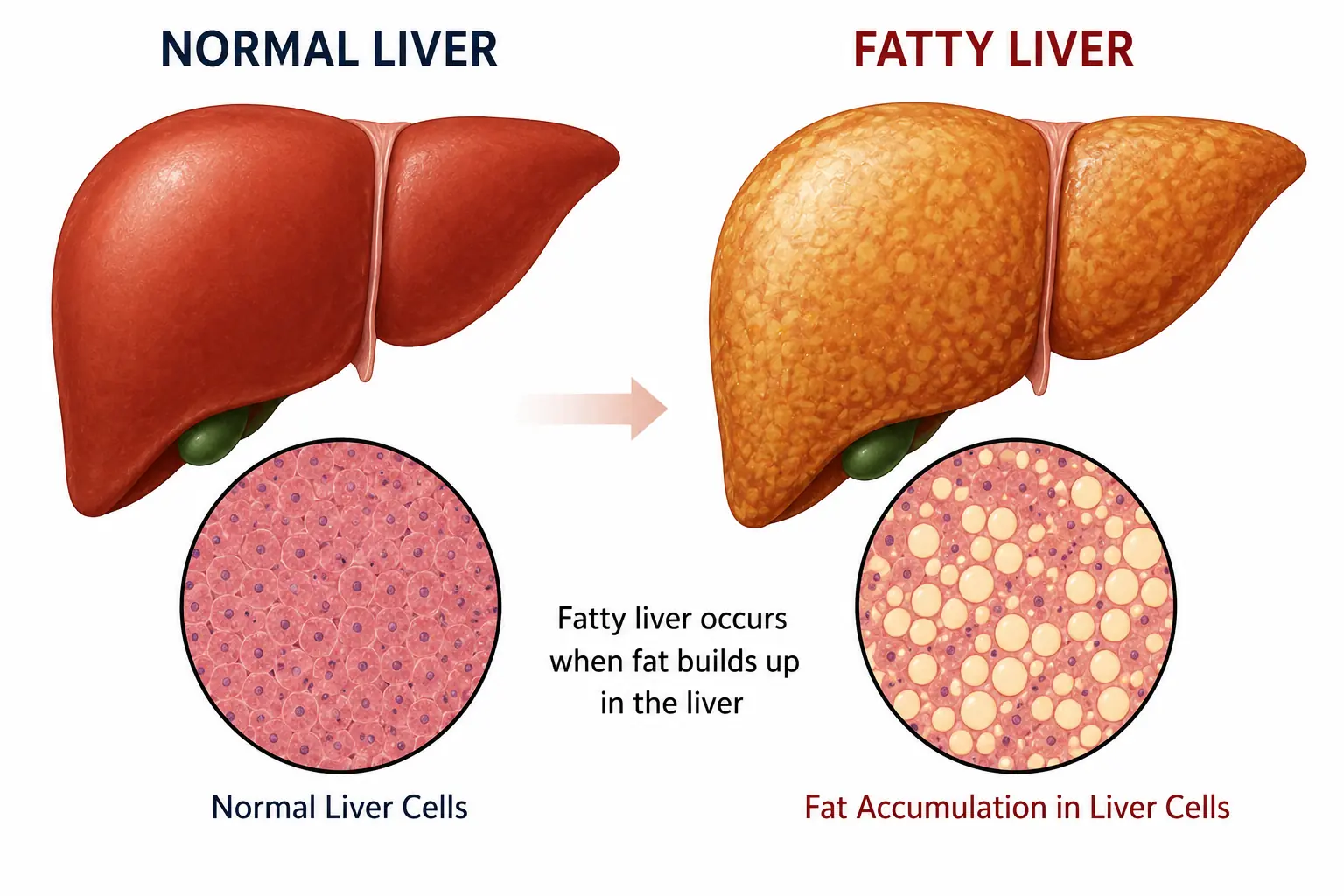
Fatty liver disease, also known as hepatic steatosis, often doesn't cause noticeable symptoms in its early stages. It's typically discovered during routine medical exams or tests for other health issues. However, there are some signs and symptoms that may serve as red flags and prompt further evaluation by a healthcare professional such as fatigue, abdominal discomfort, unexplained weight loss, enlarged liver and elevated liver enzymes.
It's important to note that these signs and symptoms are not specific to fatty liver disease and can be associated with other health conditions as well. If you experience any of these symptoms, or if you have risk factors for fatty liver disease (such as obesity, type 2 diabetes, or excessive alcohol consumption), it's essential to consult a healthcare professional for a thorough evaluation. Diagnosis typically involves a combination of medical history, physical examination, blood tests, and imaging studies, such as ultrasound or a CT scan, to assess the liver's condition and rule out other potential causes of liver problems. Early detection and lifestyle modifications can be crucial in managing fatty liver disease and preventing its progression to more severe forms, such as non-alcoholic steatohepatitis (NASH) or cirrhosis.
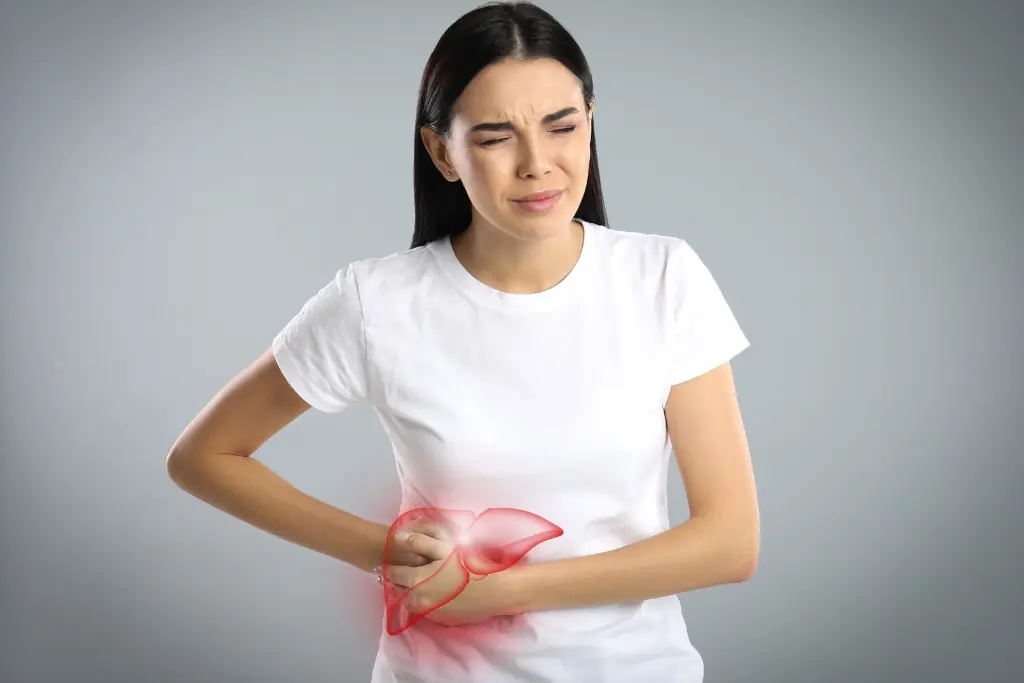 Can symptoms appear when you go to the toilet?
Fatty liver disease symptoms typically do not appear or worsen during or after going to the toilet. Fatty liver disease primarily affects the liver's function and structure, and its symptoms are generally not directly related to bowel movements or urination.
The symptoms of fatty liver disease, as mentioned in the previous response, are more commonly associated with fatigue, abdominal discomfort, unexplained weight loss, an enlarged liver, or elevated liver enzymes detected through blood tests. These symptoms reflect the impact of excess fat accumulation in the liver and potential inflammation or liver damage.
What symptoms could signal a more advanced form of the condition?
Fatty liver disease can progress to more advanced and potentially serious forms if not managed or treated properly. The more advanced stages of the condition, such as non-alcoholic steatohepatitis (NASH) and cirrhosis, may present with more noticeable and severe symptoms, such as:
Persistent and worsening abdominal pain - As the liver becomes more damaged, abdominal discomfort or pain may become more pronounced and persistent, especially in the upper right side of the abdomen.
Jaundice - Jaundice is a yellowing of the skin and the whites of the eyes. It can occur when liver function is significantly impaired due to conditions like cirrhosis.
 Ascites - Ascites is the accumulation of fluid in the abdominal cavity, causing abdominal swelling and discomfort. It is a common complication of advanced liver disease.
Easy bruising and bleeding - As the liver struggles to produce proteins needed for blood clotting, individuals with advanced liver disease may experience easy bruising and prolonged bleeding from minor injuries.
Confusion and mental changes - Hepatic encephalopathy is a condition that can occur in advanced liver disease. It can lead to confusion, difficulty concentrating, memory problems, and even altered consciousness.
Unintentional weight loss - Significant and unintentional weight loss can be a sign of advanced liver disease.
Fatigue and weakness - Fatigue and weakness may become more profound as liver function deteriorates.
Itchy skin - Pruritus, or itchy skin, can occur in advanced liver disease due to the buildup of toxins in the blood.
Spider veins and skin changes - Spider veins (spider angiomas) and other skin changes, such as palmar erythema (red palms), may be noticeable in individuals with advanced liver disease.
Gastrointestinal bleeding - Cirrhosis can lead to the development of varices (enlarged blood vessels) in the gastrointestinal tract, which can bleed and cause symptoms like black, tarry stools or vomiting blood.
What should you do if you experience these symptoms?
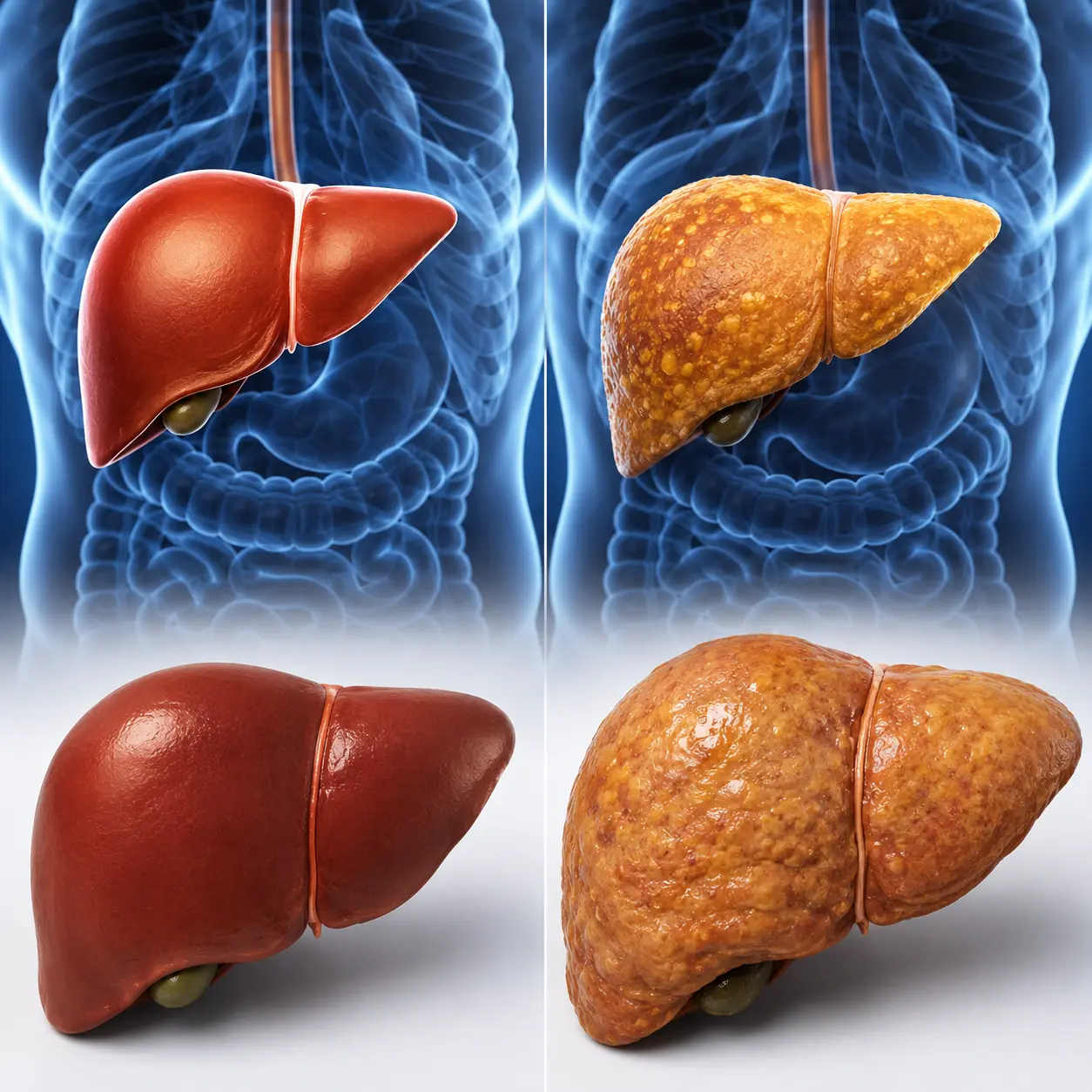 It's important to remember that not everyone with fatty liver disease will progress to these advanced stages, and many people with the condition can manage and even reverse it with lifestyle changes, such as weight loss, improved diet, and reduced alcohol consumption. Regular medical monitoring and early intervention are crucial for managing the condition and preventing its progression to more severe forms. If you or someone you know is experiencing any of these symptoms, it's essential to seek medical attention promptly for a proper diagnosis and treatment plan.
Liver function tests are blood tests used to identifying the underlying causes of your symptoms and monitoring liver health or damage. These tests assess specific enzyme and protein levels in your bloodstream. Take a proactive step by scheduling a liver function blood test at Pall Mall.