5 Fish That Can Contain More Mercury Than You Think — Here’s What You Should Know
Fish is often considered one of the healthiest foods you can put on your plate. It provides high-quality protein, omega-3 fatty acids, vitamin D, vitamin B12, selenium, and other important nutrients.
But there’s one issue many people overlook: mercury.
Mercury occurs naturally in the environment and can also enter waterways through pollution. In water, microorganisms can convert it into methylmercury, a form that accumulates in fish and other seafood.
The key thing to understand is that mercury levels aren't the same in every fish.
Large, long-lived predatory fish generally accumulate more mercury because they eat many smaller fish throughout their lives. This process is known as biomagnification.
That doesn't mean you should stop eating seafood. Instead, knowing which species tend to be higher in mercury can help you make smarter choices.
Here are five fish worth paying particular attention to.
1. Swordfish
Swordfish is prized for its thick, steak-like texture and mild flavor. It's commonly grilled, broiled, or served as a seafood entrée.
But swordfish is also a large predatory fish, and that matters when it comes to mercury.
Because swordfish live relatively long lives and consume many smaller marine animals, methylmercury can accumulate in their tissues over time.
For this reason, U.S. FDA and EPA guidance places swordfish among the fish with the highest mercury levels and recommends that pregnant or breastfeeding people and young children avoid it.
For other adults, the broader lesson is moderation and variety rather than relying heavily on one high-mercury species.
Lower-mercury alternative: Salmon, sardines, or trout can provide valuable nutrients and omega-3 fats with substantially less mercury concern.
2. Shark
Shark is eaten in various parts of the world and may appear grilled, dried, smoked, or incorporated into traditional dishes.
However, sharks sit near the top of the marine food chain.
They can live for many years and consume large numbers of smaller fish. As a result, mercury can progressively accumulate in their bodies.
This is exactly the pattern that makes large predators more likely to have elevated methylmercury concentrations.
Shark is therefore another species classified by the FDA and EPA among the choices to avoid for groups particularly vulnerable to mercury exposure.
Lower-mercury alternative: Consider salmon, tilapia, pollock, shrimp, or sardines depending on the nutrients and preparation you're looking for.
3. King Mackerel

Here's where names become especially important.
Not all mackerel has the same mercury profile.
King mackerel is different from smaller varieties such as Atlantic mackerel.
King mackerel is a large predatory species that can accumulate considerably more mercury than many smaller mackerel species.
That's why simply seeing the word "mackerel" isn't enough to determine whether a particular fish is a high-mercury choice.
The FDA and EPA specifically list king mackerel among the highest-mercury choices to avoid for pregnant or breastfeeding people and young children.
Meanwhile, Atlantic mackerel is generally considered a much lower-mercury option.
Lower-mercury alternative: Atlantic mackerel can be an excellent substitute and is also rich in beneficial omega-3 fatty acids.
4. Bigeye Tuna
Tuna deserves special attention because it's one of the world's most widely consumed fish.
But different tuna species can contain very different amounts of mercury.
Bigeye tuna is a relatively large predatory tuna and tends to contain more mercury than smaller tuna species.
According to U.S. FDA/EPA guidance, bigeye tuna is classified among the highest-mercury choices for people who are pregnant, may become pregnant, are breastfeeding, and young children.
This doesn't mean every type of tuna needs to disappear from your diet.
For example, canned light tuna generally contains less mercury than bigeye and typically less than albacore/white tuna.
That's why knowing the actual species or product type can make a meaningful difference.
Lower-mercury alternative: Canned light tuna is generally the lower-mercury tuna option, while salmon and sardines provide additional alternatives.
5. Orange Roughy
Orange roughy might not look like an obvious high-mercury fish, but its biology makes it noteworthy.
This deep-sea species is exceptionally long-lived. Orange roughy can survive for many decades, giving contaminants such as methylmercury considerable time to accumulate.
Because mercury accumulation is influenced by age, diet, and position in the food chain, long-lived fish can sometimes carry substantially higher concentrations than shorter-lived species.
The FDA and EPA include orange roughy among their highest-mercury fish choices.
If you're trying to reduce mercury exposure while continuing to eat seafood, choosing shorter-lived, lower-food-chain species more frequently is generally a sensible strategy.
Lower-mercury alternative: Haddock, pollock, tilapia, salmon, or trout may be better everyday options.
Why Does Mercury in Fish Matter?
The primary mercury concern associated with seafood is methylmercury.
At sufficiently high exposure levels, methylmercury can affect the nervous system. Developing brains are particularly sensitive, which is why seafood guidance pays special attention to pregnancy, breastfeeding, and young children.
This does not mean eating a single swordfish steak will automatically cause mercury poisoning.
Mercury exposure is influenced by several factors, including:
- The mercury concentration in the fish
- How much you eat
- How frequently you eat it
- Your body size
- Exposure accumulated over time
In other words, frequency and species both matter.
Should You Stop Eating Fish?
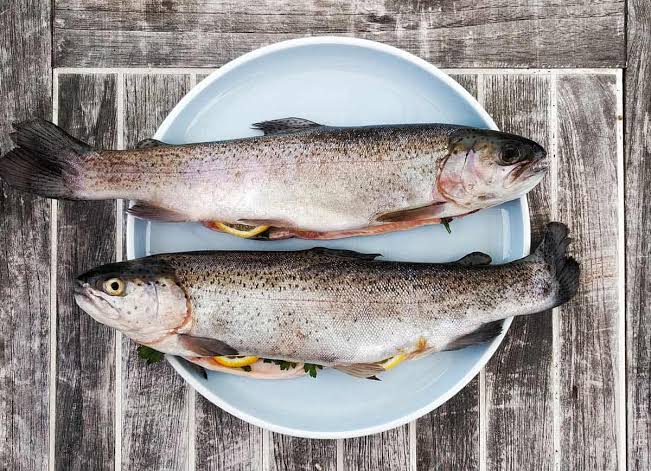
For most people, no.
Fish can be an extremely nutritious part of a balanced diet.
The goal isn't to become afraid of seafood. It's to choose species wisely and eat a variety of seafood rather than repeatedly consuming high-mercury predators.
Many commonly available seafood choices tend to be lower in mercury while still providing protein and other valuable nutrients.
Examples include:
Salmon, sardines, shrimp, pollock, tilapia, trout, anchovies, Atlantic mackerel, oysters, and scallops.
Several of these—including salmon, sardines, trout, anchovies, and Atlantic mackerel—are also excellent sources of omega-3 fatty acids.
Who Should Pay Extra Attention?
Mercury exposure is particularly important during periods of brain and nervous-system development.
According to FDA/EPA advice, people who are pregnant or breastfeeding, those who might become pregnant, and parents or caregivers choosing seafood for young children should pay particular attention to which species they eat.
For these groups, the FDA/EPA recommends choosing fish from its lower-mercury categories and avoiding the highest-mercury choices.
Current U.S. guidance recommends 2–3 servings per week from the “Best Choices” category for people who are pregnant or breastfeeding, with age-appropriate portions for children.
A Simple Rule to Remember
There's a useful general principle:
The bigger, older, and more predatory the fish, the greater the potential for mercury accumulation.
It isn't a perfect rule—mercury concentrations vary by species and environment—but it's a useful starting point.
Small fish such as sardines and anchovies generally have shorter lifespans and occupy lower positions in the food chain.
Large predators such as swordfish, sharks, king mackerel, and bigeye tuna consume numerous smaller animals over many years, allowing methylmercury to become increasingly concentrated.
The Bottom Line

Fish remains an important source of protein, healthy fats, vitamins, and minerals. Mercury isn't a reason to eliminate seafood altogether.
It's a reason to choose carefully.
Five fish that deserve particular attention for their mercury content are:
1. Swordfish
2. Shark
3. King mackerel
4. Bigeye tuna
5. Orange roughy
If you eat seafood frequently, rotating among lower-mercury options such as salmon, sardines, trout, shrimp, pollock, and Atlantic mackerel can help reduce mercury exposure while preserving many of the nutritional benefits of seafood.
The important question isn't simply, “Do you eat fish?” It’s also, “Which fish—and how often?”