Imagine finishing dinner, getting ready for bed, and reaching for something you probably already have in your kitchen: a small clove of garlic.
For generations, garlic has been associated with traditional remedies, home cooking, and countless claims about its effects on the human body. Some people add it to warm water, others swallow a small piece raw, and many believe that eating it before sleeping can help the body recover overnight.
The claims are certainly intriguing. Garlic is said to support the heart, improve circulation, strengthen the immune system, help regulate blood sugar, and even fight harmful microorganisms.
But how much of this is actually supported by science?
And more importantly, does eating garlic specifically before bed offer advantages that you would not get from consuming it during the day?
The answers are more complicated than many popular health posts suggest.
Garlic is not simply a flavorful ingredient. It contains several biologically active sulfur compounds that researchers have studied for their potential effects on cardiovascular health, inflammation, blood pressure, and other processes.
However, there is an important distinction between the potential benefits of garlic as part of an overall diet and the idea that eating it at a particular time produces special results.
Let's start with what makes this familiar ingredient so interesting.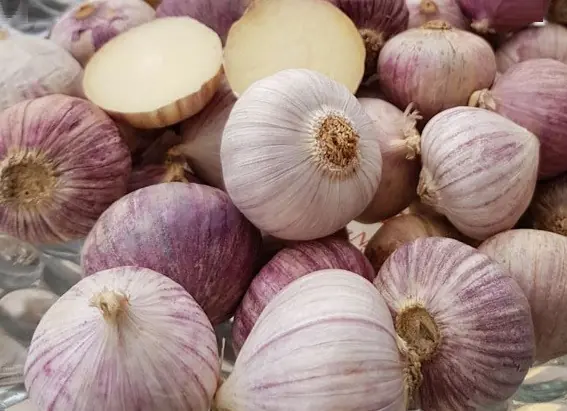
What makes garlic biologically active?
Garlic comes from the plant Allium sativum, a member of the same botanical family as onions, leeks, and shallots.
Its distinctive smell and sharp taste are largely connected to sulfur-containing compounds.
One of the most widely studied is allicin.
Interestingly, an intact garlic clove does not contain large amounts of allicin in its fully formed state. Instead, it contains a compound called alliin and an enzyme known as alliinase.
When garlic is crushed, chopped, or chewed, these components come into contact and trigger a reaction that produces allicin.
This is why freshly crushed garlic develops such a powerful aroma.
Allicin is relatively unstable and can break down into other sulfur-containing compounds. These compounds have attracted scientific attention because laboratory studies have identified antimicrobial, antioxidant, and other biological activities.
Researchers have also investigated additional garlic compounds, including diallyl sulfides and S-allyl cysteine, particularly in relation to oxidative stress and cardiovascular health.
But the chemistry of garlic is only part of the story.
A compound demonstrating an interesting effect in a laboratory does not automatically mean that eating one clove will produce the same effect inside the human body. Digestion, absorption, preparation methods, individual differences, and the amount consumed all influence the results.
That is why clinical research involving people is essential.
Does eating garlic before bed make it more effective?
This is where one of the biggest misconceptions appears.
There is no strong scientific evidence establishing that eating garlic immediately before bedtime provides unique health benefits compared with eating it at another time of day.
Garlic's potentially beneficial compounds do not suddenly become more effective simply because the lights are turned off.
Some people prefer consuming garlic at night because it fits naturally into their evening routine. Others believe the body has more time to absorb its compounds while sleeping.
However, this does not mean that nighttime consumption has been proven to improve circulation, accelerate detoxification, or strengthen immunity more effectively than daytime consumption.
The body continues carrying out essential metabolic and repair processes throughout the day and night. It does not require garlic at bedtime to perform these functions.
In fact, eating raw garlic immediately before lying down may cause problems for some people, particularly those who experience acid reflux, heartburn, or stomach irritation.
For them, the timing could make the experience less comfortable rather than more beneficial.
Why garlic continues to attract scientific interest
Despite the exaggerated claims sometimes found online, there are legitimate reasons researchers continue studying garlic.
Some clinical trials suggest that garlic preparations may produce modest reductions in blood pressure in certain people with hypertension.
Other studies have explored possible improvements in cholesterol measurements, particularly total cholesterol and LDL cholesterol.
Researchers have also investigated garlic's potential influence on blood sugar regulation, inflammatory markers, and immune responses.
These findings are interesting, but the evidence varies considerably. Some studies use raw garlic, others use aged garlic extract or garlic powder, and the amounts consumed are not always comparable.
This means that the results from one type of preparation cannot automatically be applied to every clove of garlic found in a kitchen.
Before considering whether garlic belongs in your evening routine, it is worth examining one of its most discussed potential benefits: its relationship with the cardiovascular system.
And that is where the science becomes particularly interesting.
CHAPTER 2: COULD GARLIC SUPPORT YOUR HEART AND BLOOD CIRCULATION?
Heart health is influenced by many factors, including blood pressure, cholesterol levels, blood vessel function, physical activity, diet, and genetics.
Because cardiovascular disease remains a major health concern worldwide, researchers have spent years investigating whether everyday foods can help support the systems responsible for maintaining healthy circulation.
Garlic is one of the ingredients that has received considerable attention.
Its sulfur-containing compounds may influence several biological processes associated with cardiovascular health. Some human studies have reported modest improvements in blood pressure and cholesterol measurements after people consumed certain garlic preparations regularly.
However, these findings should be understood as potential supportive effects, not proof that garlic can prevent or reverse heart disease.
1. Garlic may help support healthy blood pressure
High blood pressure is often called a silent condition because many people experience no obvious symptoms.
Yet persistently elevated blood pressure can gradually damage blood vessels and increase the risk of heart attack, stroke, kidney disease, and other complications.
This is one reason researchers have investigated garlic as a possible dietary addition for people with elevated blood pressure.
Some clinical trials and systematic reviews have found that garlic supplements may modestly reduce blood pressure in certain individuals, particularly those who already have hypertension.