MD Anderson notes that people prone to kidney stones should consider discussing regular okra water consumption with their healthcare professional because okra contains oxalates.
It is important not to eliminate nutritious vegetables unnecessarily. People with a history of kidney stones should seek personalized advice rather than following a broad social media warning.
4. Allergic reactions are possible
Although uncommon, food allergies can occur with almost any food.
A person who is allergic to okra may experience itching, hives, swelling, or digestive discomfort after eating it.
More serious allergic reactions can involve difficulty breathing, throat swelling, dizziness, or a sudden drop in blood pressure.
Anyone experiencing breathing difficulties or swelling of the throat after eating a food should seek emergency medical assistance.
People who have previously experienced an allergic reaction to okra should avoid eating it until they have received appropriate medical advice.
5. Large portions are not automatically better
Another common mistake is assuming that if a vegetable is healthy, eating more of it must produce greater benefits.
That is not necessarily true.
A very large serving of okra may cause digestive discomfort, particularly in someone who is not accustomed to high-fiber foods.
It can also crowd out other foods that provide nutrients not found in significant amounts in okra.
A varied diet is generally more beneficial than relying heavily on one vegetable.
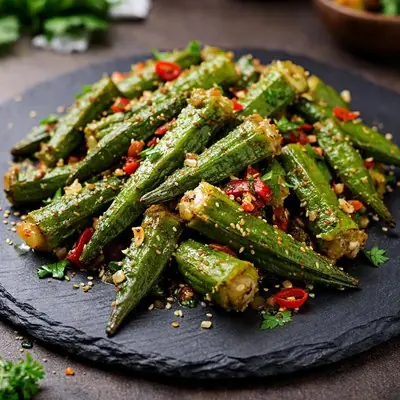
6. What about okra water?
Okra water has become popular in online wellness discussions.
It is usually made by soaking sliced okra pods in water and drinking the liquid.
Some social media posts claim that it can lower blood sugar, improve fertility, support weight loss, or cleanse the body.
However, these claims should be treated carefully.
MD Anderson Cancer Center explains that evidence supporting many of the claimed benefits of okra water is limited. Drinking the soaking liquid also does not provide the same amount of fiber as eating the whole vegetable.
If you enjoy okra, eating the whole cooked vegetable is generally a more straightforward way to obtain its fiber and nutrients.
When should you reduce your intake?
Consider reducing the portion or seeking professional advice if:
-
You repeatedly experience bloating or stomach discomfort after eating it.
-
You have a diagnosed food allergy.
-
You take warfarin and are planning a major change in your diet.
-
You have a history of kidney stones and have been advised to limit oxalate.
-
You are considering concentrated okra supplements or daily okra water.
For most people, ordinary servings of cooked okra can fit comfortably into a balanced diet. The goal is to understand personal tolerance rather than fear the vegetable.
Chapter 4: The Best Ways to Prepare Okra Without Losing Its Nutritional Value
How you prepare okra can influence its texture, taste, and overall nutritional quality.
Some people love its naturally slippery consistency, while others avoid it because they dislike the thick liquid released when the pods are cut or cooked.
Fortunately, there are several ways to prepare okra.
1. Choose fresh pods before cooking
Good preparation begins at the market.
Look for pods that are:
-
Bright green.
-
Firm but not excessively hard.
-
Free from mold and obvious damage.
-
Fresh-looking rather than shriveled.
-
Relatively small and tender.
Very large, mature pods can become tough and fibrous.
The University of Nebraska's food education material recommends selecting okra that is fresh and firm, avoiding pods that are moldy, limp, or dried out. It also recommends rinsing the pods carefully before cooking.
UNL Food
2. Wash the pods properly
Rinse okra under clean running water before preparing it.
Gently rub the surface to remove soil or other visible debris.
Avoid using household detergent, soap, or cleaning chemicals on vegetables.
After washing, dry the pods with a clean kitchen towel if you plan to roast or stir-fry them. Removing excess surface moisture can help improve browning.
3. Steam okra for a simple vegetable side dish
Steaming is one of the easiest ways to prepare okra.
It requires little added oil and allows the vegetable to retain much of its natural flavor.
Place washed pods in a steamer and cook until tender. The time will depend on their size and freshness.
You can serve them with a small amount of olive oil, garlic, black pepper, lemon juice, or herbs.
This method is especially useful for people who want a simple vegetable dish without heavy sauces or deep frying.
4. Stir-fry it with garlic and tomatoes
Stir-frying is another popular option.
Cut the pods into pieces and cook them with a small amount of oil, garlic, onion, and tomatoes.
Tomatoes add acidity and flavor, while spices can make the dish more interesting.
Because okra releases mucilage when cut and heated, the mixture may become slightly thick. In many traditional dishes, this is exactly the desired result.
If you prefer a less slippery texture, cook the pods in a hot pan and avoid overcrowding them. Keeping them relatively dry before cooking can also help.
5. Roast okra for a firmer texture
Roasting is a convenient option for people who dislike the texture of boiled okra.
Wash and dry the pods, trim the ends, and toss them with a modest amount of oil and seasoning.
Spread them in a single layer on a baking tray and roast until tender with lightly browned edges.
Garlic, paprika, black pepper, and lemon can add flavor without requiring a heavy sauce.
Roasting also makes it easy to combine okra with other vegetables such as peppers, onions, and zucchini.
6. Add okra to soups and stews
Okra is particularly useful in soups because its natural mucilage can thicken the liquid.
It is used in dishes across several culinary traditions, including gumbo and vegetable-based stews.
You can add it to tomato soup, chicken soup, bean stew, or lentil dishes.
If you want the thickening effect, cut the pods into smaller pieces. If you prefer them to hold their shape, add whole or larger pieces later in the cooking process.
7. Be careful with deep-fried okra
Fried okra can be delicious, but the preparation method matters.
A thick coating of flour or cornmeal and deep frying can substantially increase the calories and fat in the final dish.
That does not mean you can never eat fried okra. It simply means that it is better treated as an occasional preparation rather than the only way you consume the vegetable.
For everyday meals, steaming, roasting, and lightly sautéing are useful alternatives.
8. Store fresh okra correctly
Okra is perishable, so proper storage helps maintain its quality.