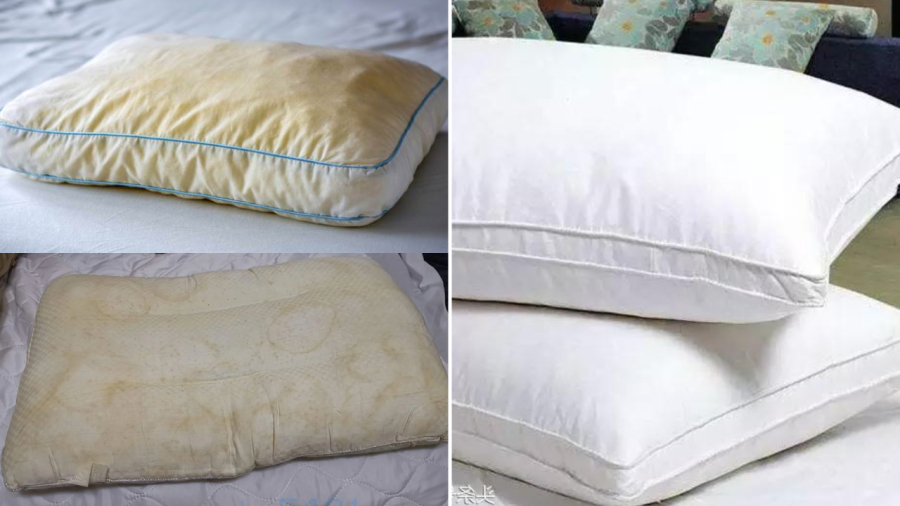
Pillows play an essential role in sleep quality and overall hygiene. Over time, however, pillow cores — whether filled with cotton, polyester, or down — can develop yellow stains and small mold spots. These changes are usually caused by sweat, body oils, humidity, and improper drying. While replacing pillows is sometimes necessary, mild discoloration and light surface mold can often be treated effectively with proper cleaning methods.
Before starting, it is important to understand that heavily mold-infested pillows should be discarded for health reasons. The following methods are intended only for light staining and minor mold spots.
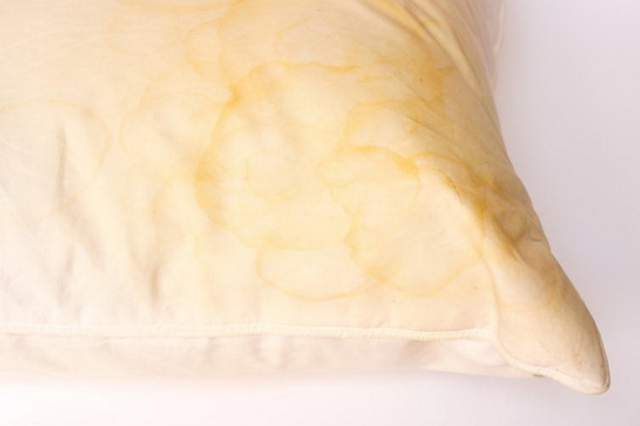
Why Pillow Cores Turn Yellow and Develop Mold
Yellow stains commonly result from:
-
Nighttime sweating
-
Natural body oils
-
Saliva
-
Hair products
-
Humidity in the bedroom
Mold develops when moisture becomes trapped inside the pillow and does not dry properly. Poor ventilation and high humidity increase this risk.
Regular washing and proper drying can prevent most of these issues.
Step 1: Check the Care Label
Before cleaning, examine the pillow’s care instructions. Some pillow cores are machine washable, while others require hand washing or spot cleaning. Memory foam pillows, for example, should never be submerged in water.
If the pillow is washable, proceed with the appropriate method below.
Method 1: Deep Cleaning with Baking Soda and Vinegar
This method works well for mild yellowing and light mold spots.
What You’ll Need:
-
Baking soda
-
White vinegar
-
Mild laundry detergent
-
Warm water
Steps:
-
Sprinkle baking soda generously over stained areas.
-
Lightly spray white vinegar over the baking soda (a mild bubbling reaction is normal).
-
Let the mixture sit for 30–60 minutes.
-
Wash the pillow in warm water with a small amount of detergent.
-
Rinse thoroughly.
Baking soda helps neutralize odors and absorb oils, while vinegar has natural antimicrobial properties.
Method 2: Hydrogen Peroxide for Whitening (White Pillows Only)
Hydrogen peroxide can help brighten white pillows and reduce mild mold discoloration.
Important:
Use only on white fabrics, as it may bleach colored materials.
Steps:
-
Mix equal parts hydrogen peroxide and water.
-
Apply directly to stained areas.
-
Let sit for 20–30 minutes.
-
Wash and rinse thoroughly.
This method can lighten yellow stains caused by sweat and oils.
Method 3: Lemon Juice and Sunlight Treatment
Natural sunlight is one of the most effective mold inhibitors.
Steps:
-
Apply fresh lemon juice to stained areas.
-
Let it soak for 15–20 minutes.
-
Place the pillow in direct sunlight for several hours.
UV rays help kill surface mold spores and naturally bleach fabric. Ensure the pillow dries completely to prevent moisture retention.
Method 4: Washing with Hot Water (If Allowed)
If the care label permits hot water washing:
-
Use warm to hot water (according to label guidelines).
-
Add mild detergent.
-
Include an extra rinse cycle to remove residue.
Hot water can help eliminate bacteria and mold spores. However, avoid excessive heat for delicate fillings.
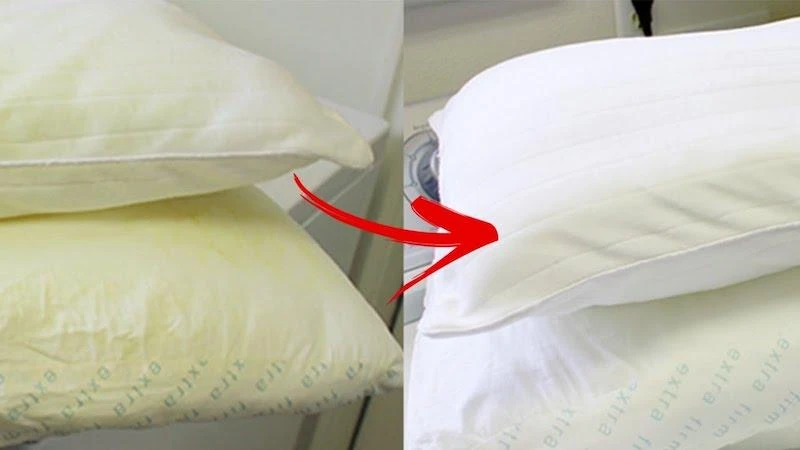
Thorough Drying Is Critical
Proper drying is just as important as washing. Inadequate drying can worsen mold growth.
Best Practices:
-
Use a dryer on low to medium heat (if allowed).
-
Add clean tennis balls to maintain fluffiness.
-
Ensure the pillow is completely dry before use.
-
Alternatively, air-dry in direct sunlight.
Feel the center of the pillow to confirm dryness, as moisture often remains trapped inside.
When to Replace the Pillow
Discard the pillow if:
-
Mold smell persists after cleaning
-
Mold spots return quickly
-
Filling feels clumped or damaged
-
Allergic symptoms worsen
In such cases, replacement is safer than attempting repeated cleaning.
Prevention Tips
To prevent yellow stains and mold in the future:
-
Use high-quality pillow protectors
-
Wash pillowcases weekly
-
Wash pillows every 3–6 months
-
Maintain bedroom ventilation
-
Use a dehumidifier in humid climates
-
Avoid sleeping with wet hair
Regular maintenance significantly reduces buildup.
Final Thoughts
Yellow stains and small mold spots on pillow cores are common but manageable issues when addressed early. With proper cleaning methods - including baking soda, vinegar, hydrogen peroxide (for white pillows), and sunlight you can often restore hygiene and freshness.
However, health and safety should always come first. If mold contamination is extensive, replacing the pillow is the safest choice.
A clean pillow not only improves hygiene but also enhances sleep quality and overall comfort. Consistent care ensures your bedding remains fresh, supportive, and safe for long-term use.