The behavior may also occur during moments of affection. Some dogs sniff their owners before settling beside them, resting their heads on their laps, or curling up at their feet. Although sniffing alone doesn't prove that a dog feels a particular emotion, it can be one ordinary part of interacting with a familiar person.
In other words, your dog doesn't need to be confused about who you are to find your scent interesting. You can be its favorite person and still provide an endless source of new olfactory information.
Why Some Dogs Are More Interested in Smells Than Others
Not every dog investigates people in the same way.
Some dogs are naturally curious and spend considerable time exploring their surroundings with their noses. Others appear more interested in movement, toys, food, or social interaction.
Breed characteristics, individual temperament, early experiences, training, and the opportunities a dog has to explore can all influence its behavior. Dogs bred for scent-related work may be particularly motivated to follow odors, although individual dogs can vary considerably even within the same breed.
Age and experience may also affect how a dog investigates its environment. A young dog may enthusiastically sniff almost everything, while an older dog may be more selective about where it directs its attention. These are tendencies rather than strict rules.
A dog's environment matters, too. If sniffing is one of the main ways it gets to explore during walks, it may naturally investigate new people and unfamiliar objects with enthusiasm.
Providing safe opportunities for scent exploration can be beneficial. You might scatter a few pieces of your dog's regular food across a clean patch of grass, hide treats around a room, or let your dog take its time investigating appropriate areas during a walk.
These activities offer mental stimulation without requiring intense physical exercise.
However, if your dog repeatedly sniffs one particular person's private area and cannot be redirected, it may be helpful to teach alternative greeting behaviors. The aim is to preserve the dog's opportunity to explore while making interactions comfortable for everyone.
Can Your Dog Smell Changes Before You Notice Them?
One reason canine scent abilities attract so much scientific interest is that dogs can detect certain odors at concentrations far below what humans can readily notice.
The human body releases a complex mixture of volatile compounds through breath, sweat, and other biological processes. The composition of these compounds can change in response to different physiological conditions.
Researchers have investigated whether trained dogs can distinguish some odor patterns associated with particular diseases, metabolic changes, and emotional states. Certain studies have reported promising results under controlled conditions.
Nevertheless, these findings require careful interpretation.
A dog trained to recognize a specific odor under controlled conditions is not the same as an ordinary household dog casually sniffing its owner. Training, testing methods, environmental factors, and the dog's ability to distinguish the target odor all influence performance.
Even when a dog appears unusually interested in one part of a person's body, there is no reliable way to determine from that behavior alone what the dog has detected, if anything unusual at all.
A change in attention could simply reflect sweat, a new soap, a spill, clothing, or an unfamiliar environmental odor.
If you notice a physical symptom, such as persistent pain, an unusual lump, unexplained bleeding, or a change in skin appearance, seek medical advice based on that symptom. You do not need to interpret your dog's sniffing as a warning or assume that it has identified an illness.
Canine smell research is fascinating precisely because it is still being explored. Its potential should not be confused with a dependable home diagnostic method.
How to Teach Your Dog Better Greeting Manners
You don't have to allow your dog to sniff every person it meets. Guests, children, and strangers may feel uncomfortable with close physical contact, particularly when a dog approaches their groin.
Fortunately, dogs can learn more appropriate ways to greet people.
Begin by rewarding calm behavior. When your dog approaches a guest without jumping or pushing into their personal space, offer praise or a small treat.
You can also teach a cue such as "sit," "come," or "leave it." Practice these behaviors in quiet surroundings before expecting your dog to respond reliably when visitors arrive.
If your dog moves toward someone's private area, calmly guide it away and redirect its attention. Ask the dog to sit or invite it to sniff an offered hand if the person is comfortable with that interaction.
Reward the alternative behavior immediately.
Consistency matters. If one family member encourages the dog to jump on visitors while another person tries to prevent it, the dog may struggle to understand which behavior is expected.
Avoid shouting, hitting, or frightening your dog. These reactions can create anxiety without teaching the animal what to do instead.
If the behavior is persistent, difficult to interrupt, or accompanied by anxiety or aggression, a qualified trainer or veterinary behavior professional can help you develop an appropriate plan.
Understanding the Difference Between Normal Sniffing and Excessive Behavior
Most sniffing is ordinary canine exploration. Nevertheless, changes in behavior can sometimes deserve attention.
For example, a dog that suddenly begins sniffing the same person or object repeatedly may have encountered a new odor. The explanation could be entirely harmless, such as a change in laundry detergent or a new skincare product.
However, if the behavior becomes repetitive, interferes with normal activities, or appears alongside other changes, it may be worth discussing with a veterinarian.
Pay attention to the overall pattern rather than focusing on one isolated incident. Has your dog also become unusually restless? Is it licking its own body excessively? Has its appetite, sleep, or general behavior changed?
A sudden change in a dog's behavior does not automatically indicate a medical problem, but a broader pattern can provide useful information.
Likewise, if your dog repeatedly investigates a particular area of its own body, licking or scratching it, check for visible irritation and seek veterinary advice when appropriate. Skin problems, discomfort, and other conditions can sometimes cause increased attention to a body part.
The same principle applies to people: sniffing alone is not evidence of disease. It is one behavior among many, and its meaning depends on context.
Let Your Dog Sniff Without Forgetting Personal Boundaries
One of the easiest ways to understand dogs is to remember that their sensory priorities differ from ours.
People often approach a new acquaintance by making eye contact, smiling, and exchanging words. Dogs may begin by observing body language and investigating scent.
Neither approach is inherently rude within its own social context. The challenge arises when a dog's natural behavior conflicts with human expectations about privacy.
You can respect your dog's instincts without allowing every behavior.
For instance, you can give your dog plenty of time to sniff during walks while preventing it from pushing its nose into a stranger's clothing. You can let it investigate familiar household objects while redirecting it away from food waste or potentially harmful substances.
You can also teach children how to interact safely with dogs, including avoiding sudden movements and respecting a dog's space.
These small habits help create a better relationship between dogs and people. The dog retains opportunities to explore its environment, while humans can maintain comfortable boundaries.
Ultimately, a well-mannered dog is not one that never follows its nose. It is one that has learned how to explore safely and respond to guidance.
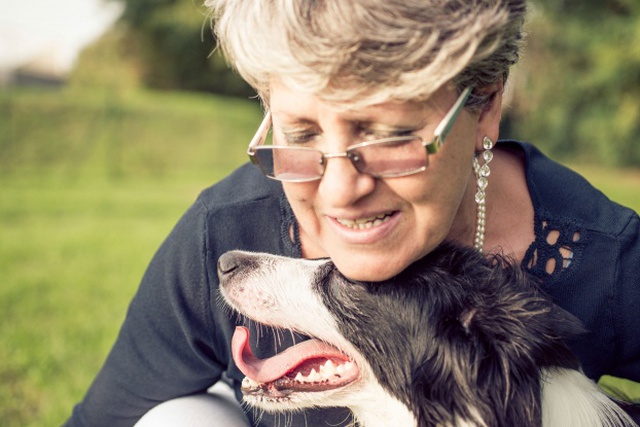
Final Takeaway: Your Dog Is Following Its Nose
When your dog sniffs your private area, the behavior may feel awkward, but it usually has a straightforward explanation: dogs use scent to investigate the world around them.
Body odor, sweat, familiar personal scents, and changes in the environment can all attract a dog's attention. The groin and armpits may be particularly interesting because they can produce distinctive odors.
Your dog is not necessarily being rude, and the behavior does not automatically indicate sexual interest or an ability to detect a medical condition.
If the sniffing becomes intrusive, gentle redirection and consistent training can help. If you notice a genuine health concern, rely on appropriate medical advice rather than trying to interpret your dog's behavior as a diagnosis.
The next time your furry companion approaches and starts sniffing, remember that it is experiencing the world through a sense far more powerful than your own.
You may see an ordinary moment.
Your dog encounters a collection of scents, familiar memories, and new information.
And with a little patience, clear boundaries, and positive training, you can allow your dog to follow its natural instincts while making sure everyone feels comfortable.