If you've ever looked closely at a car's seat belt, you may have noticed a small plastic button attached to the belt near the buckle.
It's easy to overlook.
You may have seen it hundreds of times without ever wondering why it's there. It isn't a switch, it doesn't unlock the belt, and it certainly isn't a decorative feature.
So what exactly does that tiny button do?
The answer is surprisingly simple: it helps keep the seat-belt buckle in a convenient position when the belt isn't being worn.
This tiny piece of plastic is commonly called a stop button, retaining button, or seat-belt stop button. Although it plays a very small role, it makes the seat belt easier to use every day.

What Is the Little Button on the Seat Belt?
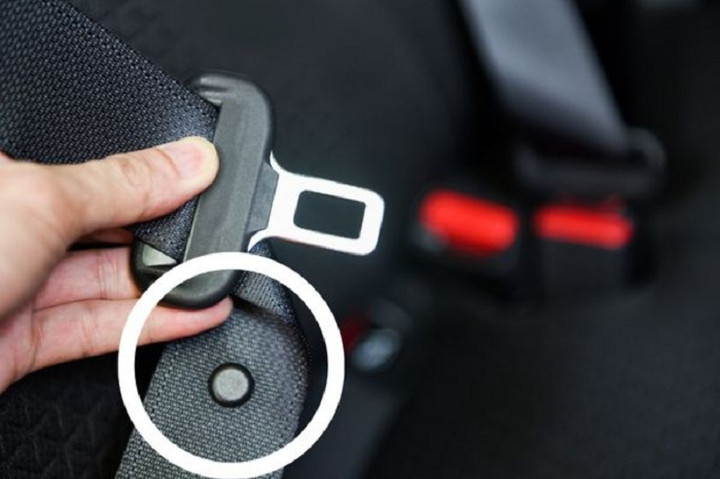
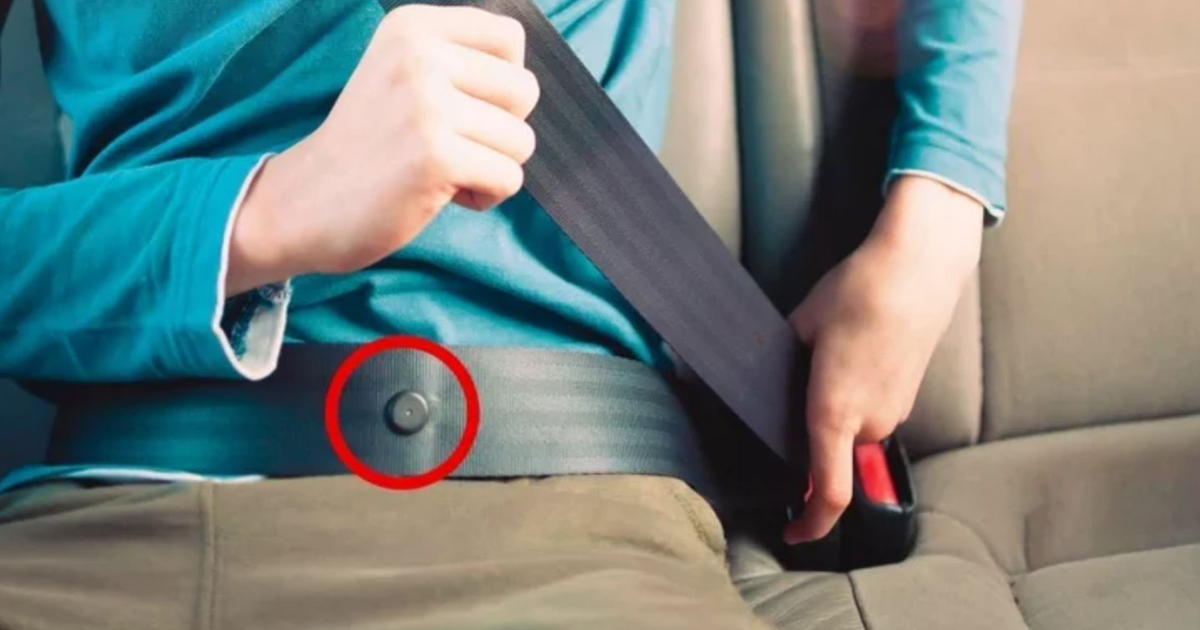
The small button is usually located on the webbing just below the seat-belt buckle.
Depending on the vehicle, it may be round, oval, rectangular, or slightly raised. Its color often matches or contrasts with the belt itself.
The button is attached directly to the seat-belt webbing.
Its main purpose is to stop the buckle from sliding too far down the belt.
Without it, the buckle would be able to move freely along the webbing.
When you unbuckle and release the seat belt, the belt retracts into the vehicle's retractor mechanism. Without a stopping point, the buckle could slide farther down toward the lower anchor or even become awkwardly positioned.
The small button prevents that from happening.
How Does It Work?
The mechanism is incredibly straightforward.
Imagine the seat belt as a long strip of fabric.
The buckle is attached around that strip and can slide along it when the belt is not being used.
The small button acts like a physical barrier.
When the belt retracts, the buckle eventually reaches the button and stops.
That's it.
There is no complicated electronics system hidden inside.
No sensor.
No battery.
No connection to the airbag.
Just a small physical component performing a simple mechanical function.
And that's actually a good example of how automotive engineering often works.
Some of the most useful components are the ones you barely notice.
Why Does the Buckle Need to Be Stopped?
You might wonder why manufacturers don't simply allow the buckle to slide wherever it wants.
The answer comes down to convenience and usability.
If the buckle could slide freely along the belt, it might move into an inconvenient location whenever you released the seat belt.
For example, it could slide toward the lower anchor near the seat.
That would make it harder to grab the next time you got into the vehicle.
You'd potentially have to reach down between the seat and the center console or search around the side of the seat to find it.
The stop button keeps the buckle in a predictable location.
So when you sit down and reach for the belt, the buckle is generally where you expect it to be.
It Helps Prevent the Buckle From Disappearing Down the Belt
Anyone who has ever driven an older vehicle knows how annoying small accessibility problems can be.
A buckle that slides too far away may not seem like a major issue, but imagine having to reach behind you or down beside the seat every time you buckle up.
The stop button prevents that.
It creates a consistent stopping point.
The buckle can move enough to accommodate different seating positions and body sizes, but it cannot simply travel indefinitely along the belt.
This small detail makes the seat belt much more user-friendly.
Is the Button Part of the Seat-Belt Safety System?
This is where it's important to understand the distinction between safety-critical components and convenience components.
The small stop button itself generally isn't what keeps you restrained during a crash.
The actual restraint system includes components such as:
-
Seat-belt webbing
-
Buckle
-
Buckle latch
-
Retractor
-
Pretensioner, where equipped
-
Load limiter, where equipped
-
Anchor points
These components are engineered to manage occupant movement during a collision.
The tiny plastic stop button has a much simpler job.
Its primary function is to position the buckle conveniently.
So while it's part of the overall seat-belt assembly, you shouldn't confuse it with the mechanisms responsible for restraining you during a crash.
What Happens If the Button Breaks?
Because the stop button is usually made from plastic, it can eventually become damaged.
It might crack, loosen, or fall off.
If that happens, the buckle may begin sliding farther down the belt than it normally would.
You may notice that the buckle is no longer sitting in its usual position when you release the belt.
This doesn't necessarily mean the entire seat belt needs to be replaced.
However, because seat belts are critical safety equipment, it's important not to improvise repairs.
Don't use random glue, tape, clips, zip ties, or homemade fasteners to replace a damaged component.
Instead, consult the vehicle manufacturer, dealership, or a qualified automotive safety professional about the correct replacement part.
What If You Don't Have That Button?
Not every seat belt is designed exactly the same way.
Some systems use different methods to control buckle position.
For example, certain seat belts may incorporate a sewn-in feature or another type of stop rather than a separate plastic button.
So if you don't see the familiar little button, that doesn't automatically mean something is missing.
The design can vary between:
-
Vehicle manufacturers
-
Vehicle models
-
Front and rear seating positions
-
Different generations of vehicles
-
Different seat-belt systems
The important thing is that the belt should function as designed by the manufacturer.
There May Be More Than One Small Button
If you inspect a seat belt carefully, you may notice that some belts have more than one small stop or positioning feature.
That's because the belt may have multiple components that need to remain within certain positions.
For example, one stop may control where the buckle rests, while another feature may help position the belt relative to the seat or shoulder area.
The exact arrangement depends on the vehicle and belt design.
So don't assume every little plastic piece on a seat belt has the same function.
Why Is the Button Usually Below the Buckle?
Its position makes perfect sense once you understand its job.
The button is placed on the webbing at a point where it can prevent the buckle from traveling too far.
When the belt is retracted, the buckle moves toward the anchor.
The button eventually contacts the buckle and stops its movement.
This leaves the buckle accessible to the occupant.
The exact position can vary, but the principle remains the same:
The button creates a stopping point for the buckle.
Why Does the Buckle Need to Move at All?
You might think the buckle should simply be fixed in one location.
But allowing some movement helps accommodate different drivers and passengers.
People come in different sizes.
Seats can also be adjusted forward, backward, up, or down.
A sliding buckle provides some flexibility while still remaining within a usable range.
The stop button gives manufacturers a simple way to balance these two needs:
Movement when necessary, but not unlimited movement.
It's a Small Example of Human-Centered Design
One fascinating thing about the button is that most people don't consciously notice it.
That's often a sign that the design is doing its job.
Good everyday engineering tends to disappear into the background.
You don't think about why a door handle is positioned where it is.
You don't think about why a light switch is easy to reach.
And you probably don't think about why your seat-belt buckle stops at a particular point.
But each of these small decisions affects how easily people interact with everyday objects.
The seat-belt stop button is a perfect example.
What You Shouldn't Do With It
Because the button looks so insignificant, some people might assume they can remove it without consequence.
That's not a good idea.
If the button is intact and functioning properly, leave it alone.
It's part of the seat-belt assembly's intended design.
If it has broken or fallen off, don't replace it with an improvised object.
And don't drill, cut, sew, or otherwise modify the seat-belt webbing.
The webbing is a specially engineered restraint material.
Even seemingly small modifications can be inappropriate for a safety-critical component.
Don't Confuse It With the Buckle Release Button
There are actually two very different “buttons” associated with a seat belt.
The large button on the buckle is the release button.
Pressing it allows the metal tongue to come out of the buckle.
The tiny plastic button on the belt is different.
It doesn't release anything.
It simply helps control the position of the buckle on the webbing.
So if you've ever wondered why there is a small button sitting several inches away from the main buckle release, now you know.
They have completely different purposes.
Why Is It Made From Plastic?
The stop button generally doesn't need to withstand the enormous forces that the seat belt's primary restraint components experience during a crash.
Its main job is positioning.
That means it can be made from a relatively small molded component.
Using a lightweight material makes sense because the button doesn't need to perform the same structural function as the webbing, anchors, or buckle.
Again, this is an example of using the right material for the right job.
Does the Button Affect How the Seat Belt Protects You?
Under normal circumstances, the stop button is not the component responsible for determining whether the restraint will hold you during a collision.
However, the complete seat-belt system should always be maintained according to the manufacturer's specifications.
If you notice anything unusual with your belt—such as fraying, cuts, damaged stitching, a malfunctioning buckle, unusual retraction, or a warning light—have it inspected.
A seat belt is one of the most important safety systems in a vehicle.
It's not something to experiment with.
Why Seat Belts Have So Many Small Components
A modern seat belt may look simple from the outside.
It's just a strip of fabric with a buckle.
But behind that simple appearance is a carefully engineered system.
Depending on the vehicle, it may incorporate technologies designed to manage occupant movement and reduce injury risk during a collision.
Some vehicles have pretensioners, which can remove slack from the belt during certain crashes.
Others use load limiters, which are designed to manage the force applied by the belt to the occupant.
The small stop button is nowhere near as sophisticated.
But it demonstrates an important principle:
Even simple systems often depend on many small components working together.
What If the Button Slides Around?
A properly installed stop button should remain securely attached to the belt.
If yours is visibly loose or has shifted from its original location, don't simply assume that's normal.
The exact position matters because it determines where the buckle rests.
If you're uncertain, compare it with the other seat belt in the vehicle or consult the vehicle's service information.
If the component is damaged, a qualified technician can determine whether it needs replacement.
A Tiny Detail You Probably Never Noticed
The funny thing about the seat-belt stop button is that it's been sitting in front of you for years.
You probably reach for your seat belt every time you drive.
You hear the familiar click as the buckle locks.
You pull the belt across your body.
You release it when you arrive.
And yet that tiny plastic button probably never entered your mind.
That's because it quietly performs its job without demanding attention.
It simply keeps the buckle from wandering too far.
The Bigger Lesson Behind This Tiny Button
Everyday objects are full of small design decisions that most people never notice.
A tiny component may exist not because it performs a dramatic function, but because it solves a very specific problem.
In this case, the problem is simple:
How do you keep a sliding seat-belt buckle accessible when the belt isn't being worn?
The answer is a tiny piece of plastic.
No complicated technology.
No hidden electronic system.
Just a small mechanical stop positioned in exactly the right place.
Final Thoughts
The next time you get into your car, take a second to look at your seat belt.
You'll probably notice the large buckle release button immediately.
But look a little farther along the belt and you'll likely find the tiny plastic stop button that you've probably ignored for years.
Its purpose is surprisingly straightforward.
It prevents the seat-belt buckle from sliding too far down the webbing and keeps the buckle in a convenient position for the next use.
It may be one of the smallest parts of the seat-belt assembly, but it makes the everyday experience of buckling up a little easier.
And that's a good reminder that useful engineering doesn't always look impressive.
Sometimes, the smallest pieces are there simply to make sure everything else works the way you expect.