Do you wake up feeling exhausted even after a full night's sleep? Do simple activities like climbing stairs or carrying groceries leave you unusually tired? While fatigue can result from stress, poor sleep, or a busy lifestyle, persistent tiredness may sometimes be a sign of iron deficiency, one of the most common nutritional deficiencies worldwide.
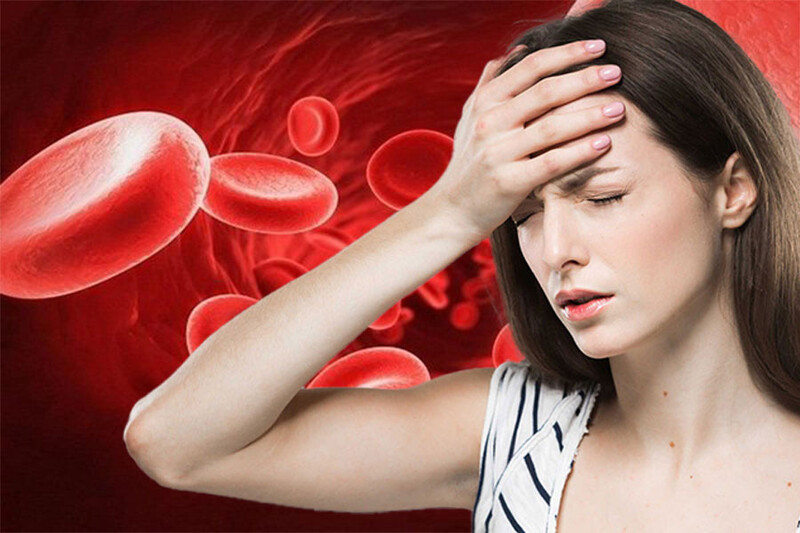
Iron is an essential mineral that plays a critical role in producing hemoglobin—the protein in red blood cells responsible for carrying oxygen throughout the body. When iron levels become too low, your body may struggle to produce enough healthy red blood cells, reducing the amount of oxygen delivered to your tissues. This can affect your energy levels, physical performance, concentration, and overall well-being.
The good news is that iron deficiency is often treatable once the underlying cause is identified. However, because many symptoms develop gradually and can resemble those of other conditions, they are often overlooked.
Here's what you should know about the signs, causes, diagnosis, treatment, and prevention of iron deficiency.
What Is Iron Deficiency?
Iron deficiency occurs when your body doesn't have enough iron to meet its needs.
At first, your body uses iron stored in the liver, bone marrow, and other tissues. As these stores become depleted, the body may struggle to make enough hemoglobin.
If iron deficiency becomes severe enough to reduce hemoglobin levels, it can lead to iron deficiency anemia, the most common type of anemia worldwide.
Not everyone with iron deficiency has anemia. Many people experience symptoms before anemia develops.
Why Is Iron So Important?
Iron supports many essential functions, including:
-
Carrying oxygen through hemoglobin
-
Supporting muscle function through myoglobin
-
Helping produce energy inside cells
-
Supporting normal immune function
-
Contributing to healthy brain function
-
Supporting normal growth and development
Without adequate iron, many organs cannot function as efficiently as they should.
1. Persistent Fatigue
The most common symptom of iron deficiency is ongoing fatigue.
People often describe it as:
-
Feeling drained
-
Low energy throughout the day
-
Needing frequent naps
-
Difficulty finishing everyday tasks
-
Feeling tired despite adequate sleep
Because your tissues receive less oxygen, your muscles and brain may have to work harder to perform routine activities.
Fatigue alone does not diagnose iron deficiency, but persistent unexplained tiredness deserves medical evaluation.
2. Pale Skin
Hemoglobin gives blood its red color.
When hemoglobin levels decrease, skin may appear:
-
Paler than usual
-
Less rosy
-
Duller
Paleness may be most noticeable in:
-
The inside of the lower eyelids
-
The gums
-
The palms
-
The nail beds
Keep in mind that natural skin tone varies widely, so this sign is not always obvious.
3. Shortness of Breath
If you become unusually winded during activities that previously felt easy, iron deficiency may be one possible explanation.
When oxygen delivery decreases, your body compensates by increasing breathing.
Simple activities such as:
-
Walking uphill
-
Climbing stairs
-
Carrying groceries
-
Light exercise
may suddenly feel much harder.
However, heart disease, lung disease, and many other conditions can also cause shortness of breath, so professional evaluation is important.
4. Frequent Headaches
The brain is highly sensitive to changes in oxygen supply.
Some people with iron deficiency experience:
-
Frequent headaches
-
Pressure-like headaches
-
Lightheadedness
-
Dizziness
The exact relationship is complex and not fully understood, but improving iron deficiency may help reduce these symptoms when iron deficiency is the underlying cause.
5. Difficulty Concentrating
Iron supports normal brain function.
Low iron levels may contribute to:
-
Brain fog
-
Poor concentration
-
Reduced attention
-
Difficulty remembering information
-
Lower productivity
Children and adolescents may be particularly vulnerable because iron is important for growth and cognitive development.
6. Cold Hands and Feet
Many people with iron deficiency report feeling unusually cold.
Reduced oxygen delivery and changes in circulation may contribute to:
-
Cold fingers
-
Cold toes
-
Feeling chilled more easily than others
Of course, cold intolerance has many possible causes, including thyroid disorders and poor circulation.
7. Brittle Nails
Iron deficiency may affect nail health in some people.
Possible changes include:
-
Thin nails
-
Nails that break easily
-
Ridges
-
Spoon-shaped nails (koilonychia) in more advanced cases
Although brittle nails are common and often harmless, persistent nail changes should be discussed with a healthcare professional.
8. Hair Thinning or Hair Loss
Hair follicles are among the body's rapidly growing tissues.
When iron stores become depleted, the body may prioritize essential organs over hair growth.
Some people notice:
-
Increased shedding
-
Hair thinning
-
Slower hair growth
Hair loss has many possible causes, including hormonal changes, genetics, thyroid disorders, nutritional deficiencies, and certain medications.
Iron deficiency is only one possible explanation.
9. Restless Legs Syndrome
Research has found an association between iron deficiency and restless legs syndrome (RLS).
People with RLS experience an uncomfortable urge to move their legs, especially:
-
At night
-
During periods of rest
-
While trying to fall asleep
Treating iron deficiency may improve symptoms in some individuals whose iron levels are low.
10. Craving Non-Food Items (Pica)
One of the more unusual symptoms of iron deficiency is pica.
People with pica may crave:
-
Ice
-
Clay
-
Dirt
-
Chalk
-
Paper
-
Laundry starch
The most common form associated with iron deficiency is craving ice, known as pagophagia.
Anyone experiencing these cravings should seek medical evaluation.
Who Is Most at Risk?
Iron deficiency can affect anyone, but certain groups are at higher risk.
Women With Heavy Menstrual Periods
Monthly blood loss is one of the leading causes of iron deficiency.
Pregnant Women
Pregnancy greatly increases iron requirements because of the developing baby and placenta, as well as the mother's expanding blood volume.
Prenatal care typically includes screening and, when appropriate, iron supplementation.
Infants and Young Children
Rapid growth increases iron needs.
Teenagers
Growth spurts and menstruation increase iron requirements during adolescence.
Vegetarians and Vegans
Plant foods contain non-heme iron, which is absorbed less efficiently than the heme iron found in animal products.
A well-planned vegetarian or vegan diet can still provide adequate iron, but extra attention to food choices is important.
Frequent Blood Donors
Regular blood donation temporarily reduces iron stores.
Some donors may benefit from monitoring their iron status, depending on donation frequency and medical advice.
People With Digestive Disorders
Conditions such as:
-
Celiac disease
-
Inflammatory bowel disease
-
Certain stomach surgeries
may reduce iron absorption.
Common Causes of Iron Deficiency
Iron deficiency develops when iron intake or absorption cannot keep up with losses or increased needs.
Possible causes include:
-
Heavy menstrual bleeding
-
Pregnancy
-
Low dietary iron intake
-
Blood loss from the digestive tract
-
Frequent blood donation
-
Poor iron absorption
-
Certain medications
-
Chronic medical conditions
In adults—especially men and postmenopausal women—new iron deficiency often requires evaluation for possible sources of blood loss, including the digestive tract.
How Is Iron Deficiency Diagnosed?
Symptoms alone cannot confirm iron deficiency.
Your healthcare provider may recommend blood tests such as:
-
Complete blood count (CBC)
-
Ferritin
-
Serum iron
-
Total iron-binding capacity (TIBC)
-
Transferrin saturation
Ferritin is particularly useful because it reflects the body's iron stores.
However, ferritin levels can be affected by inflammation, so results must be interpreted in clinical context.
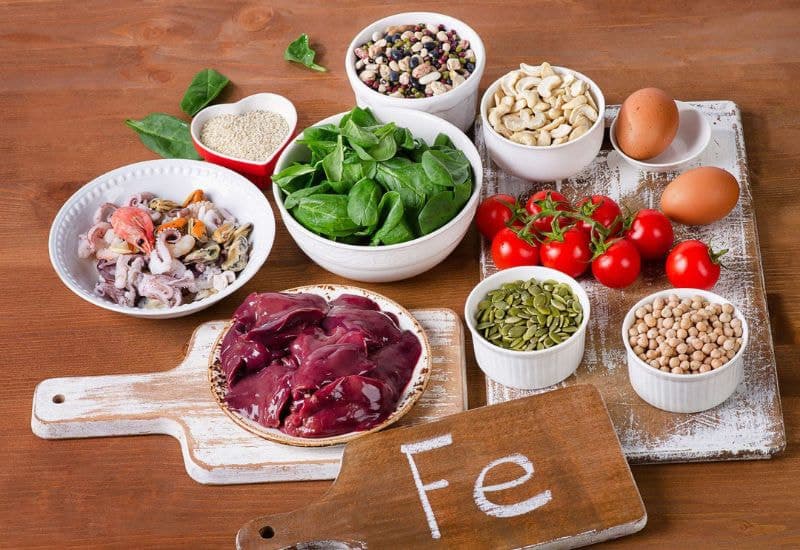
Iron-Rich Foods
Increasing dietary iron is an important part of prevention and treatment for many people.
Heme Iron (More Easily Absorbed)
Found in animal foods such as:
-
Lean beef
-
Liver (eat in moderation and follow pregnancy guidance)
-
Chicken
-
Turkey
-
Fish
-
Shellfish
Non-Heme Iron
Found in plant foods including:
-
Lentils
-
Beans
-
Chickpeas
-
Tofu
-
Spinach
-
Pumpkin seeds
-
Quinoa
-
Fortified breakfast cereals
How to Improve Iron Absorption
Not all dietary iron is absorbed equally.
One of the simplest ways to improve absorption is to combine iron-rich foods with vitamin C.
Examples include:
-
Beans with tomatoes
-
Spinach with bell peppers
-
Fortified cereal with strawberries
-
Lentil soup with lemon juice
Vitamin C helps convert iron into a form that is more readily absorbed.
Foods and Drinks That May Reduce Iron Absorption
Some substances can reduce the absorption of non-heme iron if consumed at the same time.
These include:
-
Tea
-
Coffee
-
Calcium supplements
-
Large amounts of dairy products with iron-rich meals
-
Certain high-fiber bran products
This doesn't mean you must avoid these foods entirely—simply consider consuming them at different times from iron-rich meals if iron deficiency is a concern.
Do You Need Iron Supplements?
Not everyone who feels tired should start taking iron tablets.
Too much iron can be harmful.
Iron supplements should ideally be taken only when recommended by a healthcare professional, based on symptoms, blood tests, and the underlying cause.
Common side effects include:
-
Constipation
-
Nausea
-
Stomach discomfort
-
Dark stools
Your healthcare provider may recommend taking supplements with or without food depending on the product and your tolerance.
Can Iron Deficiency Be Prevented?
In many cases, yes.
Helpful strategies include:
-
Eating a balanced diet with iron-rich foods
-
Pairing plant-based iron sources with vitamin C
-
Attending routine health checkups
-
Managing heavy menstrual bleeding with medical guidance
-
Treating digestive disorders when present
-
Following prenatal care recommendations during pregnancy
When Should You See a Healthcare Professional?
Schedule a medical evaluation if you experience:
-
Persistent fatigue
-
Pale skin
-
Shortness of breath
-
Frequent dizziness
-
Unexplained hair loss
-
Restless legs symptoms
-
Cravings for ice or other non-food items
-
Heavy menstrual bleeding
-
Blood in the stool
-
Black, tarry stools
-
Unexplained weight loss
These symptoms do not necessarily mean iron deficiency, but they deserve professional assessment.
Common Myths About Iron Deficiency
Myth 1: Only Women Develop Iron Deficiency
False.
Although women of reproductive age are at higher risk, men, children, older adults, and postmenopausal women can also become iron deficient.
Myth 2: Feeling Tired Always Means Low Iron
Fatigue has many possible causes, including:
-
Poor sleep
-
Stress
-
Thyroid disease
-
Depression
-
Vitamin deficiencies
-
Chronic illness
Blood testing is necessary for diagnosis.
Myth 3: More Iron Is Always Better
Too much iron can damage organs and may be dangerous, especially for people with hereditary hemochromatosis or those taking unnecessary supplements.
Myth 4: Spinach Alone Can Cure Iron Deficiency
Spinach is nutritious and contains iron, but no single food can quickly correct significant iron deficiency.
Treatment depends on the underlying cause and severity.
Myth 5: Once Your Iron Improves, the Problem Is Solved Forever
Not necessarily.
If the underlying cause—such as ongoing blood loss or poor absorption—is not addressed, iron deficiency may return.
A Day of Iron-Supportive Eating
Here's an example of a balanced day that includes iron-rich foods:
Breakfast
Fortified whole-grain cereal with strawberries and a glass of orange juice.
Lunch
Lentil soup with tomatoes, a spinach salad, and grilled chicken.
Snack
A handful of pumpkin seeds and a kiwi.
Dinner
Grilled salmon with quinoa, broccoli, and roasted bell peppers.
This type of eating pattern provides iron along with vitamin C and many other nutrients that support overall health.
The Bottom Line
Iron deficiency is one of the world's most common nutritional deficiencies, and persistent fatigue is often one of its earliest and most noticeable symptoms.
Other possible signs include pale skin, shortness of breath, headaches, dizziness, brittle nails, hair thinning, restless legs syndrome, difficulty concentrating, and unusual cravings such as chewing ice.
Fortunately, iron deficiency is often treatable. Identifying the underlying cause, eating iron-rich foods, improving iron absorption, and using supplements when medically indicated can help restore healthy iron levels.
Because many conditions can mimic iron deficiency, the only way to confirm the diagnosis is through appropriate medical evaluation and blood testing.
Final Thoughts
Feeling tired all the time isn't something you should simply accept as a normal part of life. While modern schedules, stress, and lack of sleep are common reasons for low energy, persistent fatigue can also be your body's way of signaling an underlying health issue, including iron deficiency.
Pay attention to patterns rather than isolated symptoms. If fatigue is accompanied by pale skin, shortness of breath, dizziness, hair loss, or unusual cravings like chewing ice, it's worth discussing these changes with a healthcare professional.
Most importantly, avoid self-diagnosing or taking iron supplements without guidance. Iron deficiency is highly treatable, but successful treatment begins with understanding why your iron levels are low. Once the cause is identified and addressed, many people experience a significant improvement in their energy, daily functioning, and overall quality of life.