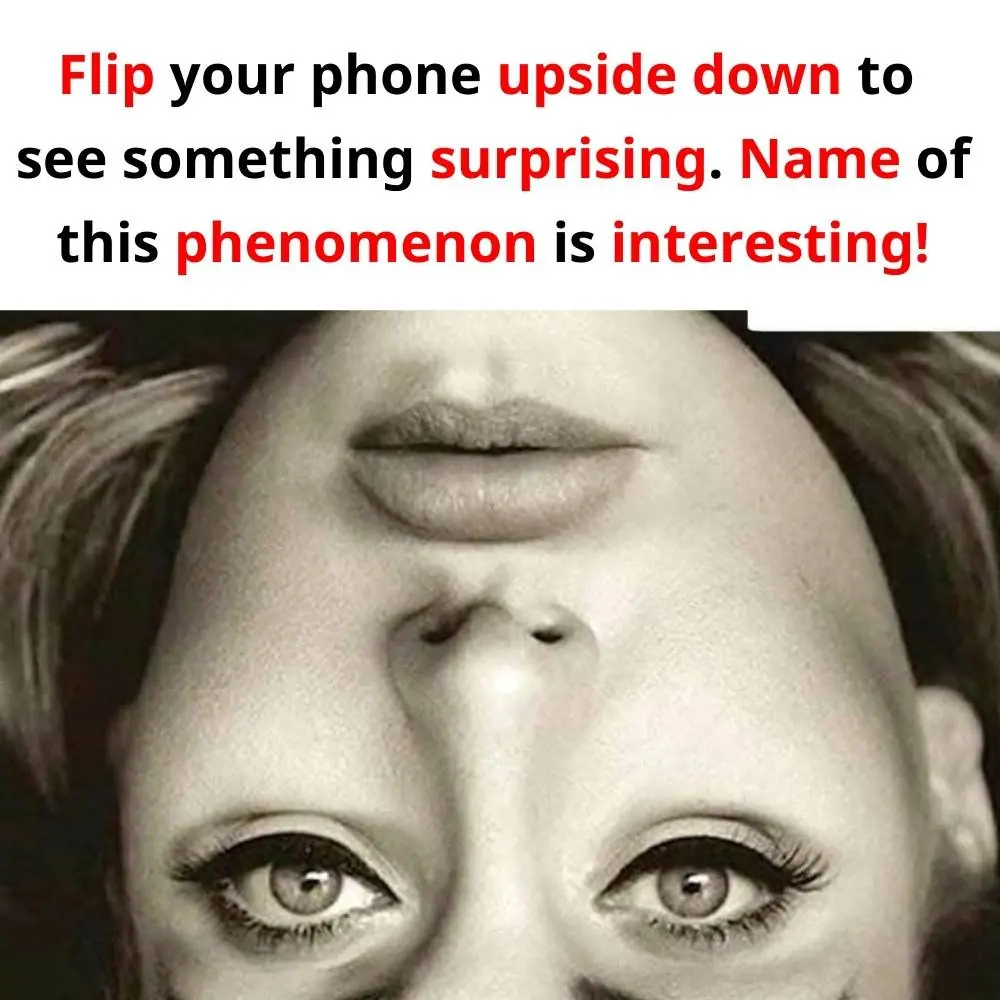
Answer. This is The Thatcher Effect, also known as the Thatcher Illusion.
This is a fascinating visual phenomenon that highlights the unique way humans process facial features. First described by Peter Thompson in 1980, this effect occurs when a face is altered by flipping the eyes and mouth upside down while the rest of the face remains upright. When viewed normally, these distortions appear grotesque and striking. However, when the entire face is turned upside down, the changes become much harder to detect, making the face appear relatively normal. This illusion underscores how our brains are finely tuned to recognize and interpret upright faces, but struggle when faces are inverted.
The Thatcher Effect provides valuable insights into the mechanisms of facial recognition and the specialized role of the human brain’s fusiform face area. It demonstrates that we perceive faces holistically rather than focusing on individual features in isolation. This effect has been used extensively in psychological and neuroscience research to study perception, cognition, and even disorders like prosopagnosia (face blindness). The illusion not only reveals how our brains prioritize facial orientation but also serves as a playful yet profound reminder of the intricacies of human visual processing.