When mosquitoes start buzzing around the house, most people immediately reach for sprays, coils, electric repellents, or other commercial products. These options can certainly be useful, but there is also a much simpler approach that has become popular among people looking for natural ways to make their homes less attractive to mosquitoes.
One of the most common DIY ideas involves something that is already sitting in many kitchens: a lemon.
You may have seen recipes suggesting that cutting a lemon and adding cloves can create a natural mosquito repellent. The idea is appealing because it is inexpensive, easy to prepare, and doesn't require special equipment.
But does this simple trick really work?
The answer requires a little nuance. Lemons and cloves have strong aromas, and certain compounds in these ingredients have insect-repellent properties in laboratory or limited practical settings. However, a homemade lemon-and-clove arrangement should not be considered a reliable replacement for proven mosquito-control methods.
Still, it can be an easy household experiment, especially when combined with other steps that reduce mosquito activity around your home.
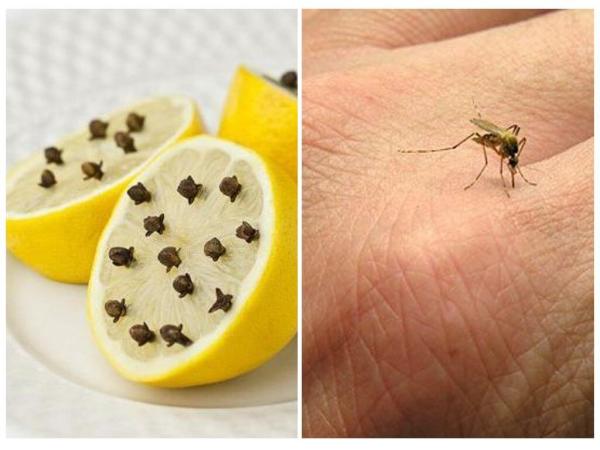
Why Do People Use Lemon to Repel Mosquitoes?
Mosquitoes rely heavily on smell and chemical signals to locate people and other sources of food.
They are attracted by several cues, including carbon dioxide from breathing, body heat, skin odors, and other chemical signals.
Strong scents can interfere with some of these cues or make an area less attractive to certain insects.
Lemon has a fresh, citrusy aroma created partly by volatile compounds found in its peel and juice. Citrus oils are often used in household cleaning products, candles, and insect-repellent formulations because of their strong scent.
However, there is an important distinction between having an odor that mosquitoes may dislike and having a scientifically proven ability to protect people from mosquito bites.
A sliced lemon on a table is not the same thing as a tested insect repellent applied correctly to exposed skin.
Why Are Cloves Often Added?
The classic DIY version of this method usually combines lemon with whole cloves.
Cloves contain aromatic compounds, especially eugenol, which has been studied for insecticidal and repellent effects.
That is one reason clove-based mixtures frequently appear in natural pest-control recipes.
When cloves are pushed into the cut surface of a lemon, the result produces a strong combination of citrus and spice aromas.
The theory is simple: the powerful scent may help make the immediate area less appealing to mosquitoes.
This is a reasonable explanation for why people continue to use the combination, although the effectiveness of a simple lemon-and-clove centerpiece can vary considerably depending on the mosquito species, airflow, concentration, and environment.
How to Make the Lemon-and-Clove Trick
The setup is extremely simple.
Take one fresh lemon and cut it in half. Insert several whole cloves into the exposed surface of each lemon half, spreading them across the surface.
Place the prepared lemon halves in areas where you frequently notice mosquitoes, such as near a doorway, patio table, or open window.
The scent will be strongest when the lemon is fresh.
You can replace the lemon once it begins to dry out, lose its aroma, or show signs of spoilage.
There is no need to make the mixture complicated.
In fact, one of the reasons this DIY method remains popular is that it requires only a couple of inexpensive ingredients.:quality(75)/2023_7_19_638253745724800795_cach-duoi-muoi-bang-chanh-02.jpg)
Where Should You Put It?
Placement matters.
If you are trying the lemon-and-clove method indoors, placing it near areas where mosquitoes might enter can make more sense than putting it in the middle of a room far away from doors or windows.
For outdoor use, the effect is likely to be limited because air movement disperses odors quickly.
A strong breeze can dilute the scent, while a large outdoor space makes it much harder for any homemade aromatic mixture to create a meaningful barrier.
That means this type of DIY solution may be more realistic as a small supplemental measure rather than a complete mosquito-control strategy.
Can Lemon Really Keep Mosquitoes Away?
This is where expectations matter.
Some citrus and clove compounds have demonstrated insect-repellent activity, but that does not mean a sliced lemon placed on a table will prevent mosquitoes from biting everyone nearby.
Natural ingredients can behave very differently depending on how concentrated they are and how they are prepared.
For example, a standardized essential-oil formulation may have a measurable repellent effect under certain conditions, while a fresh lemon with a few cloves may have a much weaker and shorter-lived effect.
So, if you try the lemon trick, think of it as a pleasant-smelling household deterrent that may help in a limited area, not as guaranteed protection against mosquito bites.
Why Mosquito Control Matters
Mosquitoes are more than an annoying summer nuisance.
Depending on where you live, they can transmit diseases such as dengue, malaria, West Nile virus, Japanese encephalitis, chikungunya, yellow fever, and Zika virus.
The actual disease risk varies by region and mosquito species, but the broader point is the same: preventing mosquito bites is important.
That is why homemade methods should be used carefully.
A pleasant-smelling lemon arrangement may be fine as an extra step, but it should not create a false sense of security in places where mosquito-borne disease is a concern.
The Most Effective Way to Use a Natural Approach
The smartest strategy is to combine simple household measures rather than relying on one ingredient.
Start by reducing places where mosquitoes can breed.
Mosquitoes can lay eggs in surprisingly small amounts of standing water. Check plant saucers, buckets, outdoor containers, clogged drains, children's toys, birdbaths, gutters, and other objects that can collect rainwater.
Emptying or covering standing water regularly can make a much bigger difference than relying on scent alone.
Inside the home, screens on windows and doors can also help prevent mosquitoes from entering.
Fans may provide another practical layer of protection because moving air can make it harder for mosquitoes to fly and land on people.
Try Using a Fan Too
One of the simplest overlooked mosquito strategies is airflow.
Mosquitoes are relatively weak fliers, and a fan can create enough air movement to interfere with their ability to approach and land.
That makes a fan particularly useful around a bed, desk, dining area, or outdoor seating area.
Unlike many homemade scent-based solutions, a fan does not depend on the mosquito disliking a particular smell.
Combining a fan with other measures may therefore be a more practical strategy than relying solely on lemon and cloves.
What About Lemon Juice on the Skin?
This is something people should not casually experiment with.
Applying lemon or other citrus juice directly to the skin can cause irritation in some people. More importantly, certain citrus substances can make skin more sensitive to sunlight and may contribute to a skin reaction after sun exposure.
For that reason, a homemade lemon mixture should not be treated as a skin-applied mosquito repellent simply because it smells strong.
When skin protection is needed, use an insect repellent that has been appropriately tested and is labeled for that purpose.
Be Careful With Essential Oils
Natural does not automatically mean risk-free.
People sometimes take the lemon-and-clove idea further by making concentrated essential-oil mixtures and applying them directly to the skin.
That can be problematic because essential oils are highly concentrated substances.
They may cause skin irritation, allergic reactions, or other problems when used incorrectly. Some essential oils are also unsuitable for young children or animals.
A product being plant-based does not automatically make it safe for every person, every concentration, or every route of exposure.
Could This Trick Work Better at Night?
Many mosquitoes are most active during specific times of day, depending on the species.
Some species are particularly active around dawn and dusk, while others can bite during daytime hours.
That means there is no single “mosquito hour” that applies everywhere.
If you notice mosquito activity in the evening, placing your lemon-and-clove arrangement in the area where people are sitting may at least make the experiment more relevant.
But remember that airflow, temperature, mosquito species, and surrounding breeding sites can all affect the result.
Keep the Lemon Fresh
A homemade repellent setup is only as useful as the ingredients inside it.
As the lemon dries, its aroma changes and weakens.
A moldy or spoiled lemon should obviously be discarded.
If you are using the trick indoors, keep it on a plate or another easy-to-clean surface and replace it as needed.
There is no advantage in keeping an old lemon around simply because it is still sitting in the same place.
What Other Natural Methods Can Help?
There are several additional measures that can reduce mosquito exposure without turning your home into a chemical fog.
Wear long sleeves and long pants when mosquitoes are especially active.
Use window and door screens and repair holes promptly.
Sleep under a mosquito net in settings where mosquito exposure is high.
Use air conditioning when available because cooler, screened indoor environments generally reduce mosquito contact.
Most importantly, eliminate standing water around your home as regularly as possible.
Plants and herbs are sometimes promoted as mosquito repellents, but simply growing a strongly scented plant is usually not enough to create dependable protection.
The same principle applies to the lemon trick.
Why Simple DIY Tricks Are So Popular
There is a reason people enjoy household remedies like this.
They are affordable. They are easy to understand. They can be prepared in minutes. And unlike complicated pest-control systems, they feel accessible to almost anyone.
A lemon-and-clove arrangement also has another advantage: it does not look like a pest-control device.
Instead, it looks like a simple kitchen or decorative item.
For someone dealing with occasional mosquitoes around a dining table or patio, that convenience may be part of the appeal.
But convenience should not be confused with proven effectiveness.
A Better Way to Think About the Lemon Trick
The most realistic perspective is this:
A lemon-and-clove setup may help create a strong scent that mosquitoes may find unpleasant, but its effectiveness is limited and inconsistent.
It can be used as a supplemental household measure, especially in a small area.
It should not be relied upon as the only defense against mosquitoes.
A combination of environmental control, physical barriers, airflow, appropriate clothing, and proven insect repellents provides a much stronger strategy.
When to Take Extra Precautions
Extra caution is particularly important in regions experiencing outbreaks of mosquito-borne disease.
If local public-health authorities are advising people to use insect repellent, wear protective clothing, eliminate standing water, or stay indoors during peak mosquito activity, those recommendations should take priority over DIY remedies.
Pregnant people, young children, older adults, and individuals with certain health conditions may also need to be especially careful depending on which mosquito-borne diseases are circulating locally.
When disease risk is high, convenience should never outweigh reliable protection.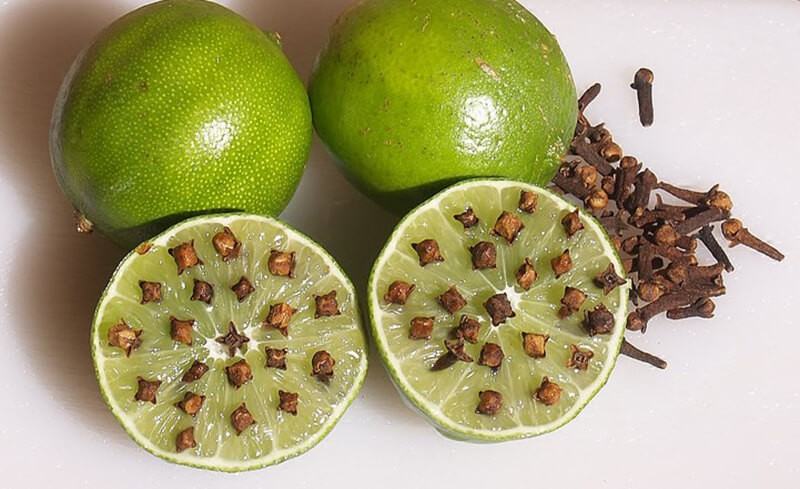
The Bottom Line
The lemon-and-clove mosquito trick is one of those simple household remedies that continues to attract attention because it is inexpensive, easy, and pleasant-smelling.
Lemon provides a strong citrus aroma, while cloves contain compounds such as eugenol that have been studied for insect-repellent properties. These characteristics may help make a small area less appealing to mosquitoes, but a homemade lemon arrangement has not been established as a dependable substitute for proven mosquito repellents.
The best approach is to combine the trick with measures that actually reduce mosquito exposure: remove standing water, use screens, keep air moving with fans, wear protective clothing, and use a registered or appropriately labeled insect repellent when necessary.
So go ahead and try the lemon-and-clove idea as a simple household experiment - but keep your expectations realistic.
Sometimes the smartest “natural solution” isn't about finding one magical ingredient.
It is about using several small, practical strategies together to make your home a less inviting place for mosquitoes.