You cut into a potato expecting to find the familiar creamy, pale flesh you have seen countless times before. Instead, a dark or black ring appears just beneath the skin or farther inside the potato.
At first, it can be alarming.
Is the potato spoiled? Is it safe to eat? Did something grow inside it? Should the entire potato go straight into the trash?
A dark ring inside a potato can have several possible causes, and not every discoloration means the potato is dangerous. The appearance, texture, smell, and extent of the discoloration all matter.
Understanding why these unusual marks develop can help you make a more informed decision before cooking or eating the potato.
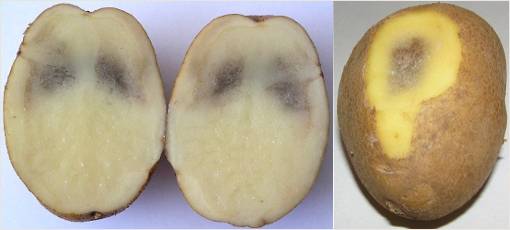
What Does a Black Ring Inside a Potato Mean?
A dark ring or band inside a potato is usually a sign that something has affected the potato's internal tissue.
Potatoes are living plant organs, and changes can occur during growing, harvesting, storage, transportation, or handling. Internal discoloration may result from physiological stress, bruising, disease, oxidation, or deterioration.
Sometimes the discoloration is limited to a small area.
Other times, a dark ring may be accompanied by soft tissue, unpleasant odors, moisture, or visible decay.
That's why the color alone shouldn't be the only factor you consider.
A dark ring is a clue—not a diagnosis.
1. It Could Be Internal Bruising
One relatively common explanation for unusual dark areas inside potatoes is internal bruising.
Potatoes can be damaged even when their outer skin looks perfectly normal.
They may be dropped, squeezed, piled under heavy weight, or subjected to rough handling during harvesting, transportation, or storage.
The damage doesn't always appear immediately on the outside.
Instead, internal tissues can become discolored over time.
Depending on the severity of the damage, the affected flesh may appear gray, brown, blue-gray, or nearly black.
In some cases, the discoloration forms a ring or irregular patch.
If the surrounding potato is firm and smells normal, the affected section may simply be removed before the rest is prepared.
However, if the potato is extensively damaged or deteriorated, discarding it is the safer option.
2. Storage Conditions Can Also Play a Role
Potatoes are particularly sensitive to their storage environment.
Temperature, humidity, ventilation, and exposure to light can all influence their quality.
If potatoes are stored under unfavorable conditions for extended periods, their internal appearance may change.
Poor ventilation and excessive moisture can encourage deterioration and microbial growth.
On the other hand, very cold conditions can alter the potato's chemistry and texture.
Afterward, the potato may develop unusual coloration or cooking characteristics.
This is one reason proper storage matters so much.
A potato that has been kept for a long time in a warm, damp, poorly ventilated location is more likely to show quality problems than one stored under appropriate conditions.
3. Natural Internal Discoloration Can Happen
Not every unusual color is necessarily caused by rot.
Potatoes can experience physiological changes while they are growing or after harvest.
Environmental stress, nutritional conditions, temperature fluctuations, and other factors can affect the development of the tuber.
Sometimes these changes produce internal defects that become visible only after the potato is cut open.
This can be particularly surprising because the outside may look completely normal.
You might see a smooth, clean potato sitting in the kitchen and assume the inside will look exactly as expected.
Then the knife reveals something completely different.
That's why cutting open a potato is often the only way to discover certain internal defects.

4. Disease or Decay Is Another Possibility
A dark ring can sometimes indicate that the potato has been affected by disease or deterioration.
This becomes more concerning when the discoloration isn't the only unusual feature.
Pay attention to the potato's texture and smell.
If the flesh is:
-
Soft or mushy
-
Wet or leaking
-
Slimy
-
Collapsing
-
Covered in extensive dark areas
-
Associated with an unpleasant or rotten odor
it's best not to eat it.
A potato showing obvious signs of decay isn't worth trying to salvage.
When in doubt, throwing away one questionable potato is a much better choice than taking unnecessary food-safety risks.
What If the Potato Is Green?
A black ring shouldn't be confused with green discoloration.
Green areas on potatoes are associated with exposure to light and may indicate increased levels of naturally occurring glycoalkaloids, including solanine.
These compounds are part of the potato plant's natural defense system.
A small green area can sometimes be removed generously, but potatoes that are extensively green, bitter, or otherwise abnormal are better discarded.
The important point is that green coloration and a dark internal ring are not automatically the same phenomenon.
Different types of discoloration can have very different causes.
Does a Black Ring Automatically Mean the Potato Is Poisonous?
No.
This is one of the most important points to understand.
Seeing a dark ring inside a potato does not automatically prove that the potato contains a dangerous level of toxins.
The appearance could be related to bruising, physiological changes, storage damage, or deterioration.
However, you shouldn't assume that every dark ring is harmless either.
The safest approach is to evaluate the potato as a whole.
Ask yourself:
Does it smell normal?
Is the flesh firm?
Is the discoloration localized or widespread?
Is there visible mold or decay?
Does the potato look unusually wet or slimy?
These observations can help you decide whether the potato appears suitable for use.
What Should You Do If You Find a Dark Ring?
If you discover a small, localized dark area inside an otherwise firm, normal-smelling potato, you can inspect the surrounding flesh carefully.
Cut away the affected portion generously.
Then examine what remains.
If the rest of the potato looks normal, is firm, and has no unpleasant odor or signs of decay, it may be suitable for cooking.
But if the discoloration extends through a large portion of the potato, or if the potato has become soft, rotten, moldy, or foul-smelling, discard the entire potato.
There's no need to take chances over one inexpensive ingredient.
Why You Shouldn't Just Ignore Unusual Texture
Color gets most of the attention, but texture can actually provide important clues.
A potato that has a dark spot but remains firm may be experiencing a different issue from a potato that is blackened, wet, and mushy.
Likewise, a normal-looking potato that smells strongly unpleasant shouldn't be considered safe simply because its skin looks fine.
Food deterioration isn't always obvious from one characteristic.
Look at the entire potato.
Color, firmness, smell, moisture, mold, and the extent of the affected area all provide useful information.
Can You Prevent These Problems?
You can't prevent every internal defect, because some problems develop before the potato ever reaches your kitchen.
However, good storage practices can help preserve quality.
Keep potatoes in a cool, dark, dry, well-ventilated location.
Avoid storing them in direct sunlight.
Don't keep them in an excessively warm or damp area.
It's also helpful to avoid unnecessary rough handling. Bruising can happen when potatoes are dropped or compressed under heavy objects.
And don't wash potatoes until you're ready to use them if you're storing them for a while. Excess surface moisture can contribute to deterioration.
Don't Store Potatoes in the Wrong Place
A common mistake is leaving potatoes wherever there happens to be space.
The refrigerator isn't always ideal for potatoes because cold temperatures can affect their starches and cooking properties.
At the same time, keeping them in a warm cupboard for months isn't a great solution either.
The goal is a stable environment that protects them from excessive heat, moisture, and light.
A breathable container or paper bag can be preferable to an airtight plastic bag because ventilation helps reduce moisture accumulation.
What About Sprouted Potatoes?
Sprouting is another sign that a potato is aging.
A few small sprouts don't necessarily mean the entire potato has immediately become unsafe.
However, sprouts and the surrounding eyes can contain higher concentrations of glycoalkaloids.
If a potato is heavily sprouted, green, shriveled, bitter, or otherwise deteriorated, it's better to discard it.
Again, one visual feature shouldn't be considered in isolation.
The overall condition matters.

Why Potatoes Sometimes Surprise Us
One reason these discoveries are so unsettling is that potatoes usually look incredibly predictable.
You buy one from the supermarket.
It looks brown or yellow on the outside.
You wash it, cut it open, and expect smooth, pale flesh.
So when you encounter a black ring, hollow area, strange cavity, or unexpected discoloration, it can feel as though something is seriously wrong.
But agricultural products naturally vary.
They can experience environmental stress, physical damage, disease, and storage changes before reaching the consumer.
Some of these problems remain hidden until the potato is sliced.
The Best Rule: When in Doubt, Throw It Out
There is no prize for rescuing a questionable potato.
If the potato has a small, isolated defect and otherwise looks and smells normal, you may be able to remove the affected portion.
But if you're unsure what you're seeing—or if the potato shows several signs of deterioration—it's safer to discard it.
This is especially true when there is mold, extensive decay, a strong unpleasant odor, significant softness, or widespread discoloration.
Food safety is not the place to gamble.
A Strange Ring Can Have a Simple Explanation
Finding a black ring inside a potato can definitely be surprising.
But it doesn't automatically mean you've discovered something toxic or dangerous.
The discoloration could be related to bruising, storage conditions, physiological changes, or deterioration, and the correct interpretation depends on the potato's overall condition.
The most useful habit is to look beyond the color.
Check the texture.
Smell it.
Look for moisture, mold, and other signs of spoilage.
Consider how long it has been stored and where it was kept.
And if the potato looks or smells seriously abnormal, don't try to convince yourself that it's still worth eating.
The Bottom Line
A potato with a mysterious black ring can certainly make you pause before dinner—but a dark ring alone isn't enough to determine exactly what happened.
Some internal discolorations are associated with physical damage or natural physiological changes, while others can indicate deterioration or disease.
If the affected area is small and the remaining potato is firm, normal-smelling, and otherwise healthy-looking, removing the questionable section may be reasonable.
If the potato is mushy, slimy, moldy, foul-smelling, extensively discolored, or otherwise clearly deteriorated, throw it away.
The next time you slice into a potato and discover something unexpected inside, don't panic. Take a closer look, consider the potato's overall condition, and remember that what looks alarming at first isn't always as mysterious—or as dangerous—as it appears.