Nighttime Bathroom Trips? What Waking Up to Urinate Could Be Telling You
Waking up once in the middle of the night to use the bathroom may seem harmless.
But when it becomes a regular pattern—night after night—it can be your body’s way of signaling that something deeper is going on. This condition, known medically as nocturia, is more than just an inconvenience. It disrupts sleep, drains energy, and in some cases, points to underlying health issues that should not be ignored.
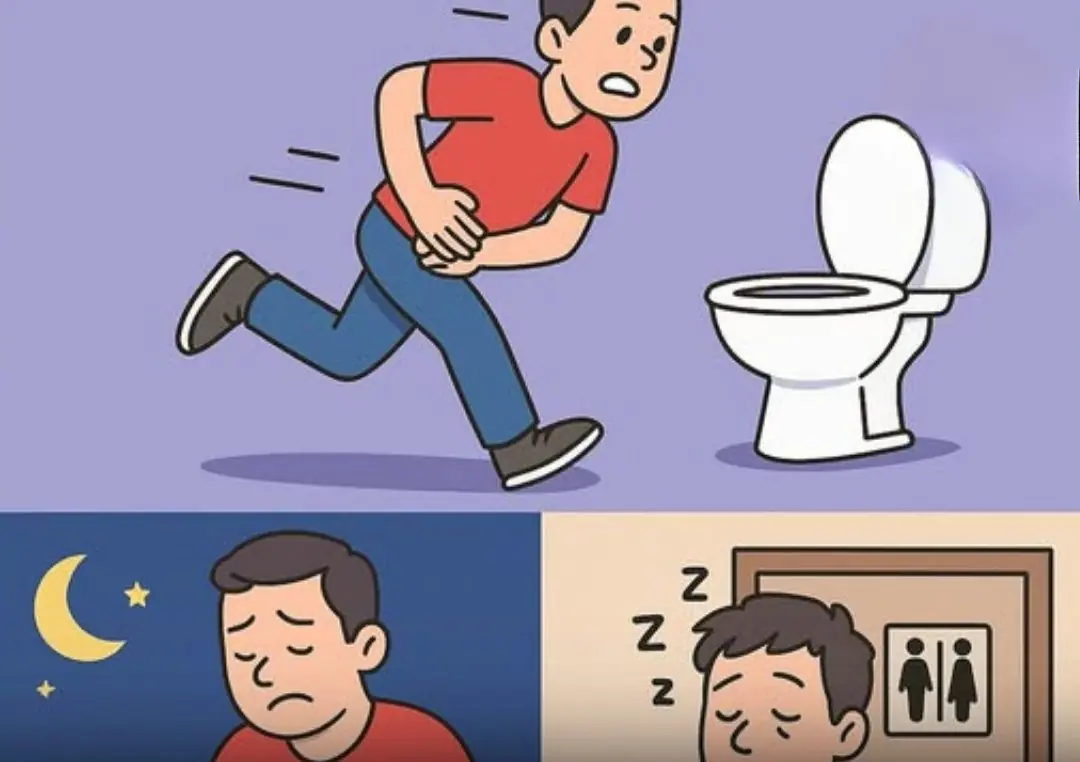
The image above captures a familiar but often overlooked scenario: interrupted sleep, urgency, and fatigue. Understanding why this happens is the first step toward protecting your long-term health.
What Is Nocturia?
Nocturia is defined as waking up one or more times during the night to urinate. While it becomes more common with age, it is not a normal or inevitable part of getting older—especially when it happens frequently.
For most healthy adults, the body naturally produces less urine at night. When that balance is disrupted, the bladder fills more quickly, forcing repeated trips to the bathroom and breaking the body’s natural sleep cycle.
1. Poor Sleep Quality and Chronic Fatigue
One of the earliest consequences of nocturia is fragmented sleep. Each interruption prevents the body from reaching deep, restorative sleep stages. Over time, this can lead to daytime drowsiness, poor concentration, irritability, and reduced productivity.
Many people blame stress or aging, without realizing that frequent nighttime urination is the real cause behind their constant exhaustion.
2. Excess Fluid Intake in the Evening
Drinking large amounts of water, tea, alcohol, or caffeinated beverages in the evening can overwhelm the bladder at night. Alcohol and caffeine are especially problematic because they act as diuretics, increasing urine production while also irritating the bladder.
If nocturia improves when evening fluid intake is reduced, lifestyle habits may be the primary trigger.
3. Bladder or Prostate Issues
In men, an enlarged prostate can restrict urine flow, making it difficult to fully empty the bladder. This results in frequent urges to urinate, especially at night when the body is at rest.
In both men and women, conditions such as overactive bladder, bladder infections, or reduced bladder capacity can cause sudden urgency, even when the bladder is not full.
4. Diabetes and Blood Sugar Imbalance

One of the most important—and often missed—causes of nocturia is diabetes. When blood sugar levels are high, the kidneys work overtime to filter excess glucose, producing more urine in the process.
Frequent nighttime urination combined with increased thirst, unexplained weight changes, or fatigue should prompt immediate medical evaluation.
5. Heart and Circulatory Conditions
During the day, fluid can accumulate in the legs and feet due to gravity. When you lie down at night, this fluid re-enters the bloodstream and is processed by the kidneys, leading to increased urine production.
This pattern is common in people with heart disease, venous insufficiency, or high blood pressure, and nocturia may be an early warning sign.
6. Sleep Apnea
Sleep apnea is a serious condition in which breathing repeatedly stops during sleep. These breathing interruptions trigger hormonal changes that increase urine production at night.
Many people with sleep apnea are unaware of the condition, assuming their nighttime bathroom trips are unrelated. In reality, nocturia can be one of its most consistent early symptoms.
7. Hormonal Changes With Age
As we age, the body produces less antidiuretic hormone (ADH) at night—the hormone responsible for reducing urine output during sleep. This shift can cause the kidneys to produce more urine overnight.
While age-related changes play a role, they should not automatically be accepted without ruling out other causes.
8. Medications
Certain medications, including diuretics, blood pressure drugs, and some antidepressants, can increase nighttime urination. When taken later in the day, their effects may peak during sleep hours.
Adjusting medication timing—under medical guidance—can sometimes significantly reduce nocturia.
When Should You Be Concerned?
You should seek medical advice if you:
-
Wake up to urinate two or more times per night
-
Experience sudden changes in urination patterns
-
Have nocturia along with pain, burning, swelling, or fatigue
-
Feel constantly tired despite adequate time in bed
Nocturia is not just a bladder issue—it is often a whole-body signal.
The Bottom Line
Your body speaks quietly before it speaks loudly.
Frequent nighttime bathroom trips are easy to dismiss, but they may be an early message from your heart, hormones, metabolism, or nervous system.
Listening early can prevent bigger problems later.
If nighttime urination is disrupting your sleep, don’t ignore it. Your health—and your rest—depend on paying attention.