Dry, cracked heels can start as a minor cosmetic annoyance and gradually become much harder to ignore.
At first, the skin may simply feel rough when you run your hand over it. Then the heels can become thick, flaky, or visibly dry. Eventually, deeper cracks may develop around the edges, making walking barefoot uncomfortable.
If you've ever dealt with stubborn heel cracks, you've probably tried everything from foot creams and pumice stones to complicated home remedies.
But sometimes, the simplest approach is also one of the most practical:
Soften the skin first, gently remove only the excess thickened skin, and then lock in moisture.
One of the easiest ways to do this at home is with a warm-water foot soak followed by a thick moisturizer or petroleum jelly.
It isn't an overnight cure, and it won't fix every cause of cracked heels. But used consistently and correctly, this basic routine can help improve the appearance and feel of dry, rough skin.
Here's how it works.
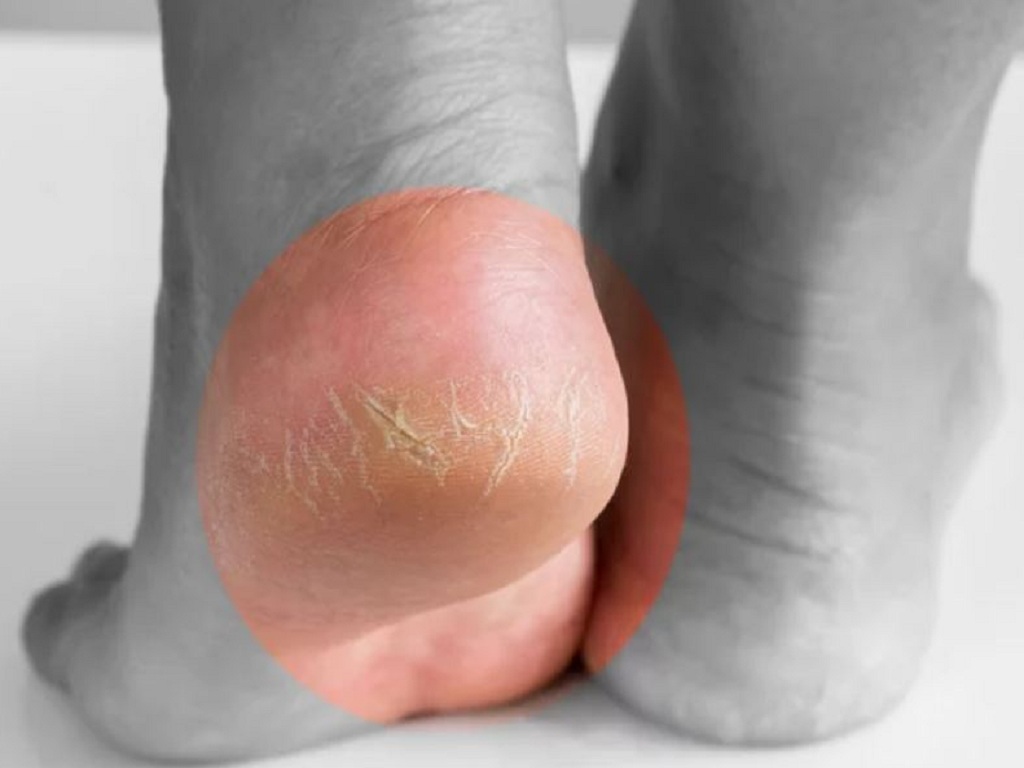
Why Do Heels Become So Thick and Dry?
The skin on your heels is naturally different from the skin in many other areas of your body.
Your feet experience constant pressure from standing, walking, and friction from footwear.
Over time, that repeated stress can cause the outer layer of skin to become thicker.
This thickened skin is often called a callus.
Calluses aren't necessarily a sign that something is wrong. They're often the body's response to repeated pressure or friction.
The problem occurs when the skin becomes excessively dry and loses flexibility.
Instead of stretching comfortably as you walk, the thickened skin can begin to split.
That's when cracks appear.
The Simple Solution: Moisture + Occlusion
If the goal is to make dry heels softer, one of the most useful approaches is surprisingly simple.
You need two things:
A moisturizer that adds hydration.
And:
Something that helps prevent that moisture from escaping.
Petroleum jelly is particularly useful as an occlusive because it forms a protective layer over the skin.
Rather than adding large amounts of water to the skin itself, it helps reduce water loss from the outer skin layer.
That's why applying it after bathing or soaking can be helpful.
Step 1: Start With a Warm Foot Soak
Begin by soaking your feet in comfortably warm water for approximately 10–15 minutes.
The purpose isn't to "detox" your feet.
It is simply to soften the hardened outer layer of skin.
You don't need extremely hot water.
In fact, very hot water can strip natural oils from the skin and potentially make dryness worse.
Comfortably warm water is enough.
Step 2: Dry Your Feet Carefully
After soaking, gently pat your feet dry.
Don't aggressively rub the heels with a rough towel.
And pay attention to the spaces between your toes.
Keeping the skin between the toes dry is particularly important because excessive moisture in those areas can encourage fungal growth.
The heels, however, can benefit from retaining some moisture.
Step 3: Gently Smooth Thick Skin
If your heels have a thick callus, you can gently use a pumice stone or foot file.
But there's an important rule:
Don't try to remove all the thick skin in one session.
Aggressive scraping can cause tiny injuries and make the skin more irritated.
Instead, use gentle pressure and remove only loose or excessive dead skin.
If the area hurts, stop.
You should never have to scrape until the skin is pink, raw, or bleeding.
Step 4: Apply a Thick Moisturizer
This is where the routine becomes particularly useful.
Apply a thick moisturizer to the heel while the skin is still slightly damp.
Look for products containing ingredients commonly used for dry, thickened skin, such as:
-
Urea
-
Lactic acid
-
Salicylic acid
-
Ceramides
-
Glycerin
-
Petrolatum
Different ingredients work in different ways.
Some help soften thickened skin.
Others improve hydration.
Some help strengthen the skin barrier.
You don't necessarily need a complicated product.
A basic, fragrance-free moisturizer can be a good starting point.
Step 5: Seal It With Petroleum Jelly
For extremely dry heels, a thin layer of petroleum jelly can be applied over the moisturizer.
This creates an occlusive layer that helps reduce moisture loss.
The idea is simple:
Moisturize → seal → allow the skin to recover.
You can do this before bed so the product has several hours to remain on the skin.
Why Socks Can Make the Routine More Effective
After applying your moisturizer and petroleum jelly, putting on a pair of clean cotton socks can help keep the product in place.
It also prevents petroleum jelly from getting all over your bedding.
Choose socks that aren't excessively tight.
You don't want to create additional pressure or friction around already-irritated heels.
This overnight routine can be repeated regularly until the skin becomes softer and the cracks improve.
Don't Expect Results After One Night
One of the biggest problems with online foot-care advice is unrealistic expectations.
Thick, cracked skin didn't usually develop overnight.
It may take time to improve.
If the cause is dryness and mechanical pressure, consistent moisturizing and reducing friction may gradually make the heels feel smoother.
But if the cracks are caused by an underlying skin condition, fungal infection, diabetes-related foot problems, or another issue, moisturizing alone may not be enough.
Consistency matters more than intensity.
What About Lemon Juice?
Lemon juice is frequently recommended as a home remedy for rough heels.
But there is little reason to use an acidic kitchen ingredient when safer moisturizing options are available.
Lemon juice can irritate already cracked skin.
And if there are open fissures, applying acidic substances can cause significant stinging.
You don't need to burn or peel the skin to make it smoother.
What About Baking Soda?
Baking soda is another popular DIY treatment.
It may temporarily make skin feel different, but aggressive scrubbing can irritate the skin barrier.
If your heels are already cracked, excessive exfoliation may make the problem worse.
A gentle moisturizer and controlled exfoliation are generally more sensible than repeatedly scrubbing the area with abrasive mixtures.
What About Mouthwash Soaks?
Some viral foot-care recipes recommend soaking feet in mouthwash.
Although these recipes may produce an unusual sensation and temporarily alter the appearance of the skin, they're not necessary for basic heel care.
Some mouthwashes contain ingredients that may irritate sensitive or cracked skin.
There's no need to use a household product simply because a viral video claims it can transform your feet.
The Real Enemy May Be Friction
Moisturizing is only half the solution.
If your heels are constantly exposed to friction and pressure, they may continue becoming thick even if you use an excellent moisturizer.
Certain shoes can contribute.
Open-back footwear, for example, may allow the heel to move and rub more while walking.
Hard surfaces and prolonged standing can also increase pressure.
If possible, choose shoes that fit properly and provide appropriate support.
Flip-Flop Calluses Are a Real Problem for Some People
Flip-flops are convenient, especially during warm weather.
But wearing them frequently can contribute to friction and pressure around the heel.
The lack of support may also change how your foot interacts with the ground.
This doesn't mean flip-flops are inherently harmful.
It simply means that if you already have severe heel cracking, switching periodically to supportive, well-fitting footwear may reduce mechanical stress.
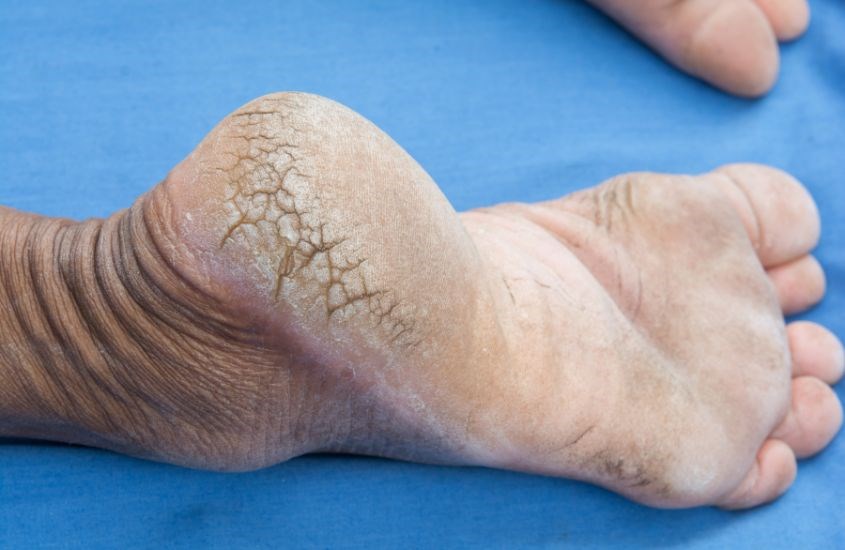
Don't Cut Your Calluses With a Razor
This deserves special attention.
When people see thick skin, they may be tempted to cut it off themselves.
Using razors, knives, scissors, or other sharp tools on the heel is risky.