A homeowner could potentially enjoy swimming during colder months without leaving the property or waiting for the next summer season.
The pool also introduces a distinctive architectural element.
The available photographs of the estate's indoor pool show a striking room with a glass roof, large arched windows, tiled surfaces, and a substantial swimming area. Natural light enters through the glazing, creating reflections across the water and surrounding architectural details.
Pricey Pads+1
It is an unusual combination of leisure and architecture.
Rather than placing a pool in an ordinary enclosed room, the design creates an environment that feels connected to the outdoors.
A Glass-Roofed Space Filled With Natural Light
One of the most visually interesting elements of the pool area is its glazed roof.
Glass overhead changes the atmosphere of an indoor swimming space.
Instead of feeling enclosed beneath a conventional ceiling, the room can receive natural light from above.
During daylight hours, sunlight can illuminate the water and surrounding surfaces.
The reflections can create a constantly changing visual effect as the light moves throughout the day.
Large windows also contribute to the feeling of openness.
The pool area becomes a place where the occupants can enjoy the atmosphere of an outdoor environment while remaining protected from the weather.
The arched windows add another architectural layer.
Their curved forms contrast with the straight lines of the pool and tiled flooring.
This creates a sense of visual rhythm across the room.
The overall impression is closer to a conservatory or traditional garden pavilion than to a typical indoor swimming facility.
That distinction matters because the pool appears to have been conceived as part of the estate's broader architectural experience.
It is not simply an additional piece of equipment.
It is a dedicated space with its own character.
The glass roof, windows, walls, and pool work together to create an environment that feels different from the rest of the house.
For a property built in 1933, this feature also illustrates the ambition associated with large private estates during that period.
A swimming pool inside a private residence was not an ordinary household amenity.
It required additional construction, specialized equipment, and ongoing maintenance.
Its presence suggests that the original design placed considerable emphasis on leisure and private recreation.
The Practical Side of Owning an Indoor Pool
An indoor swimming pool may look impressive in photographs, but its maintenance requirements deserve serious consideration.
Water temperature, air temperature, humidity, ventilation, and filtration all need to be managed carefully.
Unlike an outdoor pool, an indoor pool operates within an enclosed environment.
Water naturally evaporates, increasing humidity in the surrounding air.
If that moisture is not controlled properly, it can affect building materials and create condensation on windows, walls, and structural components.
Over time, poor humidity management can contribute to deterioration.
This is particularly important in an older mansion.
A historic property may contain original woodwork, plaster, masonry, and decorative finishes that need protection from excess moisture.
The pool area therefore requires more than routine cleaning.
Its mechanical systems need to work together to maintain an appropriate environment.
Heating is another consideration.
Keeping a large indoor pool comfortable throughout the year can involve substantial energy consumption.
The pool water needs to remain at a suitable temperature, while the surrounding air must be managed to reduce excessive evaporation and discomfort.
Ventilation and dehumidification equipment can be essential.
Filtration systems also require regular servicing to maintain water quality.
For a prospective owner, these are not minor details.
They are part of the long-term cost of operating the estate.
A professional inspection should examine the pool structure, pumps, filtration equipment, heating systems, ventilation, waterproofing, and the condition of the surrounding room.
It should also determine whether any previous moisture problems have affected the building.
The visual beauty of an indoor pool is only one part of its value.
Its actual usefulness depends on the condition of the systems that support it.
A Private Place for Recreation and Relaxation
Despite those responsibilities, the indoor pool remains one of the strongest attractions of the property.
It offers a type of privacy that public recreational facilities cannot provide.
There is no need to coordinate with opening hours or share the space with strangers.
The pool can become part of the household's everyday routine.
For someone who enjoys swimming for exercise, having a private pool can make it easier to maintain a regular schedule.
For a family, it can provide an additional recreational space.
For guests, it may become one of the most memorable features of the residence.
The pool room could also be incorporated into a broader leisure area, with seating and spaces for relaxation, subject to the property's existing layout and technical requirements.
Its glass roof and windows create a particularly attractive setting for quiet mornings or peaceful afternoons.
Imagine looking through the windows toward the surrounding greenery while the water reflects the daylight overhead.
It is an experience quite different from swimming in an ordinary backyard pool.
And because the pool is indoors, its appeal does not disappear when the seasons change.
This is one reason the feature has remained prominent in descriptions of the mansion over several years.
It is unusual, visually striking, and closely connected to the property's identity.
Nearly Six Acres of Grounds Create a Private Estate Atmosphere
The mansion's interior is impressive, but the surrounding land is equally important.
The property is described in the supplied listing as occupying approximately 5.89 acres.
That is a substantial amount of land for a residence located within an established community in northern New Jersey.
To understand its scale, it helps to consider how the property differs from an ordinary suburban lot.
Most residential homes have relatively limited outdoor areas.
A front lawn, driveway, backyard, and perhaps a small garden may be enough for everyday use.
An estate covering nearly six acres has a different relationship with its surroundings.
There is room for mature trees, open lawns, gardens, terraces, recreational areas, and additional structures.
The grounds can become an extension of the house rather than simply the area surrounding it.
This is particularly important in historic country estates.
Their design often depends on the relationship between the main residence and the landscape.
The house provides the architectural focus, while trees, gardens, paths, and open spaces create the setting.
The result is an environment in which the building feels integrated into a larger composition.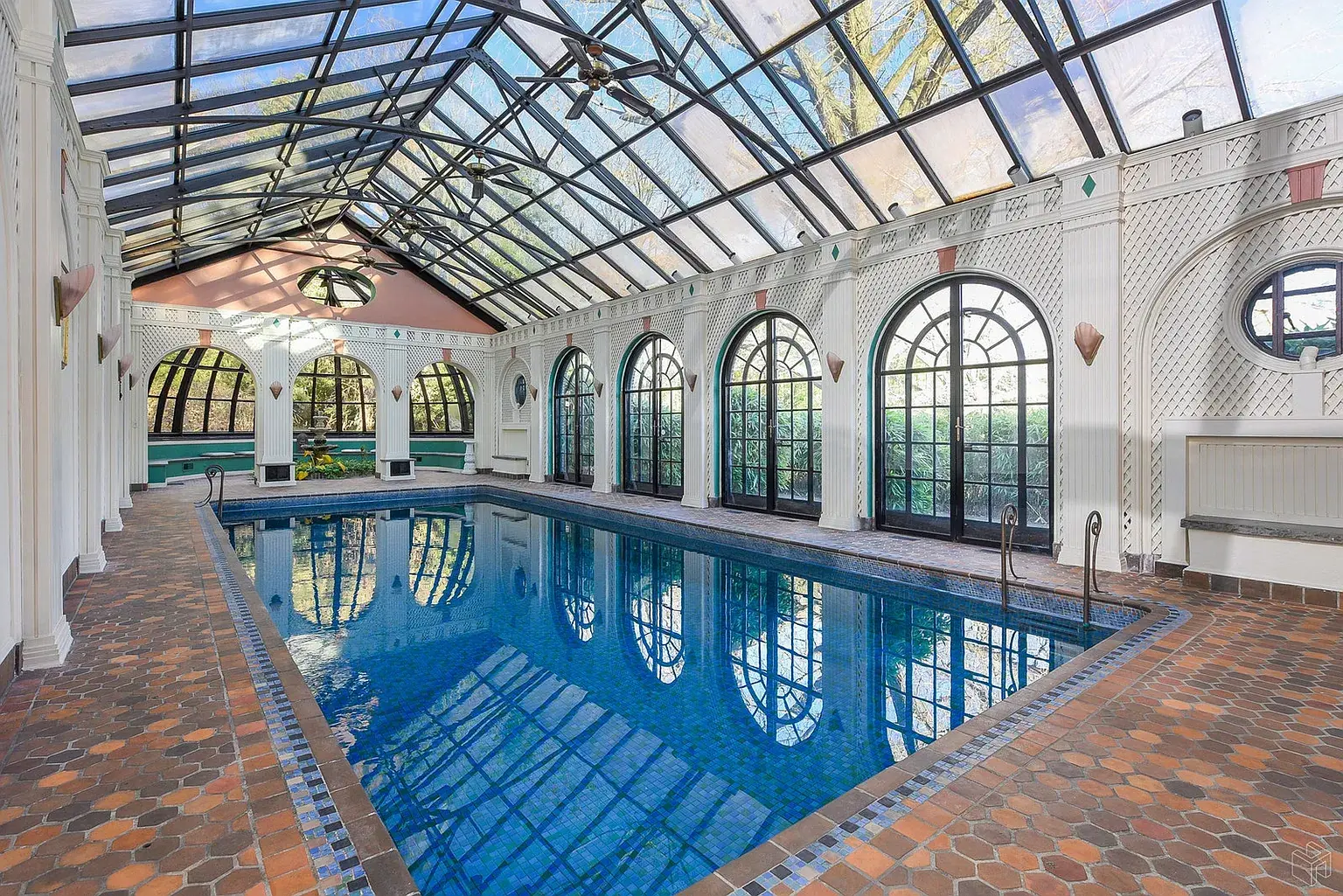
Mature Trees and the Value of Established Landscaping
Mature trees can dramatically change the appearance of a property.
A newly developed residential lot may have a beautiful lawn and recently planted vegetation, but it takes years for trees to reach substantial size.
Established trees create a sense of permanence.
Their canopies provide shade, their trunks introduce natural texture, and their changing foliage gives the grounds a different appearance throughout the year.
During spring and summer, green leaves can create a sheltered environment.
In autumn, changing colors can transform the landscape.
During winter, bare branches reveal the shapes of trees and the architectural details of the house.
This seasonal variation is one of the attractions of a property surrounded by established vegetation.
Trees also help create privacy.
Depending on their placement, they can provide natural screening between different areas of the grounds and the surrounding properties.
For a large estate, this can be particularly valuable.
Privacy does not always require tall walls or extensive fencing.
Sometimes the landscape itself provides the separation.
Mature trees can also help soften the visual scale of a large residence.
A substantial mansion surrounded by an open, bare lawn might appear imposing.
When framed by trees and carefully arranged vegetation, the same house can feel more balanced and inviting.
The grounds become an important part of the overall architectural experience.
Outdoor Spaces for Entertaining
The earlier property descriptions also mention multiple patios and outdoor areas.
These spaces create opportunities for different kinds of gatherings.
A large terrace might accommodate outdoor dining.
A smaller patio could become a quiet place for morning coffee.
An open lawn could provide room for family celebrations, informal games, or outdoor events.
The advantage of having several outdoor areas is that they do not all need to serve the same purpose.
One space can be designed for entertaining guests, while another can remain relatively private.
For a mansion with so many bedrooms, this flexibility is particularly useful.
A large household or frequent visitors may appreciate having several places to gather without everyone needing to occupy the same room.
Outdoor living can also help connect the interior of the house to the surrounding landscape.