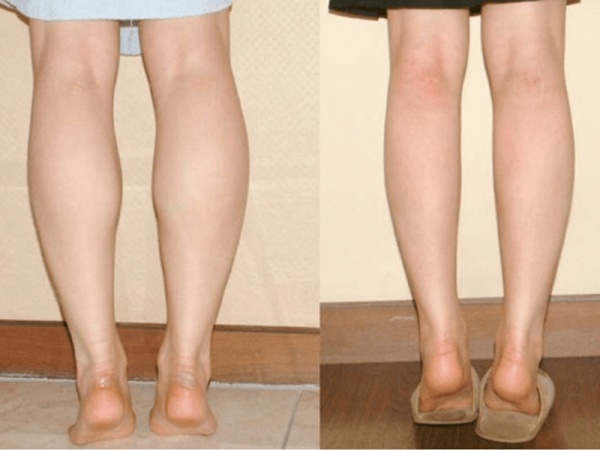
For example, the size and shape of the:
-
Quadriceps
-
Hamstrings
-
Calves
-
Gluteal muscles
can change how the legs look from different angles.
People who participate in running, cycling, strength training, dancing, or other activities may develop different muscle patterns.
That doesn't necessarily mean their skeletal alignment is different.
This is another reason why judging leg structure purely by appearance can be misleading.
9. Genetics Plays a Major Role
If several members of your family have similar-looking legs, genetics may be part of the explanation.
Bone shape, joint structure, height, proportions, and many other physical characteristics are influenced by inherited factors.
You may have inherited:
-
A particular knee angle
-
A specific hip structure
-
A certain foot shape
-
Naturally curved legs
-
A particular lower-leg proportion
This doesn't automatically indicate a health problem.
In fact, many visible differences that people worry about are simply normal variations in human anatomy.
10. Age Can Change Leg Alignment
Leg alignment can also change throughout life.
Children naturally go through different stages of lower-limb development.
The alignment seen in a toddler isn't necessarily the alignment they'll have as a teenager or adult.
Later in life, changes can occur for completely different reasons.
Joint degeneration, previous injuries, changes in muscle strength, and conditions affecting the bones can all influence how someone stands or walks.
That's why age and timing matter when evaluating a change in leg shape.
A pattern that is completely normal for a young child may deserve a different interpretation in an adult.
11. What About Pain?
Pain is often more important than appearance.
Someone can have visibly unusual leg alignment and experience no problems at all.
Another person may have relatively straight-looking legs but experience significant knee or hip pain.
If your legs look different but function normally and don't hurt, there may be little reason for concern.
On the other hand, if you notice:
-
Persistent knee pain
-
Hip pain
-
Ankle pain
-
Swelling
-
Difficulty walking
-
Frequent tripping
-
Reduced mobility
-
A noticeable change in your gait
it's worth discussing the symptoms with a healthcare professional.
12. Your Walking Pattern Can Reveal More Than Standing Still
Walking involves a complex sequence of movements.
Your hips, knees, ankles, and feet continuously adjust to keep you balanced and move your body forward.
A person's static leg alignment doesn't necessarily tell us how their legs function during movement.
For example, someone may appear to have slightly inward knees when standing but have perfectly comfortable movement.
Another person may look completely straight while standing but have abnormal movement when running or squatting.
That's why gait analysis can be useful when someone has persistent pain or movement difficulties.
13. Don't Blame Every Knee Problem on Leg Shape
This is a common misconception.
People sometimes see a particular leg shape and immediately assume:
“That's why my knees hurt.”
But pain is multifactorial.
It can be influenced by:
-
Previous injuries
-
Muscle weakness
-
Training load
-
Joint inflammation
-
Tendon problems
-
Cartilage changes
-
Body weight
-
Foot mechanics
-
Occupational demands
-
Activity patterns
Leg alignment can be one factor, but it isn't necessarily the entire explanation.
A proper assessment looks at the whole picture.
14. Can Exercise Change the Shape of Your Legs?
This depends on what you mean by “change.”