For thousands of years, people have looked at the lines on their palms with curiosity. Across many cultures, these lines have been studied as part of palmistry, also known as chiromancy or palm reading—a traditional practice that seeks to interpret personality traits, life experiences, and potential future events based on the shape of the hand and its markings.
Even today, palm reading remains popular in many parts of the world. Some people see it as a spiritual practice, while others enjoy it simply as a fascinating cultural tradition or form of entertainment.
It is important to understand, however, that there is no reliable scientific evidence that palm lines can accurately predict a person's future, health, personality, or lifespan. The meanings described in palmistry come from long-standing traditions and beliefs rather than scientific research.
Let's explore what the main lines of the hand have traditionally represented and why this ancient practice continues to captivate people around the world.
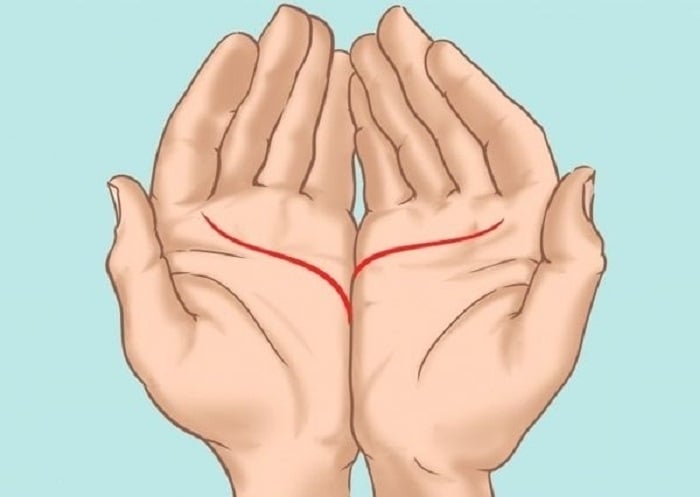
What Is Palmistry?
Palmistry is the traditional practice of interpreting the hands, particularly the palm lines, finger shapes, and mounts (the fleshy areas beneath the fingers).
Historians believe palmistry has roots dating back several thousand years and may have developed independently in regions including:
-
Ancient India
-
China
-
Egypt
-
Greece
-
Persia
Over time, these traditions spread throughout Europe and other parts of the world, with each culture adding its own interpretations and symbolism.
Today, palmistry is generally regarded as a cultural, historical, or spiritual tradition rather than a scientific discipline.
Why Do People Have Palm Lines?
Before exploring traditional interpretations, it's helpful to understand why palm lines exist.
Palm lines are natural skin folds, also called palmar flexion creases.
They develop before birth and help your hands:
-
Bend comfortably
-
Grip objects
-
Flex repeatedly without damaging the skin
The exact appearance of these creases varies from person to person due to genetics and normal development.
Their biological purpose is mechanical—not predictive.
The Four Main Palm Lines
Traditional palmistry usually focuses on four primary lines.
These include:
-
The Heart Line
-
The Head Line
-
The Life Line
-
The Fate Line
Not everyone has every line in the same form, and their appearance naturally varies.
The Heart Line
The heart line is usually the uppermost major line beneath the fingers.
Traditionally, it is associated with:
-
Love
-
Relationships
-
Emotions
-
Compassion
-
Emotional expression
Traditional Interpretations
According to palmistry:
-
A long heart line may symbolize warmth and emotional openness.
-
A shorter heart line may suggest a more reserved emotional style.
-
A curved line is often interpreted as expressing emotions freely.
-
A straighter line may traditionally represent a more practical approach to relationships.
These interpretations vary among different schools of palmistry and should not be viewed as scientifically validated personality assessments.
The Head Line
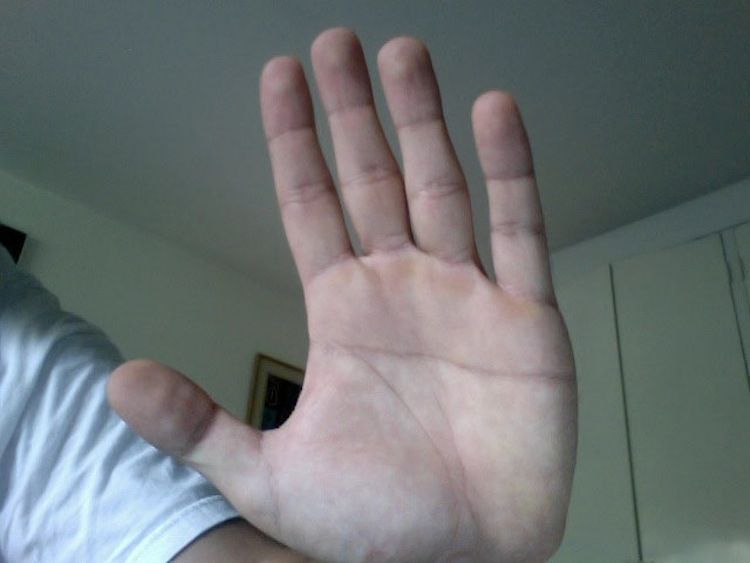
The head line generally runs horizontally across the center of the palm.
Traditionally, it represents:
-
Thinking style
-
Learning
-
Decision-making
-
Intelligence
-
Creativity
Traditional Interpretations
Palm readers often suggest that:
-
A long head line reflects careful thinking.
-
A shorter line represents quick decision-making.
-
A curved line symbolizes imagination.
-
A straight line indicates logical thinking.
Modern psychology has not confirmed any relationship between palm lines and cognitive abilities.
The Life Line
Perhaps the most misunderstood feature of palmistry is the life line.
It curves around the base of the thumb.
Traditionally, it represents:
-
Vitality
-
Physical energy
-
Major life changes
-
General well-being
What It Does Not Mean
One of the biggest myths is that the life line predicts how long someone will live.
In reality:
Traditional palmistry does not consistently interpret the life line as a measure of lifespan, and there is no scientific evidence that its length or shape predicts longevity.
Many experienced palm readers themselves emphasize that the life line is traditionally associated with vitality rather than life expectancy.
The Fate Line
The fate line runs vertically through the center of the palm in some people.
Interestingly, not everyone has a clearly visible fate line.
Traditionally, it relates to:
-
Career
-
Personal direction
-
Life purpose
-
External influences
Palmistry suggests that variations in this line may symbolize different life paths or career changes.
Again, these are symbolic interpretations rather than evidence-based predictions.
Other Features Traditional Palmists Examine
Palmistry extends beyond the major lines.
Many practitioners also consider:
Finger Shape
Traditional interpretations associate different finger lengths and shapes with various personality characteristics.
Thumb
The thumb has traditionally been linked to:
-
Willpower
-
Determination
-
Self-control
Mounts of the Palm
The raised areas beneath each finger are called mounts.
Traditional palmistry associates them with symbolic qualities.
Examples include:
-
Mount of Venus: affection and passion
-
Mount of Jupiter: ambition and leadership
-
Mount of Saturn: responsibility
-
Mount of Apollo: creativity
-
Mount of Mercury: communication
These names come from classical mythology and astrology rather than medical science.
Why Palmistry Remains Popular
Despite lacking scientific validation, palmistry continues to attract interest.
Several reasons may explain its popularity.
Curiosity
Humans naturally enjoy exploring questions about identity and the future.
Palmistry provides a structured way to reflect on these ideas.
Cultural Tradition
In many cultures, palm reading has been practiced for centuries during festivals, family gatherings, or spiritual ceremonies.
For many people, it represents an important cultural heritage.
Personal Reflection
Some individuals use palmistry as a tool for self-reflection rather than prediction.
Reading symbolic interpretations may encourage people to think about:
-
Relationships
-
Goals
-
Personal strengths
-
Areas for growth
Entertainment
Many people simply enjoy palm reading as a recreational activity.
Like astrology or personality quizzes, it can be an engaging conversation starter without being taken literally.
What Does Science Say?
Scientists have extensively studied human anatomy, genetics, and psychology.
To date:
-
No reliable scientific evidence shows that palm lines predict personality.
-
No studies demonstrate that palm lines reveal future events.
-
No evidence indicates that palm lines can predict health outcomes or lifespan.
The appearance of palm creases is primarily determined by:
-
Fetal development
-
Genetics
-
Hand movement before birth
Researchers classify palmistry as a belief system or cultural practice rather than an evidence-based science.
Palm Lines and Medical Conditions
Although palmistry is not scientific, doctors sometimes examine the hands for medical reasons.
Certain unusual palm crease patterns may occasionally be associated with specific genetic or developmental conditions.
For example:
-
A single transverse palmar crease (sometimes called a "simian crease") can occur in healthy individuals but is also seen more frequently in some genetic syndromes.
Importantly, medical professionals do not use palmistry to diagnose disease, and ordinary palm lines should not be interpreted as indicators of health or illness.
Common Myths About Palm Reading
Myth 1: The Life Line Predicts Lifespan
False.
Neither science nor traditional palmistry consistently supports this idea.
Myth 2: Palm Lines Never Change
False.
Although the main creases remain relatively stable, fine lines and skin texture can change gradually with age, work, and environmental factors.
Myth 3: Palm Reading Is Scientifically Proven
False.
There is no reliable scientific evidence supporting the predictive claims of palmistry.
Myth 4: Everyone Has the Same Palm Lines
False.
Every person's hands are unique, with natural variations in line patterns, depth, and shape.
Appreciating Palmistry as Cultural Heritage
Palmistry has influenced literature, folklore, art, and popular culture for centuries.
Many people appreciate it because it reflects humanity's long-standing fascination with destiny, personality, and self-discovery.
Viewed through this lens, palmistry can be appreciated as:
-
Cultural history
-
Traditional symbolism
-
Personal reflection
-
Entertainment
Rather than as a scientifically verified method of prediction.
Final Thoughts
The lines on your palm have intrigued people for thousands of years, inspiring countless traditions, stories, and systems of interpretation. In traditional palmistry, the heart line, head line, life line, and fate line are each believed to symbolize different aspects of a person's emotional life, thinking style, vitality, and life path. These meanings have been passed down through generations and remain an important part of many cultural traditions.
At the same time, modern science has found no reliable evidence that palm lines can predict personality, health, relationships, or future events. The creases on our hands primarily exist to allow the skin to fold naturally as we move and grip objects. While palm reading can be an enjoyable way to explore history, symbolism, and personal reflection, it should not be relied upon for important life decisions or medical guidance.
Understanding both the cultural significance and the scientific perspective allows us to appreciate palmistry for what it truly is: a fascinating tradition that has connected people with stories, beliefs, and curiosity for centuries.