Have you ever looked at your skin and noticed tiny white spots or lighter patches that weren't there before?
Maybe you first noticed them on your arms, shoulders, back, chest, legs, or face. Sometimes these spots become much more noticeable after spending time in the sun, especially when the surrounding skin becomes darker.
Seeing an unexpected change in your skin can naturally make you wonder whether it's a sign of a health problem.
The good news is that small white spots on the skin can have many different causes, and most are not necessarily serious. They may be related to sun exposure, previous skin irritation, dryness, fungal infections, changes in pigmentation, or other skin conditions.
However, because several conditions can look similar, it's important not to assume that every white spot has the same cause.
Here's what you should know.

1. Sun Exposure Can Make White Spots More Noticeable
One of the first things many people notice is that small white spots seem to appear after spending time outdoors.
But sunlight may not necessarily be the original cause.
When you spend time in the sun, the surrounding skin may produce more melanin and become darker. If an area of skin has reduced pigmentation, it may not darken at the same rate.
The result?
The lighter areas suddenly become much easier to see.
This can create the impression that the sun "caused" the spots when the difference in pigmentation may have existed beforehand.
That's one reason people sometimes discover previously unnoticed skin spots after getting a tan.
2. Tinea Versicolor Is One Possible Cause
One relatively common explanation for small lighter patches is a superficial fungal or yeast-related skin condition called tinea versicolor.
The microorganism involved normally lives on the skin. Under certain conditions, however, it can grow excessively and interfere with normal pigmentation.
The resulting patches can appear:
-
White
-
Light brown
-
Pink
-
Tan
-
Slightly darker than the surrounding skin
They often occur on the:
-
Chest
-
Back
-
Shoulders
-
Neck
-
Upper arms
The affected skin may also have very fine scaling or mild itching.
Tinea versicolor tends to be more noticeable in warm, humid conditions and may become particularly obvious during hot weather.
3. Tinea Versicolor and Vitiligo Are Different
It's easy to confuse tinea versicolor with vitiligo because both can cause areas of lighter skin.
But they're fundamentally different conditions.
Tinea versicolor involves an overgrowth of microorganisms that normally live on the skin.
Vitiligo involves the loss of melanocytes, the cells responsible for producing skin pigment.
Because their appearance can overlap, it's not always possible to distinguish them simply by looking at a photograph.
If you're unsure, a healthcare professional can examine the affected skin and determine whether additional testing is needed.
4. Vitiligo Can Cause White Patches
Vitiligo is another possible cause of areas of depigmented skin.
The affected areas may appear:
-
Much lighter than surrounding skin
-
Completely white
-
Clearly defined
-
Smooth
-
More noticeable after sun exposure
Vitiligo can occur almost anywhere on the body.
Common areas include:
-
Hands
-
Face
-
Feet
-
Arms
-
Legs
-
Around the mouth
-
Around the eyes
Some people may also notice that hair growing from an affected area becomes white.
Importantly, vitiligo is not contagious.
You cannot catch it from another person through touching, sharing objects, or ordinary social contact.
5. Vitiligo Doesn't Always Begin With Large White Areas
Many people imagine vitiligo as large patches covering significant portions of the body.
That's not necessarily how it begins.
It can start with just one or several small areas.
For some people, the patches remain relatively stable. For others, they may gradually become larger or new patches may appear elsewhere.
That's why a small white spot shouldn't automatically be ignored simply because it is tiny.
At the same time, a tiny white spot certainly doesn't automatically mean vitiligo.
There are many other possible explanations.
6. Previous Skin Injury Can Leave a Lighter Area
Your skin can sometimes lose some pigment after experiencing inflammation or injury.
This is known as post-inflammatory hypopigmentation.
It may occur after:
-
Scratches
-
Cuts
-
Burns
-
Insect bites
-
Rashes
-
Eczema
-
Skin irritation
-
Certain cosmetic procedures
The original irritation may disappear completely, leaving behind an area that looks lighter than the surrounding skin.
In many cases, the pigmentation gradually returns toward normal as the skin continues to recover.
You may not even remember the original irritation because it could have happened weeks or months earlier.
7. Eczema Can Leave Lighter Skin Behind
Certain forms of eczema or dermatitis can cause temporary changes in pigmentation.
The area may initially have been:
-
Red
-
Dry
-
Itchy
-
Inflamed
-
Scaly
Once the inflammation improves, the skin can remain lighter for some time.
This can be especially noticeable in people with darker skin tones.
The lighter color doesn't necessarily mean that the pigment-producing cells have been permanently damaged.
In many cases, the color gradually becomes more even as the skin recovers.
8. Dry Skin Can Make Color Differences More Obvious
Sometimes the problem isn't entirely about pigmentation.
Very dry skin can appear:
-
Pale
-
Rough
-
Flaky
-
Uneven
-
Slightly lighter
If the area is also itchy or irritated, dryness or dermatitis could be contributing to the appearance.
Using a gentle moisturizer and avoiding harsh soaps can help support the skin barrier.
However, persistent white patches shouldn't automatically be blamed on dry skin.
If the spots continue to spread or change, it's worth having them evaluated.
9. Other Skin Conditions Can Also Cause Light Patches
Several skin conditions can leave areas of lighter pigmentation after inflammation has resolved.
For example, psoriasis and other inflammatory skin disorders can sometimes be followed by temporary pigment changes.
This is why it's useful to remember what the skin looked like before the white or lighter area appeared.
Ask yourself:
Was there a rash here before?
Was the area itchy?
Did it become red or irritated first?
Did I scratch or injure the skin?
These details can help a healthcare professional understand what may have happened.
10. The Location of the Spots Can Provide Clues
Where the spots appear may provide useful information.
Tinea versicolor commonly affects areas such as:
-
The upper back
-
Chest
-
Shoulders
-
Neck
-
Upper arms
Vitiligo can affect many different parts of the body and may commonly involve areas such as:
-
Hands
-
Face
-
Feet
-
Around the eyes
-
Around the mouth
However, location alone is never enough to make a diagnosis.
Different skin conditions can occur in the same areas.
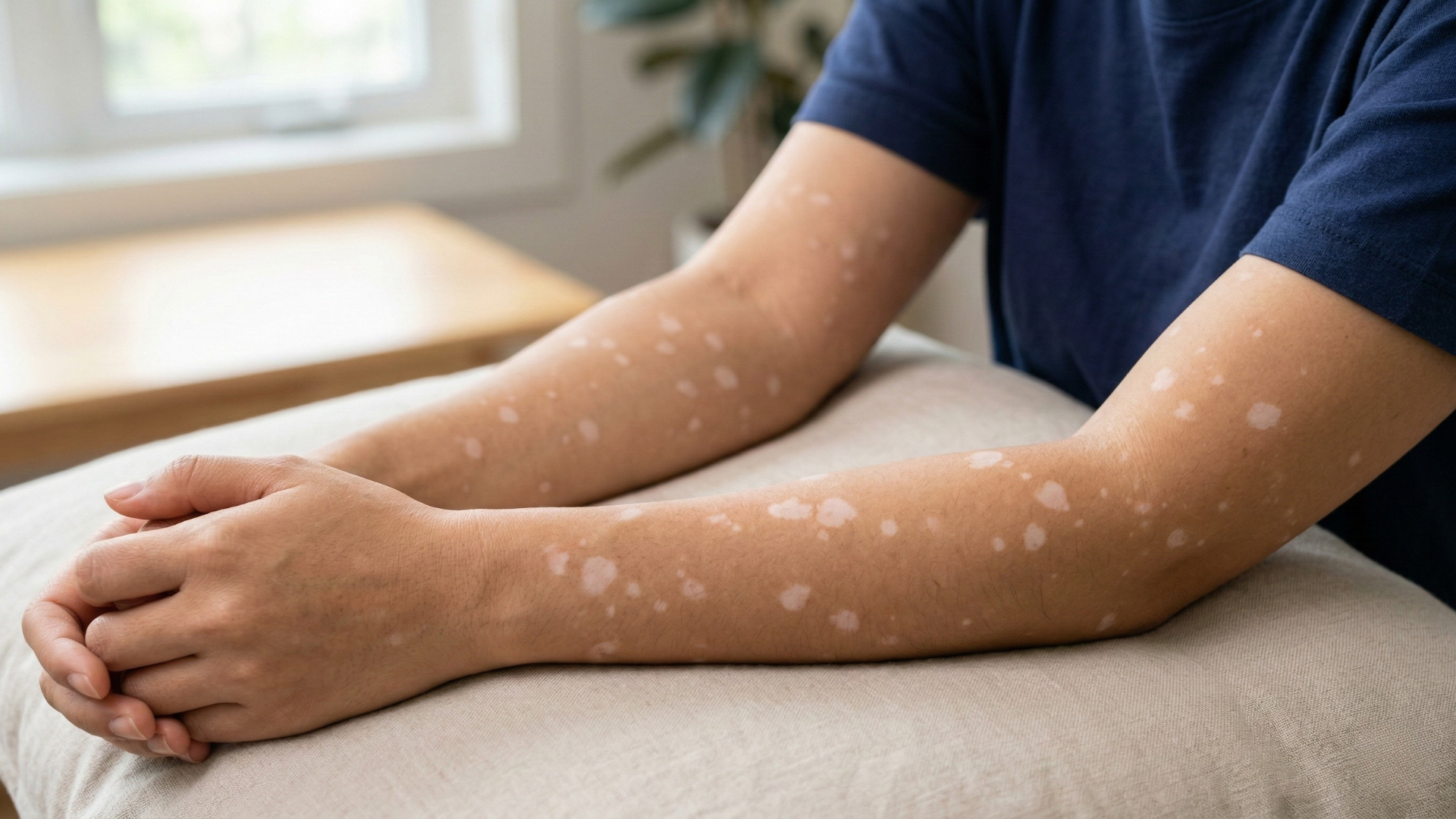
11. Pay Attention to the Texture
Don't look only at the color.
Touch the area gently and compare it with the surrounding skin.
Ask:
Does it feel completely smooth?
Is it dry?
Does it have fine scales?
Is it rough?
Is it thicker than the surrounding skin?
A smooth white patch may suggest a different cause than a light patch covered with fine scaling.
Texture can provide an important clue when combined with the location and appearance of the spots.
12. Do the Spots Itch?
Itching can also provide useful information.
Some fungal skin conditions may cause mild itching, particularly in hot or humid environments.
Other pigment conditions may cause little or no discomfort.
But this isn't an absolute rule.
A person can have a skin condition without itching, while another person with the same condition may experience significant irritation.
So itching is simply one clue among many.
13. Are the Spots Getting Bigger?
One of the most useful things you can do is monitor the spots over time.
Ask yourself:
-
Are they staying the same size?
-
Are they gradually expanding?
-
Are new spots appearing?
-
Are several spots merging together?
-
Are they becoming whiter?
-
Are they appearing in completely different areas?
A stable spot may have a different explanation from one that is rapidly changing.
If you notice continued spreading or the appearance of multiple new patches, it's a good idea to seek professional advice.
14. Why White Spots Can Look Worse After a Tan
This is worth emphasizing.
Imagine a small area of skin with reduced pigmentation.
Before sun exposure, your entire arm may have a similar color.
After spending several days outdoors, the surrounding skin becomes darker.
The lighter area remains relatively unchanged.
Suddenly, the contrast becomes much stronger.
This can make a previously unnoticed spot appear "new."
For this reason, people sometimes discover pigmentation changes after vacations, outdoor activities, or periods of increased sun exposure.
15. People With Darker Skin May Notice the Contrast More Easily
Small changes in pigmentation can occur in people of every skin tone.
However, the contrast between normal skin and depigmented areas can be more noticeable in people with darker skin.
This doesn't necessarily mean the condition is more serious.
It simply means that even a relatively small difference in pigmentation may be easier to see.
16. Don't Automatically Assume You Have a Vitamin Deficiency
A common reaction to seeing white spots is:
"I must be missing a vitamin or mineral."
That isn't necessarily true.
Although nutritional deficiencies can affect skin and hair, localized white spots have many other possible causes.
Taking supplements without knowing whether you're actually deficient may not solve the problem.
In some cases, excessive supplementation can even cause health problems.
If you suspect a nutritional deficiency, it's better to discuss your diet and symptoms with a healthcare professional.
17. Avoid Random Home Remedies
When people see unusual spots on their skin, they sometimes try household ingredients such as:
-
Lemon juice
-
Vinegar
-
Baking soda
-
Garlic
-
Essential oils
-
Strong exfoliants
This can make things worse.
Some of these substances can irritate the skin, cause burns, or trigger inflammation.
Additional inflammation may create even more pigmentation changes.
Instead of experimenting with harsh remedies, try to determine the actual cause first.
18. Tinea Versicolor Can Usually Be Treated
If the spots are caused by tinea versicolor, treatment generally focuses on controlling the excessive fungal or yeast growth.
Depending on the situation, treatment may involve antifungal:
-
Creams
-
Lotions
-
Medicated shampoos
-
Cleansers
-
Prescription medication in some cases
One important thing to understand is that the infection can improve before the skin color returns to normal.
The spots may remain lighter for weeks or even months after the underlying infection has been treated.
That doesn't necessarily mean the treatment failed.
The pigment may simply need time to recover.
19. Tinea Versicolor Can Come Back
Unfortunately, tinea versicolor can recur.
The microorganism involved normally lives on healthy skin, so treatment doesn't necessarily prevent it from returning.
Hot and humid conditions can make recurrence more likely.
If you've experienced repeated episodes, a healthcare professional may recommend strategies for reducing the chance of recurrence.
20. Vitiligo Requires a Different Approach
If the white patches are caused by vitiligo, antifungal treatments won't address the underlying condition.
Vitiligo involves the loss of pigment-producing cells.
Treatment options can vary depending on:
-
The amount of affected skin
-
Where the patches are located
-
How quickly they are changing
-
Age
-
Overall health
-
Individual preferences
Some treatments aim to restore pigmentation, while others focus on managing the appearance and preventing further problems.
This is another reason why an accurate diagnosis matters.
21. Protect Lighter Areas From the Sun
Areas with significantly reduced pigment have less natural protection from ultraviolet radiation.
As a result, they may burn more easily.
If you have noticeable depigmented areas, consider:
-
Using sunscreen
-
Wearing protective clothing
-
Seeking shade
-
Avoiding prolonged midday sun
-
Reapplying sunscreen as needed
Sun protection also helps reduce the contrast between lighter areas and surrounding skin.
22. When Should You See a Dermatologist?
Not every tiny white spot requires urgent medical attention.
However, consider getting the area checked if:
-
The spots are spreading
-
New spots keep appearing
-
They become completely white
-
The patches persist for a long time
-
They become scaly
-
They itch persistently
-
The skin becomes painful
-
The surrounding area becomes inflamed
-
Hair within the affected area becomes white
-
The spots appear across multiple areas of your body
-
You simply cannot determine what caused them
A dermatologist can examine the skin and determine whether additional testing is necessary.
23. What Happens During a Skin Examination?
A healthcare professional may ask:
-
When did the spots appear?
-
Have they changed?
-
Did they appear after a rash?
-
Have you had recent sun exposure?
-
Have you injured the area?
-
Are they itchy?
-
Have you noticed similar spots elsewhere?
-
Does anyone in your family have a similar condition?
The skin may then be examined closely for:
-
Color
-
Shape
-
Borders
-
Texture
-
Scaling
-
Distribution
Depending on what is suspected, additional examination methods may be used.
24. What If the Spots Don't Go Away?
Persistence matters.
A small spot that appears after a minor injury and gradually fades is different from a patch that remains unchanged or continues expanding for months.
If you've had unexplained white patches for a long time, don't keep guessing.
Getting a professional evaluation can help determine whether you're dealing with:
-
A fungal infection
-
A pigment disorder
-
Previous inflammation
-
Eczema
-
Another skin condition
The correct diagnosis also helps you avoid using treatments that aren't appropriate.
25. Keep Track of Changes
If you're concerned about white spots, take a clear photograph of the affected area.
You can compare the appearance over time.
Pay attention to:
-
Size
-
Shape
-
Color
-
Number of spots
-
Texture
-
Whether new areas appear
Try taking photographs under similar lighting conditions.
This can make subtle changes easier to recognize.
If the spots continue changing, showing the photographs to a healthcare professional can also be helpful.
Common Myths About White Spots
Myth 1: White Spots Always Mean a Vitamin Deficiency
Not true.
Many different skin conditions can produce lighter areas.
Myth 2: Every White Spot Is Vitiligo
Definitely not.
Fungal infections, eczema, previous inflammation, and other conditions can also cause lighter patches.
Myth 3: The Sun Always Causes White Spots
Not necessarily.
Sun exposure can simply make existing pigmentation differences more visible.
Myth 4: White Spots Are Always Contagious
No.
Conditions such as vitiligo are not contagious, and many other causes of white spots are not contagious either.
Myth 5: You Can Diagnose the Cause Just by Looking at a Photo
Not reliably.
Different conditions can look very similar.
A proper examination may be necessary to determine the cause.
How to Support Healthy Skin
Regardless of why the spots appeared, some basic habits can help protect your skin.
Use Sun Protection
Protect exposed skin from excessive ultraviolet radiation.
Moisturize Regularly
This is especially useful if your skin tends to be dry or irritated.
Avoid Harsh Products
Be cautious with strong acids, bleaching products, aggressive scrubs, and other irritating treatments.
Don't Pick or Scratch
Repeated irritation can worsen inflammation and pigmentation changes.
Be Careful With Home Remedies
Natural ingredients aren't automatically safe for the skin.
Eat a Balanced Diet
Include a variety of:
-
Fruits
-
Vegetables
-
Protein
-
Whole grains
-
Healthy fats
A balanced diet provides the nutrients your skin needs for normal function.
A Simple Checklist for White Spots
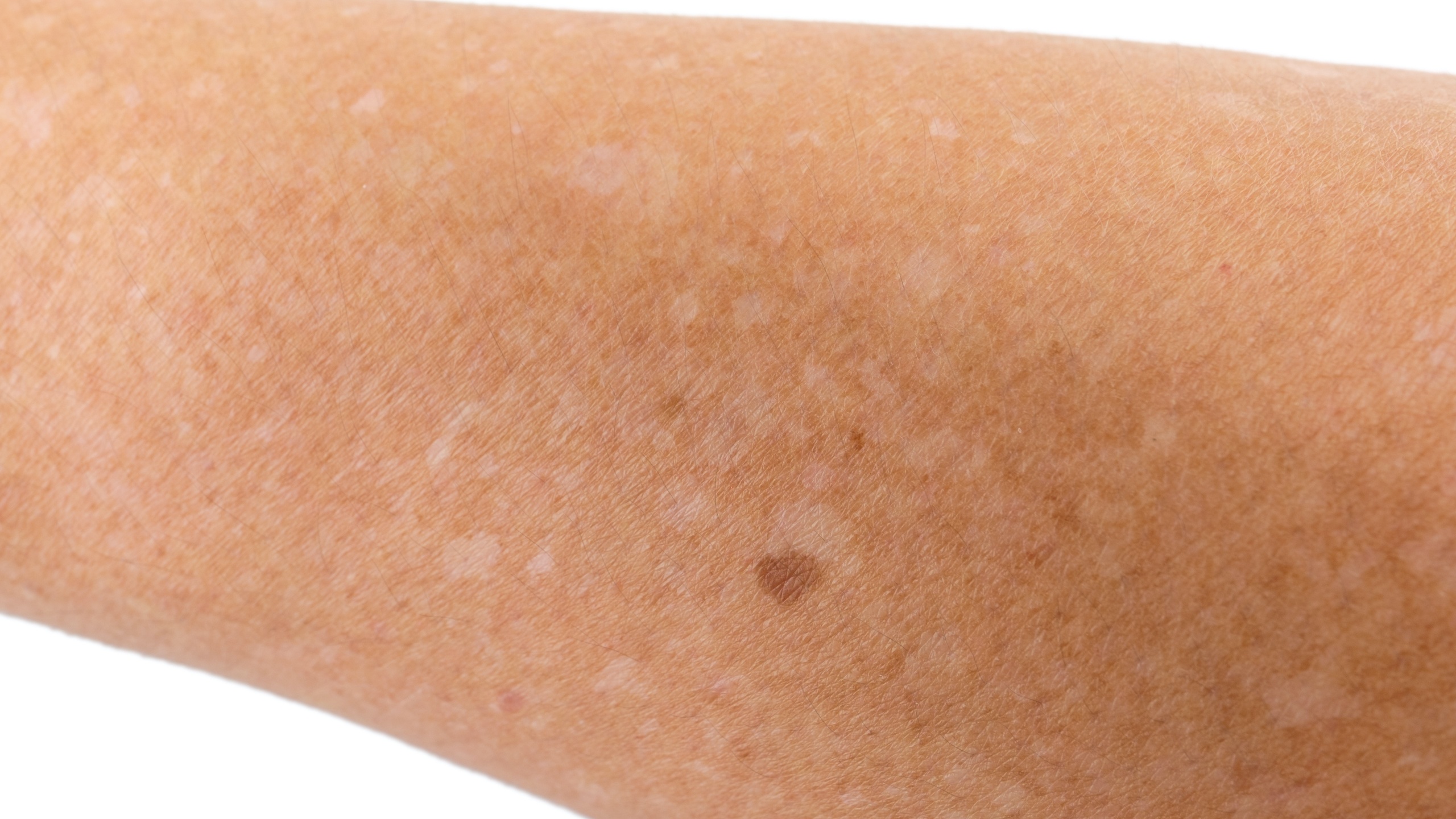
If you've noticed small white spots, consider these questions:
What color are they?
Are they slightly lighter or completely white?
What is the texture?
Is the skin smooth, dry, rough, or scaly?
Do they itch?
Or are they completely symptom-free?
Where are they located?
Are they mainly on your chest, back, arms, face, hands, or elsewhere?
When did they appear?
Was there a recent rash, injury, or period of heavy sun exposure?
Are they changing?
Are they spreading, becoming larger, or appearing in new areas?
These details can provide useful information when discussing the spots with a healthcare professional.
The Bottom Line
Small white spots on the skin can have many possible explanations.
They may be related to:
-
Sun-related contrast
-
Tinea versicolor
-
Vitiligo
-
Previous skin inflammation
-
Eczema
-
Dryness
-
Minor injury
-
Other pigmentation changes
The appearance of a white spot alone usually isn't enough to determine the cause.
Don't immediately assume that you have a vitamin deficiency, and don't automatically assume that you have vitiligo.
Instead, pay attention to the color, texture, location, symptoms, and changes over time.
If the spots persist, spread, become more noticeable, or are accompanied by other skin changes, consider having them evaluated by a dermatologist.
Most importantly, avoid harsh DIY treatments that could further irritate your skin.
A small white spot isn't necessarily a reason to panic—but it is a reason to pay attention to your skin and understand what may be causing the change.