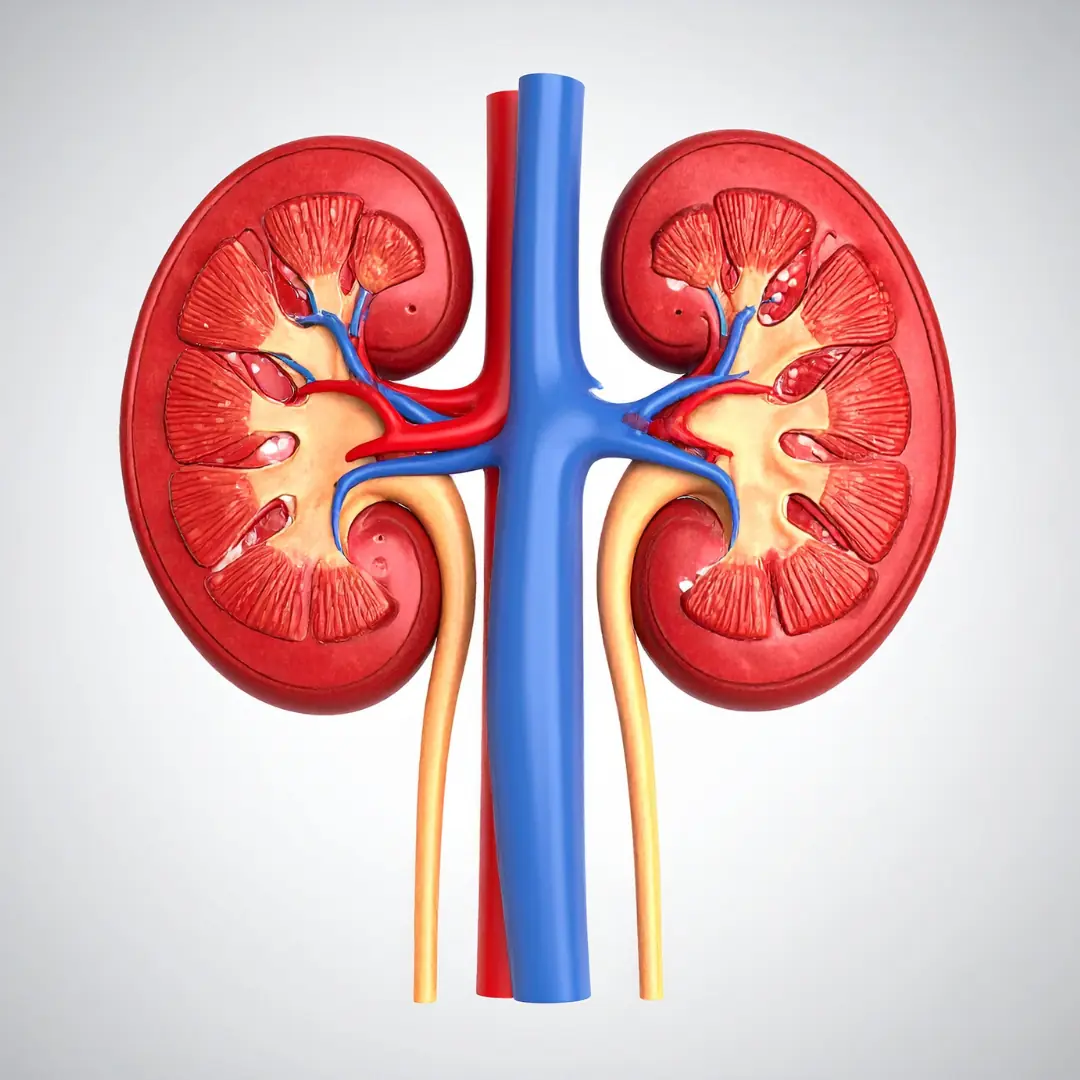
High blood pressure is one of the major risk factors associated with chronic kidney disease.
Over time, uncontrolled hypertension can damage the small blood vessels responsible for supplying the kidneys.
Diabetes is another major risk factor because persistently elevated blood glucose can damage the structures involved in filtration.
This explains why researchers have investigated whether garlic may influence blood pressure.
Some human studies suggest that garlic supplements can produce modest reductions in blood pressure, particularly among people who already have hypertension.
However, the evidence remains limited, and findings from supplement studies should not be interpreted as proof that eating a particular amount of fresh garlic will produce the same result.
The National Center for Complementary and Integrative Health notes that garlic supplements may lower blood pressure to a small extent in people with high blood pressure.
Even if garlic contributes to a modest improvement in blood pressure, it should not replace prescribed medication.
For someone with kidney disease, maintaining appropriate blood pressure is much more important than relying on a single food.
The most useful approach involves following a medically appropriate treatment plan, eating a balanced diet, remaining physically active when possible, and attending recommended medical appointments.
4. What About Garlic's Potential Anti-Inflammatory Properties?
Inflammation is another important subject in kidney research.
Inflammation is a normal part of the body's defense system.
When an injury or infection occurs, the immune system activates processes that help protect and repair affected tissues.
However, prolonged or excessive inflammation can contribute to tissue damage.
Researchers have studied several garlic compounds to understand whether they influence inflammatory signaling pathways.
Some laboratory and animal experiments suggest that certain compounds in garlic may affect molecules involved in inflammatory responses.
These findings have generated interest in the possible relationship between garlic and long-term health.
But there is an important limitation.
A compound that influences inflammation in a laboratory experiment does not necessarily produce the same effect when someone eats it.
The amount absorbed may be different, the compound may be broken down during digestion, and the concentrations used in experiments may not be achievable through ordinary food consumption.
Furthermore, inflammation is only one component of kidney disease.
Chronic kidney disease can develop for many different reasons, including diabetes, hypertension, inherited conditions, autoimmune disorders, and previous kidney injuries.
Reducing one biological process does not automatically correct all the underlying causes.
This is why garlic should be viewed as a food with interesting biological properties rather than a treatment for kidney disease.
5. Why the Five-Month Period Is Not Proof of Kidney Recovery
The headline focuses on five months of daily garlic consumption.
That period sounds significant because it suggests consistency and commitment.
However, the length of time someone follows a dietary habit does not establish whether that habit has improved a medical condition.
To demonstrate that kidney function has improved, doctors need objective measurements.
These include blood tests, urine tests, medical history, and sometimes imaging or additional investigations.
A person might report feeling more energetic after changing their diet.
They might also experience better digestion or improved general well-being.
Those experiences can be meaningful, but they cannot independently establish that kidney filtration has improved.
For example, someone who begins eating more vegetables, reducing heavily processed foods, exercising regularly, and sleeping better may notice several improvements.
If that person also eats garlic every day, it would be difficult to determine which change contributed to the result.
This is a basic principle of medical research: a change occurring after an intervention does not automatically mean the intervention caused the change.
The reported experience of the 28-year-old man should therefore be understood as an anecdotal story rather than proof of a medical treatment.
And that leads to an even more important question: how can someone actually determine whether their kidneys are healthy?
Chapter 2: The Kidney Facts Everyone Should Understand Before Trying Natural Remedies
6. How Doctors Really Measure Kidney Function
Many people assume that kidney problems always produce noticeable symptoms.
Unfortunately, that is not always true.
Chronic kidney disease can develop gradually, and many people experience few or no obvious symptoms during its early stages.
This is one reason regular testing is important for people who have risk factors.
According to the National Institute of Diabetes and Digestive and Kidney Diseases, two particularly important measurements are estimated glomerular filtration rate and urine albumin.
The first measurement: eGFR
The estimated glomerular filtration rate, commonly called eGFR, provides an estimate of how efficiently the kidneys filter blood.
Doctors calculate it using blood creatinine levels together with other information.
Creatinine is a waste product produced through normal muscle metabolism.
Healthy kidneys remove creatinine from the bloodstream and eliminate it through urine.
When kidney filtration becomes less effective, blood creatinine levels may increase.
An eGFR result helps healthcare professionals assess kidney function and monitor changes over time.
However, a single result does not always provide the complete picture.
Doctors consider previous results, age, medical history, medications, and other laboratory findings.
The second measurement: urine albumin
Albumin is a protein normally found in the blood.
Healthy kidneys generally prevent significant amounts of albumin from passing into the urine.
When kidney filtering structures become damaged, albumin may leak into urine.
Doctors can measure this using a urine albumin-to-creatinine ratio, often abbreviated as UACR.
A persistently elevated result may indicate kidney damage, even when eGFR remains relatively well preserved.
Looking at both measurements provides more useful information than relying on how someone feels after changing their diet.
This is why someone who suspects kidney disease should arrange appropriate testing instead of attempting to evaluate kidney health through food experiments.