When Paul Alexander was just a child, a disease suddenly changed the course of his life.
He was not expecting to become seriously ill. He was not prepared for the possibility that something as ordinary as breathing could become a lifelong challenge.
But in 1952, at the age of six, Alexander contracted polio during one of the worst outbreaks of the disease in the United States.
Within days, the illness left him paralyzed from the neck down and unable to breathe independently.
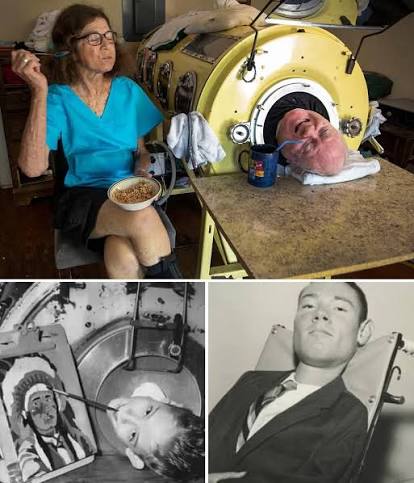
Doctors placed him inside an iron lung, a large mechanical respirator that used changes in air pressure to help his lungs draw in and release air.
For many people, an iron lung represented the final stage of a devastating disease.
For Paul Alexander, it became something very different.
It became part of his life.
And remarkably, it did not prevent him from pursuing education, developing a career, writing, forming relationships, or advocating for himself.
His story is not simply about surviving polio.
It is about adapting to circumstances that seemed impossible, discovering independence in unexpected ways, and refusing to allow a medical condition to become the only definition of a human life.

A Child Caught in a Polio Epidemic
Paul Alexander was born in Texas in 1946.
His early childhood was relatively ordinary.
Like other children, he had dreams, energy, curiosity, and a future that appeared open-ended.
Then came 1952.
At the time, polio was one of the most feared infectious diseases in the United States.
Poliovirus could infect the nervous system and, in severe cases, cause paralysis of muscles involved in breathing.
The disease particularly terrified parents because it could strike children who had appeared perfectly healthy.
During the 1952 U.S. epidemic, tens of thousands of cases of polio were reported, and thousands of people died.
For families living through that period, a diagnosis could change everything almost overnight.
Alexander became one of those children.
His illness progressed rapidly.
He became severely paralyzed and lost the ability to breathe normally.
He was taken to the hospital.
There, doctors faced a difficult decision.
He needed mechanical assistance to breathe.
That assistance came in the form of an iron lung.
What Was an Iron Lung?
To understand Alexander's story, it helps to understand what an iron lung actually did.
An iron lung, technically known as a negative-pressure ventilator, was a large cylindrical chamber.
A patient would lie inside the chamber with only the head positioned outside.
The machine would repeatedly change the air pressure around the patient's body.
When the pressure inside the chamber decreased, the chest expanded and air was drawn into the lungs.
When the pressure increased again, air moved back out.
In other words, the machine helped create the mechanical conditions needed for breathing.
This was particularly important for people whose respiratory muscles had been paralyzed by polio.
Modern ventilators generally work differently, using positive pressure to push air into the lungs.
But during the major polio epidemics of the mid-20th century, iron lungs were an essential form of life support.
For patients who could not breathe independently, the machine could literally mean the difference between life and death.
The Machine That Became Part of His Life
For Alexander, the iron lung was not a temporary inconvenience.
He spent years depending on it.
Eventually, however, he learned a technique called glossopharyngeal breathing, sometimes known as "frog breathing."
This technique uses muscles of the mouth and throat to push additional air into the lungs.
It does not restore normal respiratory function, but for some people with severe paralysis, it can provide periods of breathing outside the machine.
Learning to use this technique gave Alexander greater independence.
He could spend time outside the iron lung.
He could interact with the world more freely.
He could pursue activities that would otherwise have been extremely difficult.
But the machine remained an important part of his life.
It was not simply medical equipment.
It became part of his daily reality.
Learning to Live With What Could Not Be Changed
One of the most remarkable aspects of Alexander's story is that he did not allow his physical limitations to eliminate his ambitions.
His body had been profoundly affected by polio.
But his mind remained active.
His curiosity remained.
His desire to learn remained.
And those qualities became central to his future.
Growing up with severe paralysis meant that many everyday activities required adaptation.
Things other children could do without thinking required planning.
Mobility was restricted.
Breathing required specialized strategies.
Physical independence was limited.
Yet Alexander continued pursuing education.
That decision was significant.
Education offered something beyond academic knowledge.
It offered autonomy.
It provided a path toward a future in which his life could be defined by his abilities rather than solely by his medical condition.
A Young Man Determined to Get an Education
Alexander eventually attended school and pursued higher education.
He became a lawyer and later earned a Juris Doctor degree.
His academic achievements were remarkable considering the physical obstacles he had faced since childhood.
But describing the accomplishment only in terms of overcoming disability misses an important point.
Alexander did not simply want people to feel sorry for him.
He wanted to participate.
He wanted to learn.
He wanted to work.
He wanted to make decisions about his own life.
His education helped him do exactly that.
Becoming a lawyer also provided him with a professional identity separate from his medical history.
He was not simply "the man in the iron lung."
He was a trained professional with knowledge, goals, opinions, and responsibilities.
A Life Beyond the Hospital
One of the most powerful elements of his story is the contrast between his childhood circumstances and the life he eventually built.
Polio could have reduced his world to a hospital room.
Instead, he found ways to expand that world.
He studied.
He worked.
He developed relationships.
He pursued personal goals.
He became involved in advocacy.
And he eventually shared his experiences publicly.
His story demonstrated something important about disability:
A serious physical limitation does not automatically eliminate intellectual ambition, emotional depth, creativity, humor, or the desire for independence.
A person's body can impose limitations without determining the entire scope of that person's identity.
The Long-Term Consequences of Polio
Although Alexander survived the initial infection, surviving polio did not mean the disease simply disappeared.
Paralysis and respiratory impairment can remain long-term consequences of severe poliomyelitis.
Some polio survivors also develop post-polio syndrome decades after the initial illness.
Post-polio syndrome can involve new or worsening muscle weakness, fatigue, pain, and other problems.
Not every polio survivor develops the condition, and symptoms can vary considerably.
For someone already living with extensive paralysis, however, long-term health management can be extraordinarily demanding.
Alexander's life illustrates the reality that surviving an infectious disease can be only the beginning of a much longer journey.
The Psychological Side of Survival
There is another part of his story that cannot be measured by medical equipment.
Living with a severe disability from childhood can affect how a person sees himself and how society sees him.
Children with disabilities can encounter assumptions about what they are capable of doing.
Adults may be treated as fragile when they actually want independence.
People may focus on limitations while overlooking abilities.
Alexander's life challenged those assumptions.
He demonstrated that needing extensive physical assistance does not mean lacking intelligence, ambition, or agency.
His achievements became a response to a culture that too often underestimated people with disabilities.
He Refused to Let the Iron Lung Become His Identity
An iron lung is visually powerful.
It is large.
It is unmistakably medical.
And for decades, photographs of people inside these machines became symbols of the polio era.
But for Alexander, the machine was only one part of his life.
It supported his breathing.
It did not define his intelligence.
It did not determine his ambitions.
It did not dictate his values.
And it did not erase his individuality.
This distinction is important when discussing disability.
Assistive technology can become deeply integrated into a person's life, but using medical equipment does not reduce someone to that equipment.
A wheelchair user is not simply a wheelchair.
A person using a ventilator is not simply a ventilator user.
A person with paralysis remains a complete human being with interests, relationships, achievements, frustrations, humor, and dreams.
Alexander's life illustrated that principle vividly.
The Importance of Assistive Technology
Alexander's experience also demonstrates how technology can change what is possible.
The iron lung was a medical technology designed to compensate for paralyzed respiratory muscles.
Without it, people with severe respiratory paralysis from polio often could not survive.
Today, respiratory support technology has advanced enormously.
Modern ventilators are smaller, more sophisticated, and available in forms that can allow some people with chronic respiratory failure to live outside hospitals.
Other assistive technologies have similarly transformed disability.
Power wheelchairs can provide mobility.
Communication devices can provide alternative ways to interact.
Environmental controls can help people operate household equipment.
Adaptive computers can provide access to education and employment.
The larger lesson is that disability is shaped not only by a person's medical condition but also by the environment and technologies available to them.
A Different Kind of Independence
Independence does not always mean doing everything without assistance.
That is an important misconception.
For someone with severe physical disabilities, independence may mean being able to make decisions, direct personal care, pursue education, work, communicate preferences, and participate in society—even when physical assistance is required.
Alexander's life reflected that broader understanding.
He could need significant respiratory and physical support while still exercising intellectual and personal independence.
That distinction matters because society often confuses physical dependence with helplessness.
They are not the same thing.
A person can require extensive assistance with physical tasks and still have a powerful sense of autonomy.
Becoming an Author
Later in life, Alexander shared his experiences through writing.
His memoir, Three Minutes for a Dog: My Life in an Iron Lung, became another way of telling his story in his own words.
Writing gave him the opportunity to communicate something that photographs could never fully explain.
A photograph can show a person inside an iron lung.
It cannot show decades of thoughts, frustration, determination, humor, ambition, or personal growth.
His writing helped move the conversation beyond the machine.
It allowed people to see the person operating the machine.
That difference is profound.
A Story About More Than Survival
It would be easy to describe Alexander's life simply as a story of survival.
But survival is only the beginning.
He did not merely remain alive after contracting polio.
He built a life.
He pursued education.
He entered a profession.
He developed relationships.
He wrote.
He advocated.
He continued setting goals despite circumstances that could have understandably overwhelmed him.
That is why his story resonates with so many people.
It challenges the assumption that a meaningful life requires perfect health or physical independence.
The Polio Vaccine Changed the World
Alexander's childhood also belongs to an important period in medical history.
The early 1950s were the height of public fear surrounding polio.
Then medical science produced a breakthrough.
In 1955, the first widely used polio vaccine developed by Jonas Salk was announced as safe and effective.
Later, Albert Sabin's oral polio vaccine became another major tool in global vaccination efforts.
Vaccination dramatically reduced polio transmission in many parts of the world.
The transformation was extraordinary.
A disease that once caused widespread fear among parents became preventable through vaccination programs.
Today, wild poliovirus transmission has been eliminated from most countries, although polio remains a global public-health concern in a small number of areas, and vaccination remains essential to maintaining progress.
Alexander's generation experienced the disease before vaccination could protect most children.
That historical context makes his story even more significant.
Remembering the People Behind the Statistics
When people talk about polio today, they often mention numbers.
Cases.
Deaths.
Vaccination rates.
Eradication campaigns.
But behind every statistic was an individual life.
A child who had been playing.
A parent who was terrified.
A family waiting outside a hospital room.
A patient learning to breathe differently.
A person adapting to a disability that might last for decades.
Paul Alexander's story gives a human face to that history.
He reminds us that the consequences of an epidemic do not necessarily end when infection rates fall.
Survivors can carry the effects of disease for the rest of their lives.

His Story Also Challenges the Meaning of "Normal"
Alexander's life demonstrates that there is no single definition of what a normal life must look like.
For some people, independence means running a business.
For others, it means raising children.
For someone else, it might mean earning a degree, practicing a profession, writing a book, or simply making choices about their own daily routine.
Disability changes the methods by which people accomplish things.
It does not automatically eliminate the goals.
That is why stories like Alexander's are valuable.
They do not need to be framed as inspirational clichés.
They can simply be recognized as evidence of human adaptability.
The People Who Helped Along the Way
No one survives and builds a meaningful life entirely alone.
Alexander's journey depended on medical professionals, family members, caregivers, educators, and many other people.
That does not diminish his independence.
It demonstrates something important about human life generally.
Everyone relies on others in different ways.
Some forms of dependence are simply more visible than others.
A person with severe physical disabilities may require assistance that cannot be hidden.
But needing assistance does not mean that the person's achievements belong to someone else.
Support can create the conditions in which independence becomes possible.
What His Life Teaches Us About Resilience
Resilience is often described as the ability to endure hardship.
But Alexander's story suggests that resilience can be more complicated.
It can mean adapting to a new reality.
It can mean finding another route when the original path disappears.
It can mean refusing to abandon intellectual curiosity.
It can mean continuing to make plans.
It can mean accepting help without surrendering personal agency.
And sometimes it simply means waking up the next morning and continuing.
For someone who spent decades living with the consequences of childhood polio, resilience was not a single dramatic moment.
It was a daily practice.
The Final Chapter
Paul Alexander's life continued for decades after the childhood illness that nearly took it away.
He became one of the most recognizable long-term survivors associated with the iron lung.
He lived through an extraordinary period of medical history.
He witnessed the transformation of polio from a terrifying epidemic to a disease that vaccination could largely prevent.
He also demonstrated what could be achieved by a person living with profound physical disability.
Paul Alexander died in 2024 at the age of 78.
By then, his story had reached people around the world.
But the most important part of his legacy was not simply the number of years he spent inside an iron lung.
It was what he did with those years.
More Than the Man in the Iron Lung
It is tempting to remember Paul Alexander through the image that made his story so remarkable: a man lying inside an enormous machine, breathing with mechanical assistance.
But that image tells only a fraction of his life.
Behind the machine was a child who survived a devastating disease.
Behind the paralysis was a mind determined to learn.
Behind the medical equipment was a lawyer, writer, advocate, and individual who wanted to be understood as a whole person.
His story reminds us that survival is not the same thing as simply staying alive.
Sometimes survival means building a life around circumstances you never chose.
Sometimes it means discovering new ways to achieve old dreams.
Sometimes it means allowing technology and other people to help you while still maintaining control over who you are.
And sometimes it means refusing to let the most difficult thing that ever happened to you become the only thing people remember.
Paul Alexander spent much of his life connected to an iron lung.
But his life was never really about the machine.
It was about the person inside it.
A child who survived polio became a man who earned an education, built a career, wrote about his experiences, and continued to pursue a meaningful life despite extraordinary physical limitations.
His story belongs not only to the history of polio, but also to the broader history of human resilience, disability rights, medical technology, and the enduring determination to live life on one's own terms.