Sometimes, that assumption is correct. Minor muscle strain and temporary irritation can improve with rest and gentle movement. However, persistent or worsening hip pain can also be a sign of arthritis, tendon problems, bursitis, an injury, or another condition that deserves medical attention.
The hip is one of the body's largest weight-bearing joints. It helps support your body when you stand, walk, bend, climb stairs, and perform countless everyday activities. Because the hip works closely with the muscles, tendons, ligaments, lower back, and pelvis, pain in this area can have several different causes.
Understanding where your hip hurts, when the pain occurs, and what makes it better or worse can provide useful clues. Just as importantly, recognizing warning signs can help you decide when home care is reasonable and when professional evaluation is necessary.
In this article, we will explore common causes of hip pain, symptoms you should not ignore, gentle ways to manage discomfort, and practical habits that may help protect your mobility.
CHAPTER 1: What Your Hip Pain May Be Telling You
Not all hip pain feels the same. Some people experience a deep ache inside the joint, while others feel tenderness on the outside of the hip or discomfort that spreads into the buttock or thigh.
The location of your pain can offer clues about its source, although it cannot establish a diagnosis by itself.
1. Pain in the front of the hip or groin
Pain in the groin or front of the hip is often associated with the hip joint itself.
For example, osteoarthritis can cause discomfort deep in the groin, particularly when walking, bending, or rotating the leg. Some people notice that putting on shoes and socks becomes more difficult because moving the hip into certain positions causes stiffness or pain.
Hip flexor problems can also cause pain at the front of the hip. The hip flexors are muscles and tendons that help lift the thigh toward the body. They are used when climbing stairs, running, walking uphill, or getting up from a chair.
If these tissues become strained or irritated, the discomfort may become more noticeable when lifting the knee or moving the leg forward.
A sudden increase in exercise, repeated uphill walking, or unfamiliar physical activity may contribute to a hip flexor strain.
However, groin pain can sometimes originate from other structures, including the lower back or the abdominal and pelvic regions. Persistent pain should therefore be assessed rather than automatically attributed to the hip joint.
2. Pain on the outside of the hip
Pain on the outer side of the hip may be related to the tendons surrounding the hip or the tissues near the prominent bone on the outside of the upper thigh.
One common cause is greater trochanteric pain syndrome, a term that includes several problems involving the tendons and surrounding tissues in this area. Gluteal tendinopathy, which affects tendons attached to the buttock muscles, is an important contributor.
People with this type of pain may notice tenderness when pressing the outer hip, discomfort while walking, or difficulty lying on the affected side.
The pain can become more noticeable when climbing stairs, standing on one leg, or getting up after sitting.
Some people refer to this discomfort as bursitis. Inflammation of a fluid-filled sac called a bursa can contribute to outer hip pain, but not every case is caused primarily by bursitis. Tendon problems are also common.
This distinction matters because treatment should address the underlying cause rather than relying on a label alone.
If the outer hip hurts whenever you lie on that side, consider temporarily sleeping on the opposite side with a pillow between your knees, or lying on your back with a pillow under your knees if comfortable.
These adjustments may reduce pressure on the painful area while you arrange an assessment if symptoms persist.
3. Pain in the buttock or back of the hip
Pain felt in the buttock or behind the hip may originate from the hip joint, the muscles around the pelvis, or the lower back.
For example, irritation of a nerve in the lower back can cause pain that travels into the buttock and down the leg. This may be accompanied by tingling, numbness, or a burning sensation.
Sciatica is a term commonly used for symptoms associated with irritation or compression of the sciatic nerve or its nerve roots. It is not the only possible explanation for pain that travels down the leg.
Muscle strain and problems involving the joints at the back of the pelvis can also produce discomfort in this region.
If your pain changes with your back position, travels below the knee, or is accompanied by tingling or weakness, tell your healthcare professional. These details may help distinguish a spinal or nerve-related problem from a condition primarily affecting the hip.
4. Pain and stiffness after sitting
Have you ever stood up after watching television, driving, or working at a desk and felt as though your hip needed several moments to loosen up?
This can happen for several reasons.
Osteoarthritis may cause stiffness after periods of inactivity. Muscles and tendons can also become uncomfortable after remaining in one position for a long time.
Prolonged sitting may aggravate certain hip and lower-back conditions, especially when the seat position places the joint under pressure or keeps the muscles in a shortened position.
Try changing positions regularly rather than remaining seated for several hours without a break. A brief walk or a few gentle movements may help, provided they do not worsen your symptoms.
However, severe or persistent stiffness, especially when accompanied by pain during ordinary activities, deserves further evaluation.
5. Pain that appears during walking
Walking places repeated loads on the hip joint and surrounding muscles. Pain that develops during walking can therefore have several possible explanations.
Osteoarthritis, tendon problems, muscle strain, and certain injuries may all cause discomfort when the joint bears weight.
In some cases, pain that becomes progressively worse during activity may signal a stress fracture or another bone problem. This is particularly important in people who have recently increased their exercise, have osteoporosis, or have other risk factors for weakened bones.
Do not assume that pain during walking is simply a sign of being out of shape.
If the pain is mild and clearly follows an unusual activity, temporarily reducing the activity may help. If it persists, worsens, or makes you limp, seek medical advice.
An important warning: Sudden severe hip pain, especially after a fall or injury, or an inability to stand or bear weight requires urgent medical assessment. Do not try to walk through severe pain.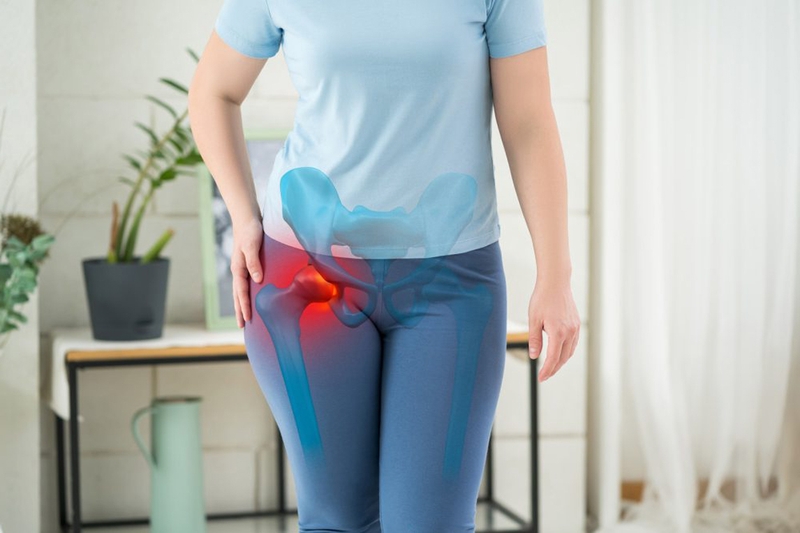
CHAPTER 2: Common Conditions That Cause Hip Pain
Hip pain is a symptom rather than a diagnosis. Identifying the cause is important because the most effective treatment for one condition may not be appropriate for another.
Here are some of the common conditions healthcare professionals consider.