Constipation is often dismissed as a minor inconvenience - something temporary that can be fixed with diet changes or over-the-counter remedies. But in some cases, it becomes a chronic condition that quietly worsens over time. This is the story of how a routine medical scan revealed the severity of a young woman’s ongoing constipation and why it’s a reminder not to ignore persistent digestive symptoms.
A Problem That Seemed “Normal”
For months, the young woman had been experiencing:
- Infrequent bowel movements
- Abdominal discomfort
- Bloating after meals
At first, she didn’t think much of it. Like many people, she assumed it was due to stress, diet, or a busy lifestyle. She occasionally used laxatives or home remedies, which provided temporary relief—but the problem kept returning.
Over time, her symptoms became more noticeable:
- Persistent fullness in the abdomen
- Reduced appetite
- Increasing discomfort
Still, she delayed seeking medical attention, believing it wasn’t serious.
When Symptoms Could No Longer Be Ignored
Eventually, the discomfort intensified. She began experiencing:
- Sharp abdominal pain
- Difficulty passing stool for several days
- A constant feeling of pressure
At this point, she decided to visit a doctor. Given her symptoms, the physician recommended imaging tests to better understand what was happening internally.
The X-ray That Revealed the Truth
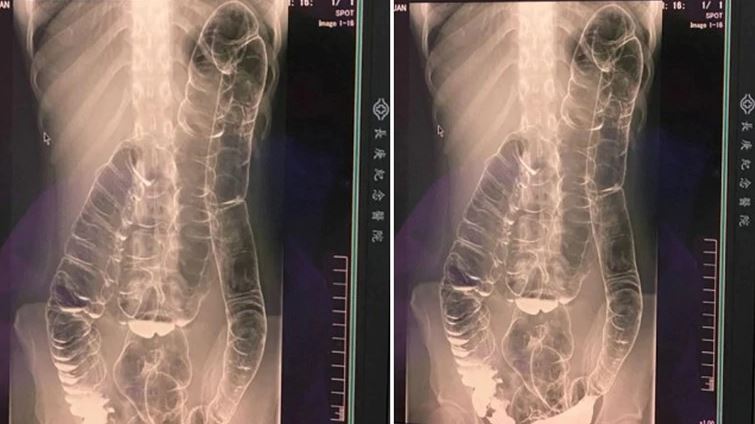
An abdominal X-ray provided a clear and surprising answer.
What the scan showed:
- Significant accumulation of stool in the colon
- Signs of fecal loading (a buildup of hardened stool)
- Distension of parts of the large intestine
This meant her constipation was not just occasional—it had become chronic and severe, affecting how her digestive system functioned.
Understanding Chronic Constipation
Chronic constipation is typically defined as:
- Fewer than three bowel movements per week
- Difficulty passing stool
- Persistent symptoms lasting several weeks or longer
Over time, untreated constipation can lead to:
- Stool hardening and buildup
- Reduced bowel motility
- Increased pressure in the intestines
In severe cases, it may result in complications such as bowel obstruction or hemorrhoids.
Why Imaging Was Important
While many cases of constipation can be diagnosed based on symptoms, imaging like an X-ray helps:
- Confirm the extent of stool accumulation
- Rule out blockages or structural issues
- Guide appropriate treatment
In this case, the X-ray provided visual evidence that the condition had progressed beyond mild discomfort.

What Caused the Condition?
Several factors contributed to her chronic constipation:
1. Low Fiber Intake
A diet lacking in fruits, vegetables, and whole grains can slow digestion.
2. Inadequate Hydration
Water helps soften stool and support bowel movement.
3. Sedentary Lifestyle
Physical activity stimulates intestinal movement.
4. Ignoring the Urge
Delaying bathroom visits can worsen constipation over time.
The Treatment Plan
Once diagnosed, the focus shifted to relieving the buildup and restoring normal bowel function.
Treatment included:
- Dietary changes (increased fiber intake)
- Drinking more fluids
- Gradual use of medically supervised laxatives
- Establishing regular bathroom habits
- Incorporating physical activity
In more severe cases, additional medical interventions may be required.
Lessons to Take Away
This case highlights an important message: persistent symptoms should not be ignored.
Constipation may seem minor, but when it becomes chronic, it can significantly impact quality of life and lead to complications.
When Should You Seek Medical Help?
You should consult a healthcare professional if you experience:
- Constipation lasting more than a few weeks
- Severe abdominal pain
- Blood in stool
- Unexplained weight loss
- Persistent bloating or discomfort
Early evaluation can prevent more serious issues.

The Bottom Line
What started as a seemingly harmless digestive issue turned into a condition that required medical attention and an X-ray was the key to uncovering it. This story serves as a reminder that your body often signals when something isn’t right.
Listening to those signals and taking action early can make all the difference. When it comes to your health, no symptom is too small to take seriously.