In that situation, follow the product instructions or your healthcare professional's guidance rather than simply changing the washing frequency.
How You Shampoo Matters, Too
Even if you have found the right washing schedule, technique matters.
Start by thoroughly wetting your hair.
Apply shampoo primarily to the scalp and roots.
Use your fingertips—not your fingernails—to massage the scalp gently.
There's no need to aggressively scrub.
Allow the shampoo to rinse through the lengths as you wash rather than repeatedly rubbing the ends.
Then rinse thoroughly.
If your hair is particularly oily or you have significant product buildup, a second shampoo may sometimes be useful.
But you don't necessarily need to shampoo twice every time.
Don't Forget Conditioner
Shampoo cleanses.
Conditioner helps improve manageability and reduces friction between hair fibers.
If your hair tends to be dry, tangled, curly, or chemically treated, conditioner can be particularly useful.
Apply it mainly to the lengths and ends rather than heavily coating the scalp if your roots become oily easily.
Leaving conditioner on the scalp may make some people's hair look greasy more quickly.
Again, individual response matters.
Very Hot Water Isn't Necessary
A hot shower can feel relaxing, especially in cold weather, but extremely hot water can leave the scalp and skin feeling dry or irritated.
Warm water is generally sufficient for washing your hair.
At the end of your shower, you don't need an ice-cold rinse to "seal the follicles" or dramatically improve hair growth.
That's a popular beauty claim, but hair follicles don't work that way.
Comfortable water temperature is perfectly adequate.
What About Dry Shampoo?
Dry shampoo can be useful when you need to refresh your hair between washes.
It typically absorbs some oil at the scalp, making hair appear less greasy.
But it doesn't actually wash away sweat, dead skin cells, dirt, or accumulated product in the same way that cleansing does.
Think of dry shampoo as a temporary styling aid rather than a replacement for regular scalp cleansing.
If you use it repeatedly without properly cleansing your scalp, buildup can occur and may contribute to irritation for some people.
Signs You May Be Washing Too Often
Your hair and scalp may give you clues.
Possible signs include:
-
Persistent scalp tightness
-
Increased dryness
-
Itching after washing
-
Hair that feels unusually rough
-
More breakage
-
Excessive frizz
-
Ends that feel brittle
These symptoms don't necessarily prove that you're washing too frequently, but they can be reasons to reconsider your products and routine.
Sometimes the issue is the shampoo rather than the number of washes.
Signs You May Not Be Washing Often Enough
On the other hand, your scalp may be asking for more frequent cleansing.
Possible signs include:
-
Persistent greasy roots
-
Noticeable product buildup
-
Scalp odor
-
Increased itching
-
Flaking
-
A heavy or uncomfortable feeling
-
Hair that looks consistently oily
Again, these signs can have multiple causes.
Persistent itching and flaking, in particular, may be related to dandruff or another scalp condition rather than simply needing more shampoo.
What About Dandruff?
Dandruff is often misunderstood.
It's not necessarily caused by poor hygiene.
Dandruff can be associated with an interaction between scalp oil, a naturally occurring yeast called Malassezia, and individual skin sensitivity.
For some people, washing more regularly can help control symptoms.
Special dandruff shampoos may also contain active ingredients designed to address the underlying process.
If over-the-counter products don't help, or if the scalp becomes very red, painful, crusted, or inflamed, professional evaluation is appropriate.
Should You Wash Your Hair Before Bed?
There's no universal requirement to wash your hair before sleeping.
However, if you've been sweating heavily, swimming, using substantial styling products, or spending time in a dusty environment, cleansing before bed may be more comfortable.
If your hair is wet before sleeping, be gentle with it.
Wet hair is more vulnerable to mechanical damage, so avoid aggressive brushing or pulling.
Using a soft towel or allowing the hair to partially air-dry can reduce unnecessary stress.
What About Washing Your Hair in the Morning?
For many people, morning washing is simply a preference.
There's no major health advantage that requires everyone to wash their hair at a particular time of day.
Choose the schedule that fits your scalp, lifestyle, work routine, and hair type.
Someone who exercises early in the morning may prefer washing afterward.
Someone whose scalp stays clean for several days may prefer washing every few days.
The clock matters less than the condition of your scalp.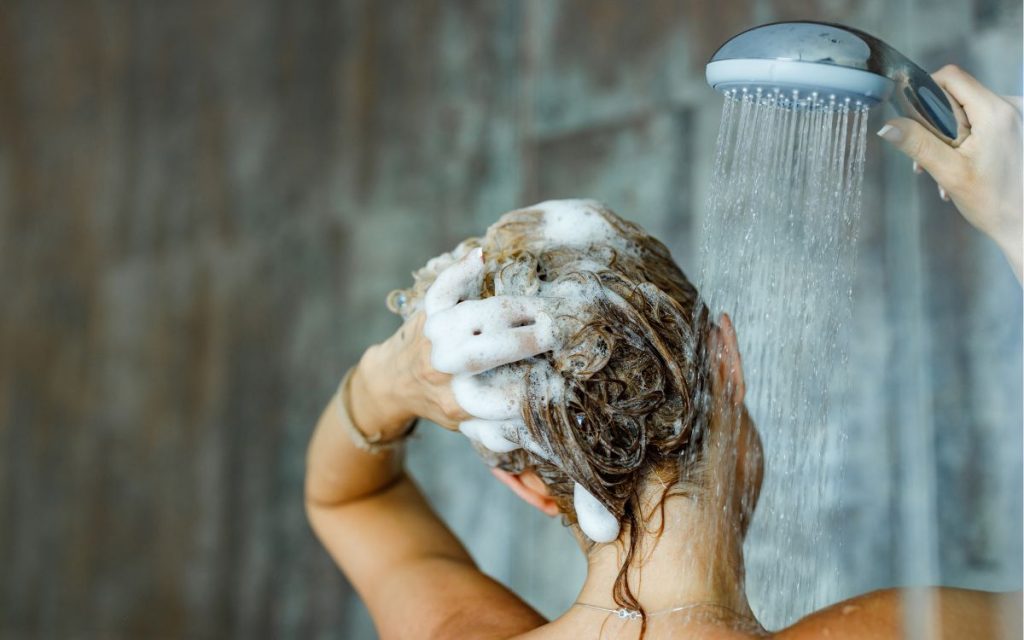
A Simple Starting Guide
While there is no universal rule, the following framework can help:
Oily scalp + fine, straight hair:
You may prefer daily or every-other-day washing.
Normal scalp + average hair texture:
Washing every couple of days may be comfortable.
Dry scalp or dry, textured hair:
You may prefer less frequent shampooing, depending on your scalp and styling routine.
Curly or coily hair:
Longer intervals between shampooing may work well for some people, particularly when the scalp remains comfortable and clean.
Frequent exercise or heavy sweating:
You may need more frequent cleansing or rinsing.
These are starting points—not strict rules.
Your scalp gets the final vote.
The Most Important Rule: Pay Attention to Your Scalp
Rather than counting the exact number of days between washes, pay attention to what your scalp is telling you.
If it becomes greasy, itchy, uncomfortable, or heavily coated with product, cleansing may be appropriate.
If your scalp feels comfortable but your hair lengths are becoming dry and brittle, you may need to adjust the products or frequency.
If you're washing every day and your hair looks healthy and your scalp feels comfortable, there may be no reason to force yourself into a less frequent routine simply because you've heard that daily washing is universally harmful.
Likewise, if you can comfortably go several days without washing, there's no need to shampoo simply because someone else follows a different schedule.
When Hair or Scalp Changes Deserve Attention
Sometimes a change in your hair isn't simply a shampoo problem.
Consider seeking professional advice if you develop:
-
Sudden or significant hair loss
-
Bald patches
-
Persistent scalp pain
-
Severe itching
-
Redness or inflammation
-
Thick scaling
-
Sores or crusting
-
Persistent unexplained dandruff
-
A sudden major change in hair texture or shedding
These symptoms can sometimes be associated with dermatological conditions or other health issues that require more than a change in shampoo.
The Bottom Line
So, how often should you really wash your hair?
There isn't one perfect schedule for everyone.
Your ideal routine depends on your scalp's oil production, hair texture, lifestyle, exercise habits, climate, styling products, and whether you have an underlying scalp condition.
If your scalp becomes oily quickly, more frequent washing may make sense.
If your scalp and hair are dry, you may benefit from washing less often or using gentler products.
Curly, coily, and textured hair may require a different approach than fine, straight hair.
The goal isn't to wash your hair as little as possible—or as often as possible.
The goal is to keep your scalp clean, comfortable, and healthy while protecting the hair from unnecessary dryness and damage.
Instead of following a rigid rule, pay attention to your own scalp.
Your hair doesn't need someone else's schedule.
It needs a routine that works for you.