CHAPTER 1 — WHY COCKROACHES KEEP COMING BACK
Few things are more unpleasant than walking into your kitchen late at night, turning on the light, and seeing a cockroach suddenly disappear behind the refrigerator. Even worse is discovering that what you thought was a single insect was actually part of a much larger infestation.
Cockroaches are among the most persistent household pests because they are exceptionally good at surviving. They can hide in tiny cracks, survive on surprisingly little food, reproduce quickly, and remain active in places that people rarely inspect. This is why killing one or two cockroaches does not necessarily solve the problem.
The first thing homeowners need to understand is that cockroaches are usually attracted to three basic things: food, water, and shelter. A home that provides even small amounts of these resources can become an ideal environment for them.
Food does not necessarily mean crumbs scattered across the floor. Cockroaches can survive on grease, food residue, crumbs trapped beneath appliances, pet food, spilled drinks, and even substances people would never consider edible. A dirty dish left overnight, an uncovered trash bin, or a few crumbs behind a kitchen cabinet may be enough to attract them.
Water is equally important. Leaking pipes, damp sinks, condensation around appliances, wet bathroom floors, and moisture beneath refrigerators can provide the hydration cockroaches need. In some homes, eliminating a moisture source can make the environment significantly less attractive to these insects.
Shelter is the third major factor. Cockroaches prefer dark, warm, protected areas where they can hide during the day. They commonly live behind refrigerators, beneath sinks, inside cabinets, around plumbing openings, behind washing machines, near electrical appliances, and within cracks along walls.
Their ability to squeeze into narrow spaces makes them difficult to detect. A cockroach may spend most of its life hidden in an area that homeowners never see, emerging only at night to search for food and water.
Another reason cockroaches are so difficult to eliminate is their reproduction. Some species produce egg cases containing multiple developing eggs. These cases may be deposited in protected areas, making them difficult to locate. If adult cockroaches are killed while egg cases remain hidden, new cockroaches may emerge later, creating the impression that the infestation has returned.
This is particularly common when people rely exclusively on sprays. A spray may kill insects that are directly exposed, but it may not reach the hiding places where the rest of the population is living. Some products may also cause cockroaches to move into new hiding places, spreading the problem throughout the home.
The German cockroach, one of the most common indoor species, is especially troublesome because it reproduces rapidly and often establishes populations inside kitchens and bathrooms. American cockroaches, meanwhile, may enter homes through drains, sewer systems, basement openings, or outdoor areas.
Understanding where cockroaches are coming from is therefore just as important as killing the ones you see.
Before using any treatment, take a few minutes to inspect the home carefully. Look beneath sinks, behind refrigerators, around food storage areas, near trash containers, and along the edges of cabinets. Pay attention to tiny black droppings, shed skins, egg cases, unpleasant odors, and small insects moving through narrow gaps.
These signs can help identify the areas where cockroaches are most active.
The good news is that cockroach infestations can often be controlled effectively when several strategies are combined. Instead of relying on a single product, the most successful approach involves removing food and water sources, eliminating hiding places, using appropriate baits, sealing entry points, and monitoring the results.
The goal is not simply to kill the cockroaches you can see. The goal is to make your home an environment where cockroaches can no longer survive comfortably or reproduce successfully.
And that begins with identifying the places they are hiding.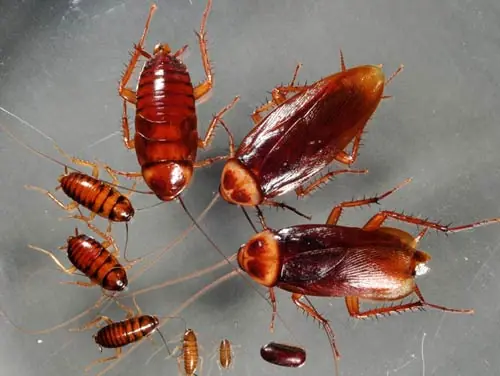
CHAPTER 2 — CLEANING HABITS THAT MAKE YOUR HOME LESS ATTRACTIVE TO COCKROACHES
One of the most effective ways to reduce cockroach activity is to remove the resources that allow them to survive. Although cleaning alone may not eliminate an established infestation, it can dramatically improve the effectiveness of other treatments.
The kitchen should be the first place to focus because it contains many of the food sources cockroaches seek.
Start by cleaning countertops after every meal. Wipe away food residue, grease, spilled drinks, and crumbs. Even small amounts of food left behind can attract insects during the night.
Pay special attention to areas that are often overlooked. The spaces beneath the stove, refrigerator, microwave, and kitchen cabinets can accumulate grease and food particles over time. These areas may provide cockroaches with both food and shelter.