Red onions (Allium cepa) are biennial bulbs grown as edible plants worldwide. Onion plants have long, hollow green leaves that emerge from an underground stem with shallow roots. Red onions are related to yellow onions, garlic, leeks, chives, and shallots.
Red onions can be grown from tiny bulbs called onion sets, which are planted as soon as soil can be worked. If you're growing red onions from seed, sow them indoors eight to ten weeks before your region's last average frost date. Onion plants are toxic to pets,1 so keep that in mind when growing them indoors or outdoors.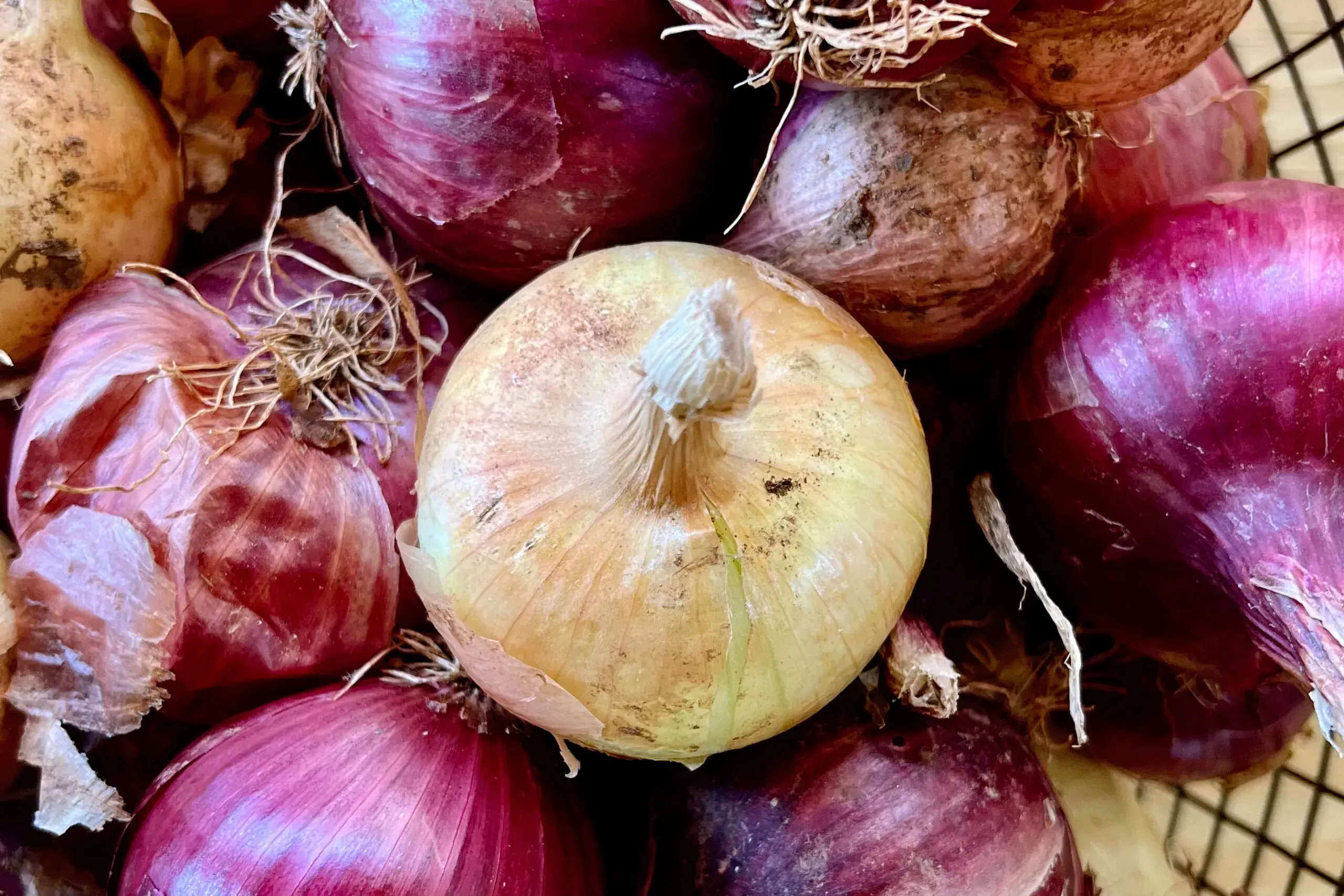
| Common Name: | Red onion |
| Botanical Name: | Allium cepa |
| Family: | Amaryllidaceae |
| Plant Type: | Biennial |
| Size: | 12-24 in. tall, 6-12 in. wide |
| Sun Exposure: | Full sun |
| Soil Type: | Moist, well-drained soil |
| Soil pH: | Neutral |
| Hardiness Zones: | 4-13 (USDA) |
| Native Area: | Central Asia |
| Toxicity: | Toxic to pets 1 |
How to Plant Red Onions
You can grow red onions from seed, but that method tends to be a bit difficult. Growing from seed can be challenging due to damping off, which onions seedlings are prone to. Or, you can purchase transplants or sets to start from, which are small onion bulbs seeded the previous year. Choose sets smaller than three-quarters of an inch around to avoid woody stems.
When to Plant
Red onion sets are planted outdoors in early spring as soon as the ground can be worked. You can also plant red onions in the fall and overwinter them until spring.
Selecting a Planting Site
Plant red onions in a sunny area with well-drained soil rich in organic matter to provide nutrients and hold soil moisture. If you have poorly drained clay soils, grow red onions in raised beds or containers.
Spacing, Depth, and Support
Plant red onion sets one to two inches deep and two to six inches apart in rows 12 to 18 inches apart. You can plant them closer together to harvest young plants as green onions.
Plant seeds three-quarters of an inch deep. Then, space transplants about four inches apart in rows 12 to 18 inches apart.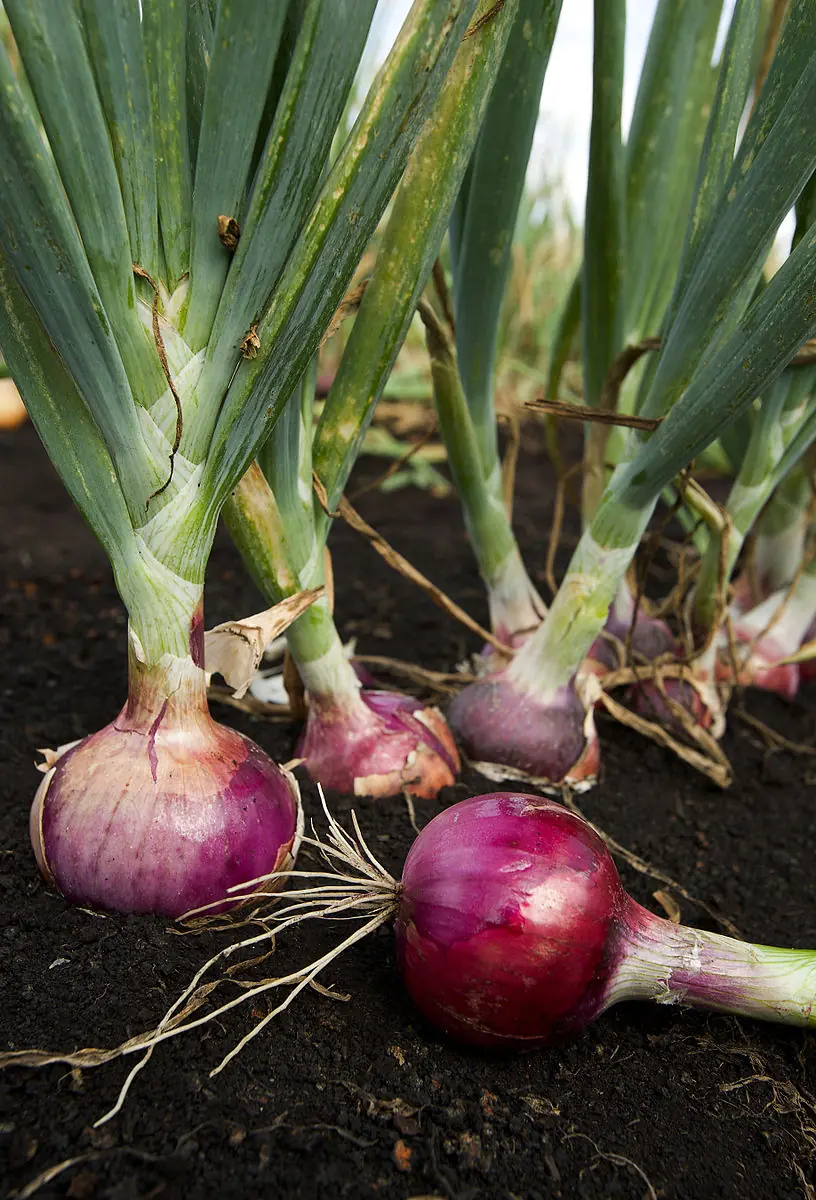
Red Onion Plant Care
Light
Red onions need as much sunlight as possible. Your plants should receive a minimum of six to eight hours of full sun each day.
Soil
Onions grow best in loose soil with good drainage and lots of organic matter. The ideal soil pH for red onions is between 6.0 and 7.0.
Water
Red onions require at least one inch of water each week. If it doesn't rain, give your plants a good soaking once per week, twice in very hot, dry conditions. An inch of rain should soak sandy, well-drained soil to a depth of ten inches and heavier clay soil six inches deep. Check the soil moisture with a trowel and add more water as needed. Sandy soil may need more frequent watering. Stop watering when the onion leaves start to fall over.
Temperature and Humidity
Onions are a cool-season crop that grows best in temperatures between 55 and 75 degrees F., but they can withstand a light frost. Hard freezes below 20 degrees F. can damage plants. Watering well before a hard freeze and protecting plants with mulch can help insulate them from damage.
Fertilizer
Prepare the planting site by adding organic compost in fall or spring. Starting a few weeks after planting, apply a nitrogen-rich organic fertilizer every two weeks. As the bulbs grow, they push against the surrounding soil creating cracks in the surface. This is a sign to stop fertilizing.
Pollination
Red onions are not self-fertile, so they rely on beneficial insects to pollinate. However, onions don't flower until their second year, and gardeners typically harvest onions in their first year of growth before any pollination occurs.
Types of Red Onion
While there are many different varieties of red onion, including heirlooms, cultivars, and hybrids, the main factor to consider is day length.
- Short-day onions like 'Red Rock' will start to form bulbs when they get ten to 12 hours of sunlight each day, making them ideal for southern areas.
- Day-neutral onions like 'Tropeana Lunga', an Italian heirloom with long, torpedo-shaped bulbs, begin forming bulbs with 12 to 14 hours of sunlight daily, making them well-adapted to most regions.
- Long-day onions require 14 to 16 hours of sunlight per day and are ideal for northern regions with longer summer days. 'Redwing' is a long-day variety with good storage qualities.
Red Onions vs. Shallots
Red onions and shallots may look similar, but there are some key differences. Shallots are smaller, with thinner layers and a pale purple rather than deep red hue, and a sweeter, milder flavor. They grow in clusters rather than single bulbs.
Harvesting Red Onions
Stop watering red onions when leafy tops begin to fall over. Thye are ready to harvest one to two weeks later, when the stem has dried out.
- Use a garden fork to lift onions gently out of the soil.
- Place the onions in a single layer in a warm, dry, sheltered place with good air circulation and allow them to cure for several weeks.
- Curing is complete when the tops are completely dry, the neck is tight, and the outer layers of the skin are papery. At this point, you can trim the tops down to an inch above the bulb or braid the tops together.
- Store cured onions in a well-ventilated container like a mesh bag or wire basket and keep them in a cool, dry place.
How to Grow Red Onions in Pots
If you're short on space or don't have enough sun or the right soil to grow red onions in the ground, you can grow them in containers.
Choose a container with drainage holes in the bottom that's at least 12 inches deep and 8 inches around. You can plant several red onion plants in a single pot as long as it's at least 3 inches across per onion.
Fill pots with a mix of two-thirds potting soil and one-third organic compost to one inch below the top of the container. Since containers tend to dry out more quickly in hot weather, you may need to water more frequently.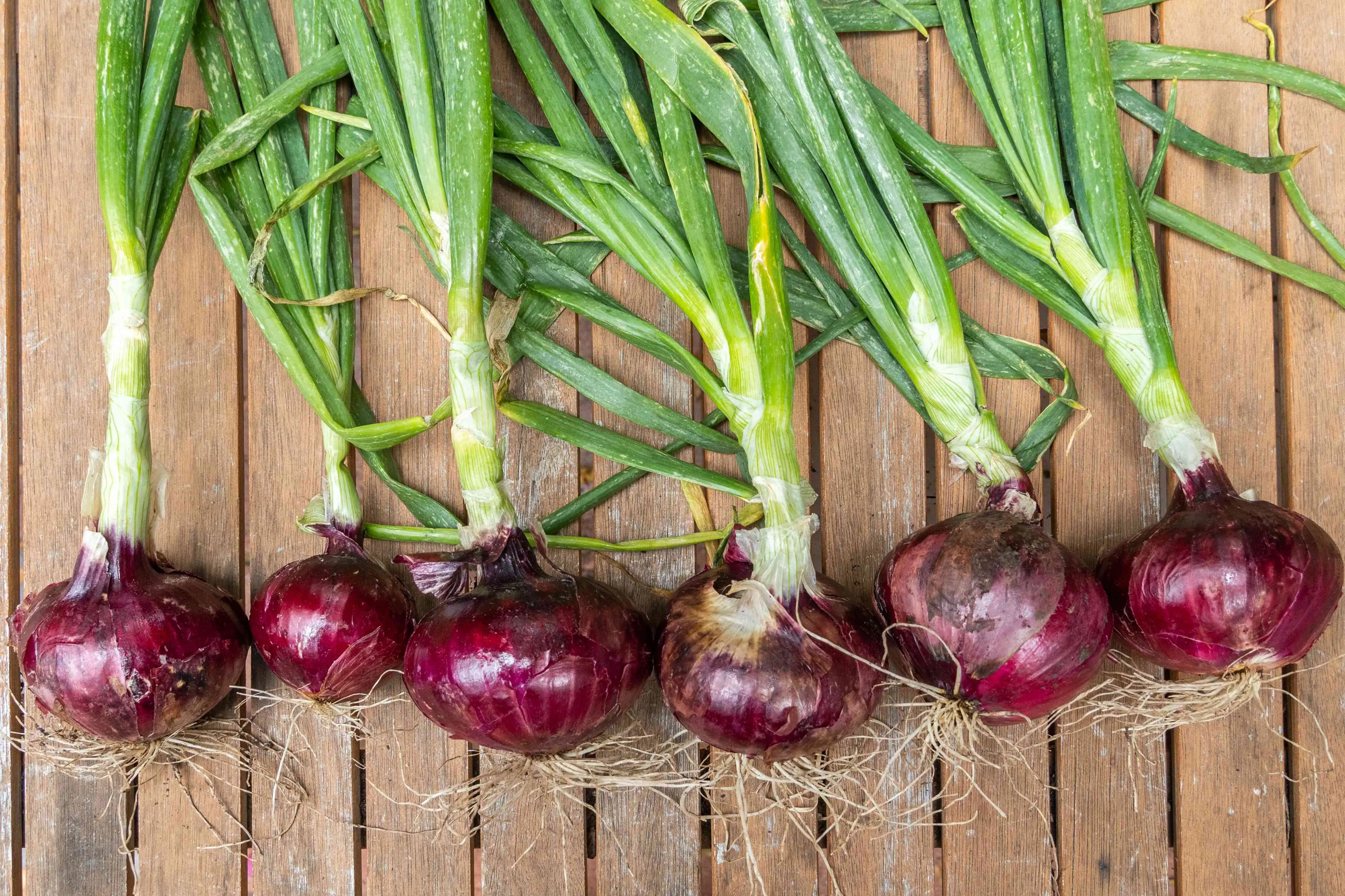
Pruning
Red onions generally don't need to be pruned, although some growers trim about four inches off leaves of starts when they're about 6 inches tall. This is thought to promote stronger roots, more vigorous plants, and bigger bulbs.
Propagating Red Onions
You can propagate red onions by growing onion sets from seed, then saving them to plant the following season. Planting onion sets in the spring rather than growing plants from seed will give you an earlier crop. Red onions planted from seed tend to have a better success rate, too. Here's how to propagate your own red onion sets.
- Plant red onion seeds in rich soil in a spot with full sun in the late winter or early spring. Wait until soil temperatures are around 45 degrees.
- Keep the soil evenly moist. Once seeds germinate, allow all seedlings to grow.
- Harvest the plants in midsummer when the greens begin to dry out. Bulbs should be around half an inch to three-quarters of an inch in diameter. Let the bulbs cure in a dry, sunny spot until the foliage is completely dry.
- Store onion sets in a cool, dry place until the following spring. Keep them in mesh bags or another container with good ventilation.
How to Grow Red Onions From Seed
Red onion seeds are best direct sowed. Though you can attempt to grow and transplant seedlings into your garden, the best method is direct sowing.
When the weather has warmed above freezing, usually late winter to early spring, direct sow the seeds 1/4 inch deep and four inches apart. Cover the seeds with a light layer of soil. Onions require an open and sunny growing site, fertile soil, and good drainage.
Overwintering
You can plant red onions from seed, transplants, or sets in the fall, then let young plants overwinter until the following spring. Be sure to seed or plant early enough so onions have several weeks to establish before your first frost date. In northern climates (zone 6 and colder), mulch plants with straw or protect them with row cover to insulate from cold temperatures.
Common Pests and Plant Diseases
- Rot: Overly wet conditions can cause roots and stems to rot in the ground. Prevent this by choosing a site with well-drained soil and good spacing for air circulation between plants.
- Leaf miner: The larvae of the leaf miner, a flying insect that lays its eggs on allium plants, feeds on red onion leaves. Signs include thin white trails on the leaves and leaf drop in heavy infestations. Check transplants and sets thoroughly to avoid introducing leaf miners into the garden, and harvest quickly to avoid further damage.
- Damping off: Pythium fungus can cause established onion seedlings to collapse and die. Avoid overwatering seedlings to help prevent damping off.
-
How long does it take to grow a red onion?
Red onions take anywhere from 90 to 120 days to reach maturity depending on the variety and whether they're planted from seed or onion sets.
-
Can you grow a red onion from another onion?
Yes. You can plant the root end of a mature onion in soil and harvest the green tops. You can also remove and replant the new shoots from an onion that has sprouted and plant those in your garden to grow new onion plants.
-
When should you plant red onions?
Red onion sets should be planted as soon as the ground can be worked in early spring. Red onion seeds should be started indoors eight to ten weeks before your region's last frost date. Red onions can also be planted in fall four to six weeks before your first frost date.