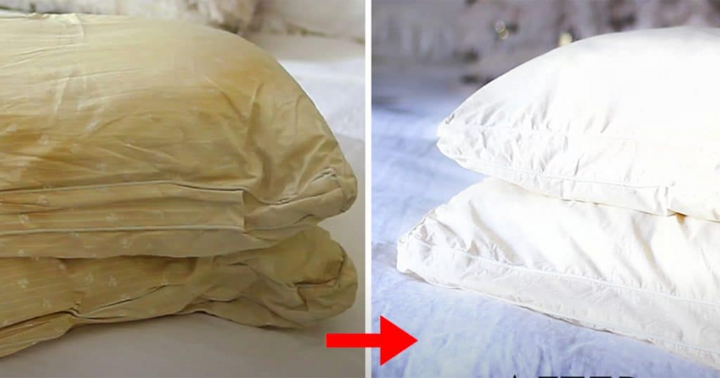
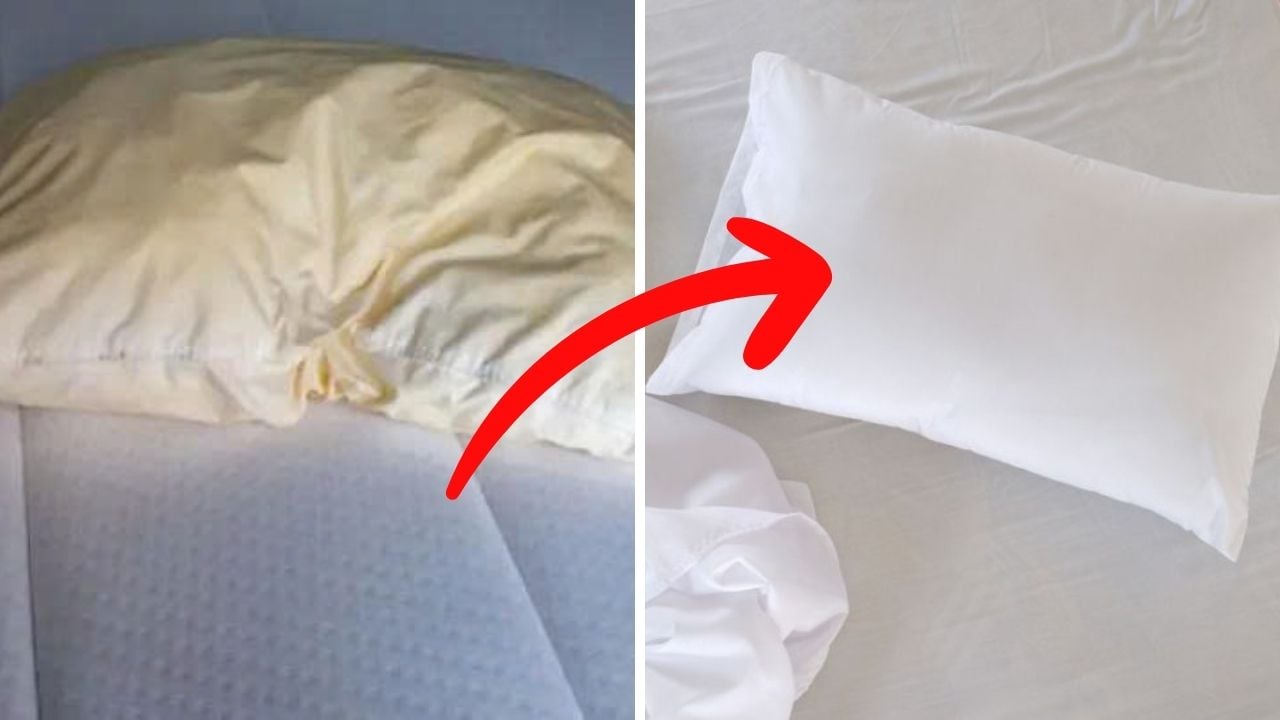
Have you ever removed your pillowcase and wondered why your once-white pillow has slowly turned yellow, beige, or slightly brown?
You're definitely not alone.
Even when you wash your pillowcases regularly, pillows themselves can gradually develop yellow stains. Over time, sweat, body oils, saliva, skincare products, hair products, and everyday moisture can work their way through the pillowcase and into the pillow.
The good news is that yellowed pillows don't necessarily need to be thrown away. Depending on the pillow's material and condition, a careful cleaning routine can help remove stains, freshen the fabric, and restore a much cleaner appearance.
Here are three practical methods you can try at home, along with some important tips to avoid damaging your pillows.

Why Do Pillows Turn Yellow?
Before trying to whiten a pillow, it helps to understand why the discoloration happens in the first place.
The most common reason is perspiration.
While you're sleeping, your body naturally releases sweat and oils. Even if you don't feel particularly sweaty, small amounts of moisture can transfer from your skin and hair onto your pillow.
Over months and years, that moisture can accumulate.
Other contributors can include:
-
Body oils
-
Saliva
-
Moisture from damp hair
-
Makeup
-
Facial moisturizers
-
Hair products
-
Dust
-
Spilled drinks
-
Infrequent washing
-
Humidity
The result is often a familiar pattern of yellowish patches, especially around the center of the pillow where your head rests.
This discoloration doesn't necessarily mean the pillow is dirty in a dangerous sense. However, it is a sign that the pillow could benefit from proper cleaning.
Tip 1: Wash the Pillow According to Its Care Label
The first and most important step is surprisingly simple:
Check the care label before doing anything else.
Different pillows require completely different cleaning methods.
Cotton and polyester-filled pillows may often be machine washable, while memory foam and some specialty pillows generally should not be placed in a washing machine.
Look for instructions such as:
-
Machine washable
-
Hand wash only
-
Spot clean
-
Do not wash
-
Do not bleach
-
Tumble dry low
-
Air dry
Never assume that every white pillow can be treated the same way.
For washable pillows
If the care label permits machine washing, remove the pillowcase and any protective cover.
Use an appropriate amount of detergent and select a washing cycle recommended by the manufacturer.
For heavily yellowed pillows, a whitening or oxygen-based laundry product may sometimes be appropriate if the care label allows it.
Avoid automatically reaching for chlorine bleach.
Although bleach may seem like the obvious solution for white fabric, it can damage certain fibers, weaken materials, or cause discoloration when used incorrectly.
A gentler oxygen-based product can be a better option for many washable fabrics.
Don't Overload the Washing Machine
If you're washing pillows in a machine, avoid cramming too many items into the drum.
Pillows need enough space for water and detergent to circulate properly.
If the machine is packed too tightly, the pillow may not rinse thoroughly.
For some machines, washing two similar pillows together can help maintain balance during the spin cycle.
However, always follow the manufacturer's instructions for both the pillow and washing machine.
After washing, make sure there is no remaining detergent or cleaning product trapped inside the pillow.
An extra rinse cycle may be helpful if the care instructions permit it.
Drying Is Just as Important as Washing
This step is easy to underestimate.
A pillow that remains damp inside can develop an unpleasant odor and may encourage microbial growth.
For machine-washable pillows that are approved for tumble drying, follow the care label and use the recommended temperature.
Check the pillow periodically during drying.
It should be completely dry throughout, not merely dry on the outside.
If the pillow is suitable for air drying, place it somewhere with good airflow and allow it to dry thoroughly.
Don't put a damp pillow back on your bed simply because the surface feels dry.
Tip 2: Try a Gentle Baking Soda Cleaning Method
Baking soda is a popular household cleaning ingredient because it can help absorb odors and freshen fabrics.
For pillows that cannot be fully washed, or when you're simply trying to freshen a pillow between deeper cleanings, baking soda can be useful.
However, baking soda isn't a magical bleaching agent.
It may help with odor and surface freshness, but heavily embedded yellow stains may require a proper wash or professional cleaning.
How to try it
Start by removing the pillowcase and protective cover.
Sprinkle a light, even layer of baking soda over the surface of the pillow.
Leave it for several hours so it has time to absorb odors.
Then thoroughly vacuum the baking soda away using a clean upholstery attachment.
Make sure no significant amount of powder remains on the pillow.
This method is particularly useful as a simple refresh, but it shouldn't replace washing when the pillow's care instructions allow washing.
What About Baking Soda and Vinegar?
You'll often see online cleaning recipes that combine baking soda and vinegar.
While the combination can create a dramatic fizz, the reaction largely involves the acid and alkaline ingredients neutralizing one another.
That bubbling effect can look impressive, but more fizz doesn't automatically mean better cleaning.
If you're dealing with serious yellowing, it's generally more useful to choose a cleaning product specifically designed for the fabric and follow its instructions rather than relying on a viral recipe.
Tip 3: Use an Oxygen-Based Whitening Product When Appropriate
For white, washable pillows, an oxygen-based laundry whitener can sometimes help improve yellowing.
These products are designed to help break down organic stains and brighten fabrics.
Before using one, however, check the pillow's care label and the product instructions.
If the pillow says "do not bleach," don't assume that every whitening product is safe.
There is an important difference between different types of bleaching agents.
Chlorine bleach
Chlorine bleach is powerful but can be harsh on fabrics and materials.
Improper use can weaken fibers or produce unexpected discoloration.
Oxygen-based products
Oxygen-based whiteners are often marketed as gentler alternatives and may be suitable for certain washable fabrics.
But "gentler" does not mean universally safe.
Always check the label first.
A Simple Whitening Routine
If your pillow is machine washable and the manufacturer allows whitening products, a basic routine might look like this:
Step 1: Remove the pillowcase
Wash the pillowcase separately according to its care instructions.
Step 2: Inspect the pillow
Look for yellow stains, tears, unusual odors, or signs of damage.
Step 3: Pre-treat visible stains
If permitted by the care label, apply an appropriate laundry stain treatment to heavily discolored areas.
Step 4: Wash
Use the recommended detergent and water temperature.
Step 5: Rinse thoroughly
Make sure detergent and cleaning products are completely removed.
Step 6: Dry completely
Follow the manufacturer's drying instructions.
Step 7: Inspect before use
Make sure the pillow is completely dry and has no lingering chemical odor.
What If Your Pillow Is Memory Foam?
This is where you need to be especially careful.
Memory foam pillows generally should not be machine washed or soaked.
Excess water can damage the foam structure and make the pillow extremely difficult to dry properly.
If your memory foam pillow has yellow discoloration, start with the manufacturer's cleaning instructions.
Usually, spot cleaning is safer than soaking the entire pillow.
You may be able to gently clean the affected area with a suitable mild cleaning solution, followed by careful air drying.
Don't saturate the foam.
And don't use harsh chemicals unless the manufacturer specifically recommends them.
Don't Forget the Pillow Protector
One of the easiest ways to prevent yellow pillows is to use a washable pillow protector underneath the pillowcase.
The protector acts as an additional barrier between your head and the pillow itself.
Instead of sweat, oils, and skincare products reaching the pillow directly, much of the moisture can be caught by the protector.
This makes future cleaning much easier.
A good routine might be:
Pillowcase: wash regularly.
Pillow protector: wash periodically.
Pillow itself: clean according to its care instructions.
This simple system can help extend the life of your pillows.
How Often Should You Wash Your Pillow?
There's no single schedule that works for every pillow.
It depends on the material, your sleeping habits, whether you sweat heavily at night, and the manufacturer's recommendations.
Pillowcases generally need much more frequent washing than the pillows themselves.
Pillows may only need periodic washing if they're designed to be washable.
Protectors can reduce the amount of direct contamination and may make maintenance easier.
The key is to follow the manufacturer's care instructions rather than washing a pillow aggressively simply because it has started to look yellow.
When Yellowing Means It's Time for a New Pillow
Cleaning can improve appearance, but it can't make an old pillow new forever.
If a pillow is:
-
Permanently flattened
-
Lumpy
-
Misshapen
-
Torn
-
Strongly odorous even after cleaning
-
Difficult to clean properly
-
No longer supportive
it may simply be time to replace it.
A pillow's primary job isn't to look white.
It's to provide appropriate comfort and support while you sleep.
Sometimes replacing an old pillow is a better investment than repeatedly trying increasingly aggressive cleaning methods.
Don't Use Harsh Chemicals Just to Make a Pillow White
This is one of the biggest mistakes people can make.
A pillow touches your face for hours every night.
Using excessive amounts of bleach, strong acids, solvents, or incompatible cleaning products can leave chemical residues or damage the material.
And never mix household cleaning chemicals unless the product instructions specifically say the combination is safe.
In particular, never mix chlorine bleach with ammonia or acidic products, because dangerous gases can be produced.
When cleaning bedding, simple and appropriate is usually better than extreme.
How to Prevent Yellow Pillows in the Future
Once you've cleaned your pillow, prevention is much easier than repeatedly removing deep stains.
1. Use a pillow protector
This is probably the simplest preventive measure.
2. Wash pillowcases regularly
Pillowcases collect sweat, oil, skincare products, and hair products.
3. Don't sleep with wet hair
Moisture can transfer directly into the pillow.
4. Allow pillows to air out
If practical, let pillows air in a clean, dry environment according to their care instructions.
5. Treat stains early
Fresh stains are generally easier to remove than stains that have accumulated for months.
6. Follow the manufacturer's instructions
The correct cleaning method depends heavily on the pillow's filling and construction.
What About Sunlight?
Sunlight is sometimes recommended as a natural way to freshen white bedding.
Allowing a washable pillow to dry thoroughly in appropriate conditions can help eliminate moisture and may provide some deodorizing benefit.
However, prolonged direct sunlight can also cause fabrics and materials to fade or degrade.
Don't assume that leaving every pillow in intense sunlight all day is a safe whitening method.
Check the care instructions and avoid excessive heat.
A Cleaner Pillow Doesn't Have to Mean a Perfectly White Pillow
It's worth remembering that pillows naturally age.
Even with excellent care, fabrics can gradually change color.
The goal shouldn't necessarily be to make a pillow look brand-new forever.
Instead, focus on:
Cleanliness.
Complete drying.
Good hygiene.
Comfort and support.
Replacing the pillow when it has reached the end of its useful life.
A slightly off-white pillow that is properly cleaned and maintained may be perfectly usable, while an artificially brightened pillow that has been damaged by harsh chemicals is not necessarily better.
Final Thoughts
Yellowed pillows are extremely common, and in many cases, they can be cleaned and refreshed rather than immediately thrown away.
The three most useful approaches are:
1. Wash the pillow according to its care label.
2. Use gentle freshening methods such as baking soda when appropriate.
3. Consider an oxygen-based whitening product for compatible washable pillows.
But there's one rule that matters more than all the cleaning tricks online:
Always check what your pillow is made of before treating it.
A cotton or polyester pillow may tolerate washing, while memory foam may require careful spot cleaning. Using the wrong method can cause more damage than the original yellow stains.
And once your pillow is clean, prevention is key. A washable pillow protector, regular pillowcase washing, and proper drying can help slow the return of those familiar yellow marks.
So before you toss an old-looking pillow into the trash, take a closer look.
With the right cleaning method, that yellowed pillow may still have plenty of life left in it.