Chapter 1: The Strange Creature Hidden in a Child’s Hair
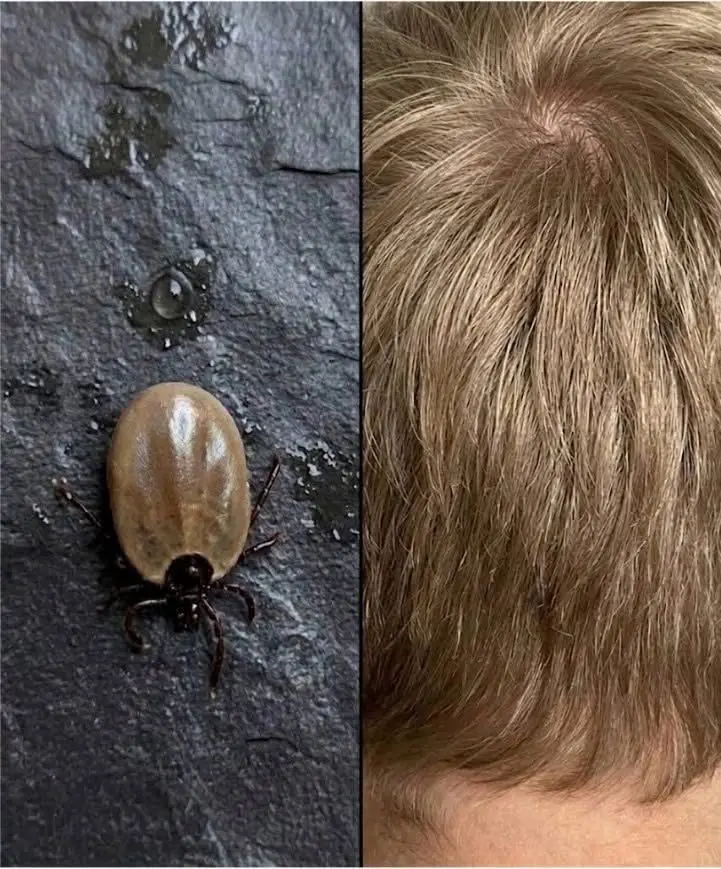
A parent’s discovery of an unfamiliar creature in a child’s hair can be frightening. At first glance, it may look like a small insect, a piece of dirt, or even a strange skin growth. But when the creature has an oval body, several legs, and appears to be attached to the skin, one possibility deserves careful attention: a tick.
The photograph accompanying this story shows a small, swollen-looking creature on a dark surface beside a close-up of human hair. Although the image does not establish where the creature was found or identify its exact species, its appearance is consistent with a tick. A clear examination by a healthcare professional or an experienced specialist would be needed for confirmation.
Ticks are often mistaken for insects, but they are actually arachnids, belonging to the same broad group as spiders and mites. Adult ticks generally have eight legs, although their appearance can vary depending on their life stage. Their bodies are designed to attach to a host and feed on blood.
Unlike many insects that bite and quickly fly away, certain ticks remain attached for hours or even days. They use specialized mouthparts to anchor themselves to the skin while feeding. Because their bites may be painless, a person can carry a tick without realizing it.
Children are particularly likely to encounter ticks during outdoor activities. Playing in gardens, walking through tall grass, exploring wooded areas, or spending time with pets can bring them into contact with these tiny parasites. Ticks do not jump or fly. They typically wait on vegetation and attach when a person or animal brushes against them.
The scalp can be a difficult place to notice a tick. Hair may conceal the creature, especially around the hairline, behind the ears, and near the back of the neck. A child may continue playing normally while a tick remains hidden among the strands.
A tick that has recently attached may appear very small, sometimes resembling a dark speck. After feeding, its body can become larger and more rounded. This change can make it easier to recognize, but it may also mean that the tick has been attached for some time.
Parents should avoid assuming that every unusual object in the hair is a tick. Lice, scabs, plant material, and other small creatures can look similar in photographs. The most reliable approach is to examine the object carefully without squeezing it and seek professional advice if identification is uncertain.
The discovery itself does not automatically mean that a child has developed an infection. Many tick bites do not lead to illness. However, certain ticks can carry organisms that cause diseases, and prompt removal is an important precaution.
The most useful lesson from this image is not that a particular child has suffered a confirmed medical emergency. It is that an unfamiliar creature found close to the scalp should be taken seriously, identified carefully, and handled safely.
Parents who discover a possible tick should remain calm, check the surrounding skin, and follow recommended removal guidance. Knowing what to do can turn a frightening moment into a manageable situation.
Chapter 2: Why Ticks Can Be Difficult to Notice
One of the most unsettling things about ticks is how easily they can go unnoticed. Their small size, quiet feeding behavior, and ability to hide in hair or skin folds make them difficult to detect during ordinary daily routines.
A child may spend an afternoon outdoors and return home without showing any obvious sign of a bite. The tick may have attached itself to the scalp, behind an ear, or near the neckline. Because the bite is often painless, the child might not complain at all.
Ticks are commonly found in environments where vegetation provides a suitable place to wait for a passing host. Tall grass, shrubs, leaf litter, and wooded areas can all provide opportunities for contact. Some ticks also enter homes on pets, clothing, or outdoor equipment.
This is why a tick check should not be limited to the arms and legs. Parents should examine the entire body after outdoor activities, paying special attention to areas that are warm, protected, or difficult to see.
The scalp deserves particular attention. Thick hair can conceal a tick, and a quick glance may not reveal anything unusual. Using good lighting and gently separating the hair into small sections can make the inspection more effective.
The areas behind and around the ears are also important. Ticks may attach near the hairline, along the neck, or in other places where clothing and skin meet. Checking these areas carefully can help detect a tick before it remains attached for an extended period.
A full inspection should also include the underarms, waist, behind the knees, between the legs, and around the belly button. Children should be encouraged to tell an adult if they notice a small dark object attached to their skin or an unexplained spot that seems unusual.
Parents should also inspect pets. Dogs and cats can carry ticks indoors, allowing them to reach family members even after everyone has returned from an outdoor activity. Checking animals regularly and following veterinary advice on tick prevention can reduce this risk.