I found it while sorting laundry.
It was small, dark, and completely unfamiliar—a tiny object resting at the bottom of my husband’s pants pocket. At first, I couldn't tell whether it was a piece of wood, a dried seed, a fragment of something decorative, or simply an object that had accidentally ended up in his pocket.
I turned it over several times in my hand, wondering what it could possibly be.
Then I noticed something else.
It had a subtle, distinctive fragrance.
If you've ever come across a small, dark, aromatic piece like this, you may have encountered something much more interesting than an ordinary piece of wood.
It could be an agarwood incense pellet, sometimes associated with the fragrant material known as oud.
Of course, appearance alone isn't enough to identify an unknown object with certainty. Similar-looking pellets can be made from many different materials. But if the object has a rich woody aroma and was intentionally carried for its fragrance, agarwood is one possibility worth knowing about.
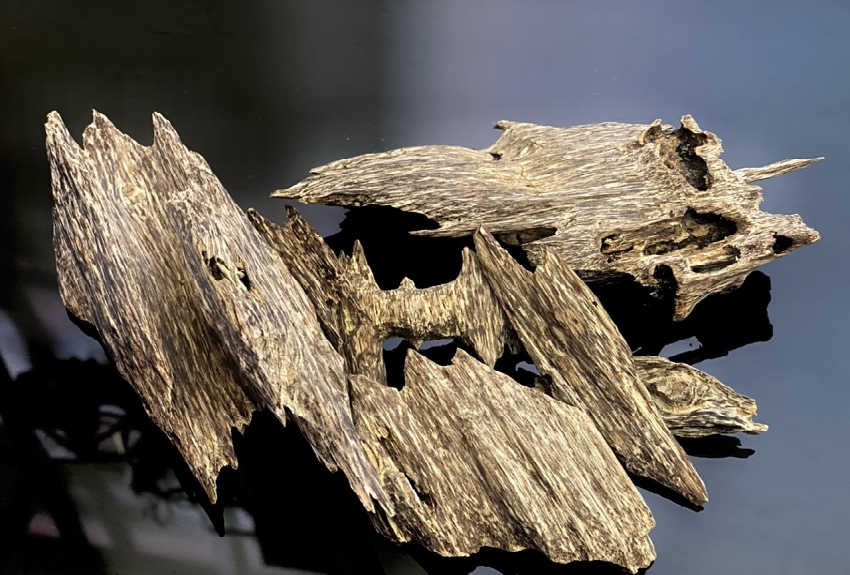
What Exactly Is Agarwood?
Agarwood is one of the world's most prized aromatic woods.
It comes from certain trees in the Aquilaria and related genera, primarily found in parts of Southeast Asia and surrounding regions.
Interestingly, the fragrant material isn't simply ordinary wood.
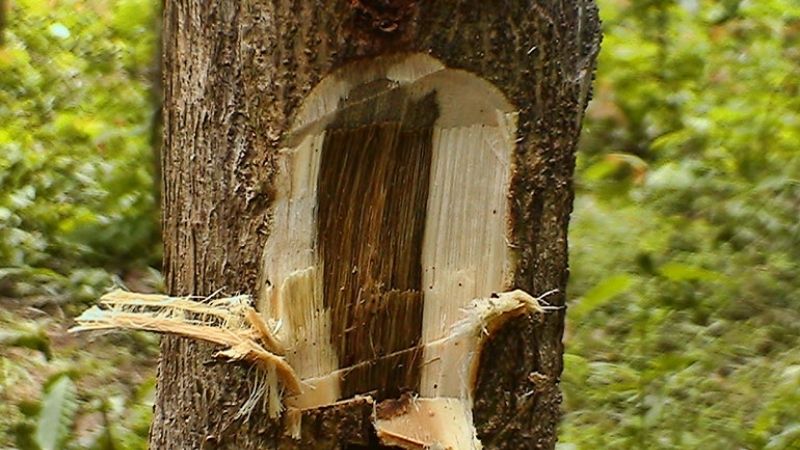
Agarwood develops when a susceptible tree experiences injury, infection, or other stress. In response, the tree can produce resin-rich material around affected areas.
Over time, this resin changes the character of the wood.
Instead of remaining pale and relatively ordinary, portions of the heartwood can become darker, heavier, and intensely aromatic.
This naturally occurring process is one reason agarwood has historically been considered so valuable.
Why Is It Sometimes Called “Wood of the Gods”?
Agarwood has been associated with religious, cultural, and ceremonial traditions for centuries.
Its deep fragrance has made it especially important in various parts of Asia and the Middle East.
Depending on the culture and tradition, agarwood may be used during:
-
Meditation
-
Prayer
-
Religious ceremonies
-
Family gatherings
-
Hospitality rituals
-
Fragrance practices
-
Traditional celebrations
Its reputation has grown not only from its scent but also from its rarity and long history of cultural use.
What Could the Small Pellet in the Pocket Be?
Agarwood can be processed into various forms.
It may be found as:
-
Small chips
-
Powder
-
Beads
-
Incense pieces
-
Compressed pellets
-
Cones
-
Decorative objects
A small dark pellet designed to release fragrance when heated could therefore be an agarwood-based incense product.
However, it's worth emphasizing that a photograph or appearance alone cannot confirm the material.
There are many commercial incense products made from mixtures of wood powder, binders, essential oils, and other aromatic ingredients.
If you need to know exactly what an object is, packaging, labeling, or an expert assessment is much more reliable.
Why Would Someone Carry Agarwood in Their Pocket?
At first, carrying a tiny piece of fragrant wood around might seem unusual.
But there are several perfectly ordinary reasons someone might do it.
For the fragrance
Some people simply enjoy the distinctive scent.
A small aromatic piece can be kept in a pocket, drawer, bag, car, or personal space so that its fragrance is available whenever desired.
Unlike a strong spray or synthetic air freshener, natural agarwood is often appreciated for its more complex and subtle aroma.
For relaxation
Scent can have a powerful connection with memory and emotion.
A familiar fragrance can make someone feel calmer, remind them of a particular place, or create a sense of comfort.
Some people incorporate fragrant woods into meditation or quiet personal routines for precisely this reason.
The experience is subjective, of course.
A fragrance that feels peaceful to one person may seem strong or unusual to another.
For cultural or spiritual reasons
Agarwood has a long history in religious and cultural traditions.
For some people, carrying a small piece can represent spirituality, tradition, good fortune, or a connection to family heritage.
The object may therefore have sentimental value that has nothing to do with its monetary price.
Why Is Genuine Agarwood So Expensive?
One of the biggest reasons is rarity.
Not every tree produces the highly resinous material that people associate with premium agarwood.
Natural formation can be unpredictable and may take many years.
The resulting material can vary considerably in:
-
Resin concentration
-
Fragrance
-
Density
-
Color
-
Age
-
Geographic origin
These differences can dramatically affect value.
High-quality material with a particularly complex aroma can command significant prices in specialist markets.
The Resin Is the Key
Ordinary wood generally has a relatively mild smell.
Resin-rich agarwood is different.
The aromatic compounds contained in the resin contribute much of the fragrance that makes agarwood desirable.
In general, material with greater resin content may have a richer and more persistent aroma.
However, quality isn't determined by color alone.
A very dark piece isn't automatically superior to a lighter one.
Experts may consider aroma, resin distribution, origin, density, age, and other characteristics when evaluating agarwood.
What Does Agarwood Actually Smell Like?
Describing agarwood's fragrance isn't easy because the scent can vary dramatically between pieces.
People may describe it using words such as:
-
Woody
-
Earthy
-
Sweet
-
Warm
-
Spicy
-
Smoky
-
Resinous
-
Musky
-
Balsamic
-
Slightly floral
One of the most interesting characteristics is that the fragrance can change as the material warms.
Instead of producing a single flat smell, different aromatic notes may emerge gradually.
That complexity is part of what makes natural agarwood so fascinating to fragrance enthusiasts.
Why Does the Aroma Change When It's Heated?
Heating aromatic materials can cause different volatile compounds to evaporate at different rates.
As the temperature changes, the fragrance profile can therefore shift.
You might notice one character at the beginning and another several minutes later.
This is somewhat similar to the way people describe the different "notes" of fine perfume.
The experience can be subtle rather than overwhelming.
That is one reason enthusiasts may spend considerable time comparing different varieties of agarwood.
Agarwood and the Experience of Meditation
Agarwood has long been associated with contemplative practices.
In some traditions, incense is used to help create a distinct environment for meditation or prayer.
The scent can become a psychological signal:
The fragrance appears → the environment becomes quieter → the mind begins to slow down.
This doesn't mean agarwood has a medically proven ability to treat anxiety, depression, or other conditions.
Rather, the ritual surrounding fragrance may help some people create a calming atmosphere.
For many enthusiasts, that's enough.
The Power of Scent and Memory
Smell has a particularly strong connection with memory.
A certain fragrance can unexpectedly remind someone of:
-
A childhood home
-
A religious ceremony
-
A grandparent
-
A particular country
-
A holiday
-
A favorite room
-
A significant period of life
Agarwood may therefore have value that goes beyond its physical properties.
Someone might carry a small piece simply because its smell reminds them of home.
Could It Be a Lucky Charm?
In some cultural contexts, aromatic woods can carry symbolic meaning.
A small piece may be kept as a personal object associated with:
-
Protection
-
Good fortune
-
Prosperity
-
Spiritual intention
-
Personal identity
These meanings are cultural or personal rather than scientifically established medical effects.
But symbolic objects can still have genuine emotional importance.
A small object doesn't need to have supernatural properties to be meaningful to the person carrying it.
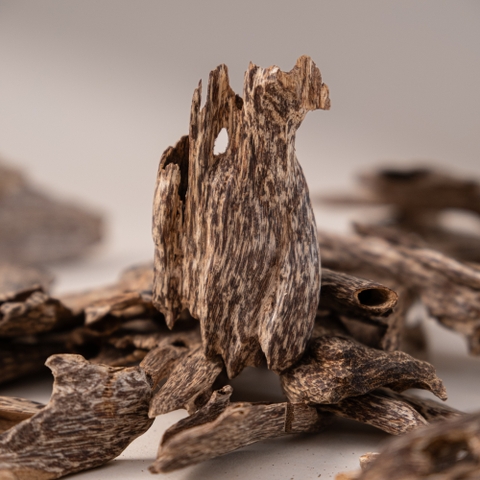
Agarwood Has a Long History
The use of aromatic woods is not a modern trend.
Agarwood has been valued for centuries across different regions.
It has appeared in traditional incense practices, perfumery, religious ceremonies, and cultural rituals.
Its history is one reason high-quality agarwood continues to attract collectors and fragrance enthusiasts today.
When someone carries a tiny pellet in a pocket, they may unknowingly—or very intentionally—be carrying a small piece of a much larger cultural tradition.
From Tree to Incense
Turning agarwood into incense involves several stages.
Depending on the product, material may be:
-
Selected for fragrance and resin content.
-
Dried appropriately.
-
Ground or processed.
-
Combined with other materials if the product isn't pure.
-
Shaped into pellets, cones, or other forms.
-
Packaged for storage and use.
Premium products may be handled carefully because moisture, heat, and contamination can affect fragrance quality.
Is Every Dark Incense Pellet Pure Agarwood?
Definitely not.
This is where buyers need to be careful.
The popularity and high value of agarwood have created a market for products that may contain:
-
Other woods
-
Fragrance oils
-
Binders
-
Charcoal
-
Plant powders
-
Synthetic aromatic compounds
Some products may be marketed as agarwood without containing a high proportion of genuine agarwood.
Therefore, a dark color and pleasant smell aren't enough to prove authenticity.
How Can You Recognize Better-Quality Agarwood?
There is no foolproof home test that can identify premium agarwood simply by looking at it.
Still, enthusiasts often pay attention to several characteristics.
Fragrance
Natural agarwood can have a layered, complex aroma rather than an overwhelmingly sharp smell.
Resin
Visible resin concentration can influence weight, appearance, and fragrance.
Texture
Highly resinous material may feel different from ordinary dry wood.
Origin
Geographic origin can affect fragrance characteristics and market value.
Source
Reliable documentation and reputable sellers are much more useful than appearance alone.
Be Careful With Online “Authenticity Tests”
You may encounter claims that you can prove agarwood authenticity by:
-
Burning it in a particular way
-
Dropping it in water
-
Checking whether it sinks
-
Looking at the smoke
-
Examining its color
Some of these characteristics can provide clues, but none should be treated as a definitive scientific authentication method.
Commercial products can be processed or blended in ways that make simple tests unreliable.
If the material is particularly valuable, professional evaluation is the better approach.
Why Does Some Agarwood Sink?
Highly resinous agarwood can become considerably denser than ordinary wood.
In some cases, pieces with high resin content may sink in water.
This is one reason the term "sinking wood" is sometimes associated with premium agarwood.
But this doesn't mean:
Sinks = genuine premium agarwood.
Water density tests are not sufficient to establish authenticity or grade.
The Sustainability Problem
There is another important side to the agarwood story.
Certain agarwood-producing trees have faced significant pressure because of demand for their fragrant wood.
Wild harvesting can threaten natural populations if it isn't properly managed.
As a result, sustainable cultivation and regulated production have become increasingly important.
Modern plantations can use controlled methods to encourage resin formation without relying exclusively on harvesting naturally infected wild trees.
When purchasing agarwood products, responsible sourcing matters.
Why Cultivated Agarwood Exists
Natural agarwood formation can be slow and unpredictable.
Cultivation allows producers to manage trees and, in some cases, induce resin formation through controlled techniques.
This can provide a more consistent supply while potentially reducing pressure on wild populations.
However, quality and fragrance can vary between cultivated and naturally formed material.
The market includes a wide range of products, and not every cultivated product has the same characteristics.
A Small Object With a Long Story
That's perhaps the most interesting thing about finding a mysterious pellet in a pocket.
At first, it seems insignificant.
A tiny dark object.
Something that could easily be thrown away.
But if it is indeed agarwood-based incense, it represents a fascinating combination of:
Botany.
Fragrance.
Traditional culture.
Craftsmanship.
History.
And human appreciation for scent.
Suddenly, that little object becomes much more interesting.
Why Someone Might Keep It Close
People develop personal rituals around scent.
Someone may keep a fragrant pellet nearby because it reminds them to slow down during a stressful day.
Another person might carry it because they enjoy the smell.
Someone else may associate it with meditation or prayer.
And another person might simply have received it as a gift.
There doesn't necessarily need to be a complicated explanation.
Sometimes people carry small objects simply because they like having them nearby.
Could It Be Used Like Perfume?
Agarwood has historically been used in perfumery and fragrance.
Some people use small pieces of fragrant wood to scent clothing or personal spaces.
However, directly rubbing an unknown incense pellet onto skin isn't necessarily advisable.
Incense products may contain substances that aren't intended for topical use.
If you want to use agarwood as a personal fragrance, use a product specifically formulated for that purpose.
Should You Burn an Unknown Pellet?
Not immediately.
If you discover an unidentified object, first determine what it is.
Some commercial incense pellets may contain binders or synthetic fragrance compounds.
Burning unknown materials can release smoke and irritating compounds.
If you know the product is intended for incense use, follow the manufacturer's instructions and ensure good ventilation.
People with asthma or respiratory sensitivity should be particularly cautious around smoke.
The Calming Feeling Is Real—but Personal
Many people describe agarwood as relaxing.
That experience may come from several factors:
-
The fragrance itself
-
Familiarity
-
Cultural associations
-
Meditation rituals
-
Quiet environments
-
The psychological effect of slowing down
But it is important not to turn traditional fragrance practices into unsupported medical claims.
Agarwood shouldn't be presented as a proven treatment for anxiety, insomnia, depression, or other health conditions.
Its value can simply be the sensory and cultural experience it provides.
A Fragrance That Connects Generations
One reason traditional incense remains popular is that scent can be passed between generations.
A grandparent may introduce a child to a particular fragrance.
Years later, that fragrance can instantly bring back memories.
In that sense, incense can become part of family history.
A small pellet carried in a pocket may therefore represent something much larger than its size suggests.
Why Collectors Become Fascinated With Agarwood
For collectors, agarwood can become a serious interest.
Different regions can produce noticeably different aromatic profiles.
Collectors may compare samples based on:
-
Sweetness
-
Depth
-
Resin intensity
-
Spiciness
-
Earthiness
-
Longevity
-
Origin
-
Processing method
Much like wine or specialty tea, the experience can become highly detailed.
What begins as "I like this smell" can eventually develop into a deep appreciation for differences between varieties.
A Tiny Pellet Can Be Surprisingly Valuable
Premium agarwood products can be expensive because high-quality material is limited.
But value varies enormously.
A small commercial incense pellet may be inexpensive.
A pellet made from exceptionally high-grade natural agarwood could be considerably more valuable.
Without knowing the material, origin, processing method, and resin content, it's impossible to determine value simply by looking at it.
So don't assume that every dark pellet found in a pocket is a hidden fortune.
What You May Actually Have Found
If the object is:
-
Small
-
Dark brown or nearly black
-
Woody-looking
-
Pleasantly aromatic
-
Intended to be heated or burned
-
Stored intentionally in a pocket or container
then an agarwood-based incense product is one possibility.
But there are many alternatives.
It could also be another type of incense, scented wood, herbal pellet, fragrance material, or manufactured product.
The appearance alone isn't enough to identify it with certainty.
So, Why Was It in the Pocket?
Perhaps the simplest answer is the correct one.
Your husband may have put it there because he liked the fragrance.
He may have been carrying it as part of a personal ritual.
He may have received it as a gift.
He may have forgotten it was there.
Or perhaps it carries a personal meaning that only he knows.
The object itself doesn't necessarily indicate anything mysterious.
Sometimes a tiny unfamiliar item is simply an unfamiliar item.
The Bigger Fascination Is the Story Behind the Object
What makes agarwood fascinating isn't just its appearance.
It's the story of how something valuable can emerge from a tree's response to injury.
The tree is damaged.
A natural defense process begins.
Resin develops.
Over years, the wood changes.
Eventually, something intensely aromatic is created.
That process has inspired cultures for centuries.
It's a reminder that nature often produces its most fascinating materials through complicated, unpredictable processes.
Final Thoughts
That mysterious little object found in a pair of pants may look insignificant at first.
But if it is an agarwood incense pellet, it may represent a material with a long history of cultural significance and an unusually complex fragrance.
Agarwood is valued because of its rarity, resin content, aroma, and traditional use. It has been associated with meditation, prayer, perfumery, hospitality, and personal rituals across generations.
Still, it's important not to assume that every dark pellet is genuine agarwood or that every health claim surrounding incense is scientifically proven.
A photograph can suggest what an object might be, but reliable identification requires more evidence.
So if you've ever reached into a pocket while doing laundry and discovered a mysterious dark pellet, don't immediately throw it away.
Take a closer look.
Maybe it's nothing more than a forgotten piece of incense.
Or perhaps you've stumbled across a tiny piece of one of the world's most fascinating aromatic traditions.
Either way, what first appears to be an ordinary fragment can sometimes have a surprisingly rich story behind it.
And perhaps that's the real charm of objects like this: they may be small enough to fit in the palm of your hand, yet carry centuries of history, culture, craftsmanship, and memory.