I realized our family traditions were hiding something unspoken
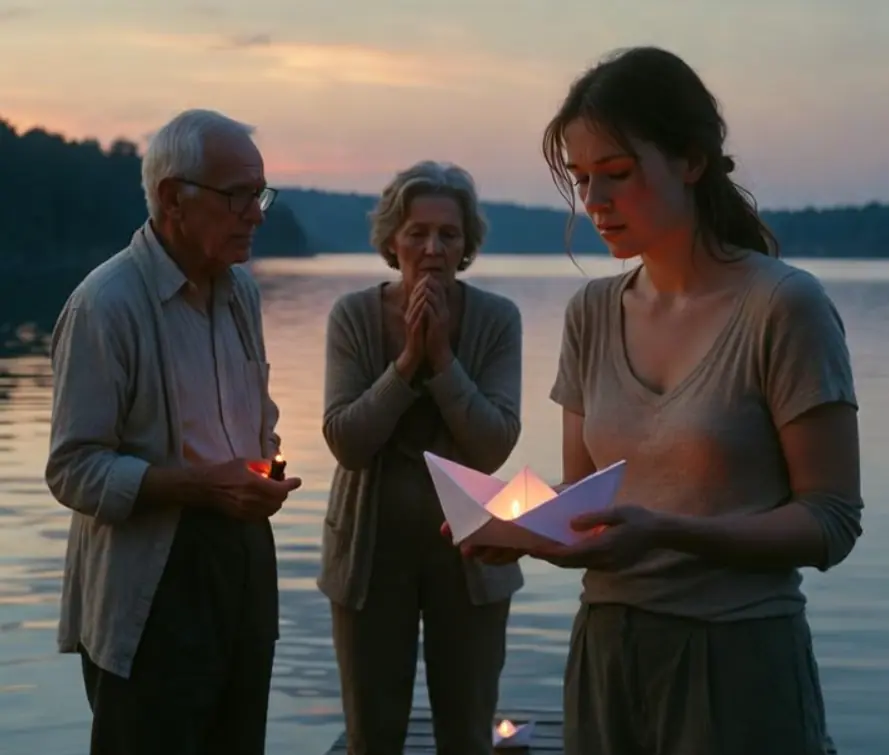
Every year, on the second Saturday of July, the Peterson family gathers at the edge of Miller’s Lake for the "Annual Paper Boat Regatta." It is a tradition that spans three generations, a meticulously choreographed event involving specialized waterproof paper, small tea-light candles, and a specific clearing in the reeds where the current takes everything toward the center of the lake. To an observer, it looks like a scene from a greeting card—three generations of a healthy, happy family standing on a dock, watching flickering lights bob across the water in the twilight.
For years, I believed the Regatta was the heartbeat of our unity. My mother would spend the weeks prior cutting the paper into perfect squares. My father would check the wind patterns with a devotion usually reserved for religious rituals. We were told the tradition was a celebration of "moving forward," a way to cast off the worries of the past year and look toward the horizon.
But as I stood on the damp wood of the dock this year, holding a folded paper hull in my palms, I realized that the tradition wasn't a celebration at all. It was an anchor. It was a beautiful, elaborate mask designed to hide a silence that had been growing in our family for twenty years.
The drama of our family wasn't found in loud arguments; it was found in the things we refused to name. We were a family of experts in emotional avoidance. We used the "Annual Paper Boat Regatta" as a substitute for actual conversation. If we were busy folding paper, we didn't have to talk about why my brother, Sam, hadn't called in six months. If we were focused on the candles, we didn't have to address the growing distance between my parents.
The symbolism of the boats was supposed to be about letting go, but the reality was that we were using them to bury things.
Memory is a selective editor. For a long time, I remembered these summers as golden. But as I watched my father adjust his glasses, his hands trembling slightly as he lit a match, a different memory surfaced—one I had been trained to ignore. I remembered the year the tradition actually started. I was ten, and it wasn't a "regatta" then. It was just one boat. A single, crumpled piece of notebook paper my mother had folded the night after my grandfather passed away.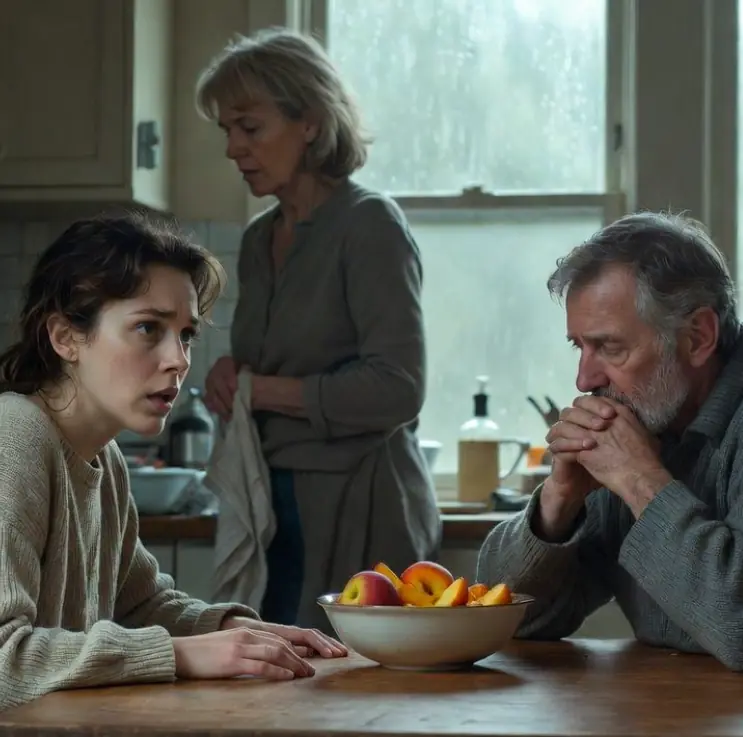
She hadn't spoken for three days. She had walked down to the water, set the boat adrift, and come back to the house as if the grief had been physically removed from her body. From that day on, whenever things got "difficult," we made boats.
We had turned a moment of genuine mourning into a mechanical ritual. We had commodified our avoidance.
This year, the atmospheric pressure in the family was higher than usual. My sister, Clara, had recently gone through a difficult divorce, and my father’s health had taken a quiet, unacknowledged turn. At the dinner before the Regatta, the table was a minefield of "safe" topics. We talked about the garden, the local bakery, and the weather. Whenever Clara’s eyes would well up, or whenever my father would lose his breath, someone would inevitably bring up the "perfect paper" for the boats.
"The wind is coming from the north tonight," my father said, his voice thin. "The boats will have a clear path to the middle."
"That’s good, Dad," I replied, feeling a sudden, sharp pang of resentment. "A clear path to nowhere."
The look my mother gave me was one I knew well—a sharp, silent plea to keep the peace. Don't break the pattern, her eyes said. Don't make us look at what’s underneath.
As the sun began to set, we walked down to the dock. The ritual began. The folding, the lighting of the candles, the careful placement on the water. I watched my mother set her boat down. She looked relieved, as she always did, as if the paper were carrying away the reality of her husband's frailty. I watched Clara set hers down, her face a mask of stoic compliance.
Then it was my turn.
I held the boat in my hands. It was perfect. The folds were crisp, the candle was centered, and it was ready to float away into the dark. But I couldn't do it. The weight of the unspoken—the grief for my grandfather that we never actually finished, the fear for my father’s health, the sadness for Clara’s broken heart—felt like lead in my chest.
If I put this boat in the water, I was agreeing to another year of silence. I was agreeing that we would rather be "peaceful" than be honest.
"I’m not putting it in," I said.
The sound of the water lapping against the dock was suddenly very loud. My father stopped mid-reach. My mother turned, her face pale in the flickering candlelight.
"Elena, it’s the tradition," she whispered. "Just set it down. It’s for the best."
"For whose best, Mom?" I asked, and for the first time, my voice didn't have a 'happy' filter. "We’ve been sending these boats out for twenty years, and every year we come back to the house and act like we’re fine. But Dad is sick. Clara is hurting. And I’m tired of pretending that a piece of paper can carry the weight of everything we’re too afraid to say to each other."
The drama was in the stillness. No one moved. The boats that were already on the water were drifting away, a small constellation of lights on a dark sea.
"We think we’re letting go," I continued, looking at my father. "But we’re just hiding. Dad, I’m scared. I’m scared of what’s happening with your health, and I’m scared that if I don't say it now, I’ll be folding a boat for you next year without ever having told you how much I love you."
The quiet truth hung in the air, heavier and more real than any ritual. My father’s shoulders slumped, and for the first time, he didn't try to straighten them. He sat down on the edge of the dock, his feet dangling over the dark water.
"I’m scared too, Elena," he whispered.
The admission was like a dam breaking. It wasn't a flood of chaos; it was a flood of relief. Clara sat down next to him, burying her face in his shoulder. My mother stood there for a long moment, her hands still curled as if she were holding a boat, and then she let out a long, shuddering breath. She sat down on the other side of him.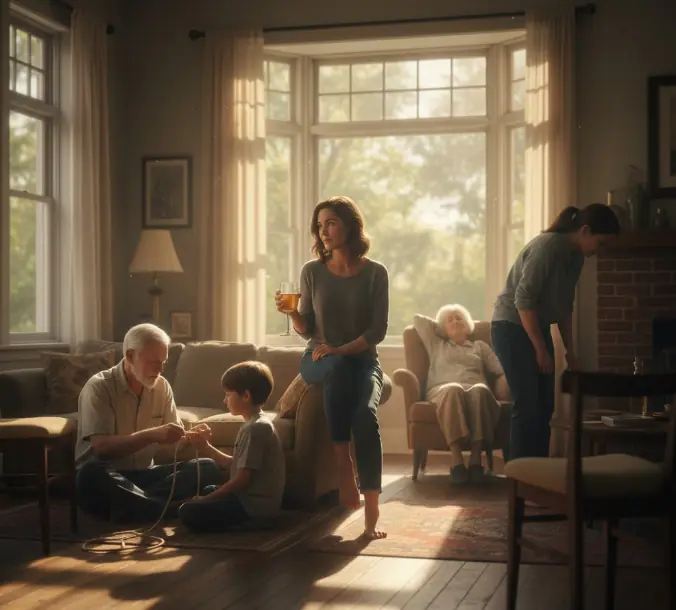
We didn't watch the rest of the boats. We didn't care if they reached the center of the lake or if they sank in the reeds.
For the first time in twenty years, the "Paper Boat Regatta" didn't work. We didn't leave the dock feeling "cleansed." We left it feeling raw, vulnerable, and deeply connected. We sat on that wooden dock for an hour, talking about the things that were actually happening. We talked about the doctor’s appointments, the loneliness of the last few months, and the way we had all been performing for each other.
The tradition was reshaped in that hour. It was no longer a mask; it was a catalyst.
As we walked back to the house, I realized that the "unspoken" was no longer a ghost in the hallway. It was just part of the conversation. The wallpaper with the vine pattern that never met—I saw it differently now. The gaps weren't mistakes; they were the places where we could finally breathe.
We still do the Regatta every July. But we don't call it a celebration of "moving forward" anymore. We call it the "July Meeting." We still fold the boats, but now, before we set them on the water, we have to say one thing that we’ve been holding back. One truth that we’re afraid of.
The boats don't look as perfect anymore. Sometimes they’re lopsided, or the paper is damp from someone’s tears before it even hits the water. But they are honest. And as I watch them drift away tonight, I don't feel the need to trace the gaps. I just feel the warmth of my father’s hand in mine and the steady, healthy rhythm of a family that finally realized that the only way to truly let go is to first have the courage to hold on to the truth. We aren't a "perfect" family anymore, and thank goodness for that. We are a real one, and the lights on the water finally look like home.