At first, I honestly thought I was looking at a pile of wet leaves, mud, and decomposing yard waste.
It had rained heavily, and the ground around the yard was soaked. Near one corner, there was a strange, glistening heap that looked almost like a pile of discarded organic material. Nothing about it seemed particularly unusual at first.
Then I noticed something moving.
Not just one tiny insect.
The entire pile seemed to shift.
Slowly, almost rhythmically, the mass appeared to ripple from one side to the other. For a moment, it looked as though the heap itself was alive. The movement was subtle but unmistakable, and the more I watched, the stranger it became.
It almost looked like the pile was breathing.
Naturally, I pulled out my phone and started recording.

At First, I Couldn't Figure Out What I Was Seeing
The closer I looked, the more confusing the scene became.
The surface of the heap was wet and shiny, and individual shapes seemed to move in different directions. Every few seconds, another section of the mass shifted.
It wasn't behaving like a normal pile of leaves.
It wasn't behaving like a puddle.
And it certainly didn't look like a single animal.
The movement was happening throughout the entire heap.
I zoomed in with my phone, hoping the camera would reveal something that my eyes couldn't.
That's when the mystery finally started to make sense.
The "Moving Pile" Was Actually Made of Earthworms
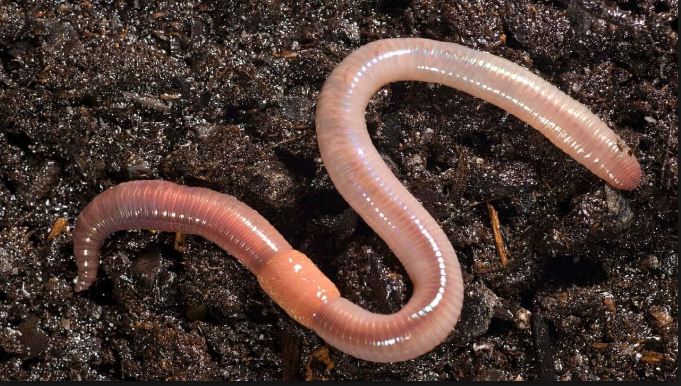
What initially appeared to be one enormous living mass was actually a large gathering of earthworms.
After periods of heavy rain, earthworms can sometimes become much more visible than usual.
Instead of remaining hidden beneath the soil, they may emerge onto the surface, particularly when soil conditions become saturated.
Seeing a few worms after rain isn't unusual.
Seeing a large number of them gathered together, however, can be genuinely startling.
When hundreds of small, moving bodies overlap and twist together, the individual worms become difficult to distinguish.
From a distance, they can look like one strange organism.
And when the entire group moves at roughly the same time, the effect can be incredibly unsettling.
Why Do Earthworms Come Out After Heavy Rain?
There is a simple environmental explanation for this behavior.
Earthworms live in soil, where they need suitable levels of moisture and oxygen.
After heavy rainfall, the spaces between soil particles can become filled with water.
This can change the conditions underground and make it more difficult for some worms to remain where they normally live.
As a result, they may move toward the surface.
This doesn't mean that every rainstorm will produce a giant collection of worms.
Their behavior depends on factors such as soil type, rainfall intensity, moisture levels, temperature, species, and local environmental conditions.
But after particularly heavy rain, finding earthworms above ground is not unusual.
Why Did They Gather Together?
This is perhaps the most fascinating part of the discovery.
When many earthworms emerge under the same environmental conditions, they may end up concentrated in the same areas.
They can collect in damp spaces, along sidewalks, around garden beds, near low areas of soil, or wherever conditions allow them to remain moist.
Once enough worms occupy the same small area, their bodies can become tangled together.
From above, the result can look bizarre.
Instead of seeing hundreds of individual worms, you see what appears to be one enormous, constantly moving mass.
That's exactly what made this discovery so disturbing at first.
The brain naturally tries to identify unfamiliar shapes.
When the movement doesn't match anything familiar, imagination can quickly fill in the gaps.
The "Breathing" Effect Was Especially Strange
Perhaps the creepiest part wasn't seeing the worms themselves.
It was the way the entire group seemed to move together.
As individual worms crawled, twisted, contracted, and shifted around one another, different sections of the pile moved in waves.
From a distance, those movements could resemble breathing.
One area would rise or shift.
Then another.
Then another.
The entire mass appeared to ripple.
But there was no giant organism hiding underneath.
There was simply a large number of individual animals reacting to the same environmental conditions.
That realization made the scene much less mysterious—but arguably even more fascinating.
Nature Can Look Completely Different When You See It Up Close
Most of us are surrounded by small forms of life every day without really noticing them.
We walk across grass.
Step over soil.
Water plants.
Move through gardens.
And rarely stop to consider what might be happening just beneath our feet.
Earthworms are a perfect example.
They are usually hidden underground, quietly moving through soil.
Because we rarely see them in large numbers, we tend to think of them as isolated creatures rather than members of a much larger ecosystem.
Heavy rain temporarily changes that.
It can bring some of that hidden activity to the surface.
Suddenly, the ordinary ground beneath your feet becomes a completely different world.
Earthworms Are Actually Important to Healthy Soil
Although a huge gathering of worms might look alarming, earthworms are generally considered important organisms in many soil ecosystems.
As they move through the soil, they can help create channels and contribute to soil structure.
Their activity also helps mix organic material with soil.
Earthworm castings—the material they excrete after processing organic matter—contain nutrients and can contribute to soil fertility.
This is one reason earthworms are often associated with healthy garden soil.
They aren't simply random creatures crawling around after rain.
They're part of a much larger ecological process.
Why the Discovery Changed the Way I Looked at My Yard
Before seeing that strange moving heap, I thought I knew what my yard looked like.
I had walked across the same ground countless times.
I'd seen the grass.
I'd noticed puddles after rain.
I'd watched leaves accumulate in certain corners.
But I'd never really thought about what was happening beneath the surface.
That one strange discovery changed my perspective.
The yard suddenly seemed much more active.
There were creatures moving through the soil.
Tiny organisms breaking down organic material.
Roots interacting with the surrounding earth.
Insects hiding beneath leaves.
And countless processes happening every day without making themselves obvious.
The surface may look still.
But the ecosystem underneath is anything but still.
Why Seeing Hundreds of Worms Can Feel So Unsettling
There's a psychological reason this kind of scene can produce such a strong reaction.
Humans are generally comfortable with familiar patterns.
A single earthworm?
Not particularly surprising.
A few worms after rain?
Still normal.
But hundreds of worms moving together create a completely different visual experience.
The brain may interpret the mass as a single organism because the individual boundaries become difficult to distinguish.
That makes the scene feel unfamiliar.
And unfamiliar biological movement can trigger an instinctive feeling of discomfort.
It's similar to the reaction many people have when seeing a large cluster of insects, fish moving together, or thousands of tiny organisms covering a surface.
The individual creatures are harmless.
The collective movement is what feels strange.
It Wasn't a Monster—Just a Natural Reaction
Once the mystery was solved, the scene became much less frightening.
There was no mysterious creature hiding in the yard.
No giant animal.
No dangerous infestation.
No bizarre phenomenon that required an extraordinary explanation.
It was simply a group of earthworms responding to their environment.
Heavy rain had changed the conditions underground, and the worms had appeared where they could survive those conditions.
Something that initially looked almost supernatural turned out to be completely natural.
And honestly, that might be the most interesting part of the story.
What Should You Do If You Find a Similar Mass?
If you encounter a large number of earthworms after heavy rain, there's usually no reason to panic.
Avoid disturbing them unnecessarily.
If they're on a walkway or another area where they could be stepped on, you can simply leave them alone and allow conditions to change naturally.
If worms are appearing repeatedly in unusually large numbers, pay attention to the surrounding conditions.
Consider whether the area experiences:
-
Heavy rainfall
-
Poor drainage
-
Waterlogged soil
-
Excessive irrigation
-
Areas where moisture accumulates
The worms themselves are generally not the problem.
In many cases, they're simply responding to what's happening in the environment.
Don't Mistake Every Moving Mass for Something Dangerous
The internet is full of strange nature discoveries.
A photograph without context can make an ordinary event appear mysterious.
A pile of worms can look like a giant organism.
A cluster of insects can look like a strange growth.
A fungus can resemble something from another planet.
That's why observation matters.
Instead of immediately assuming the worst, take a closer look.
Zoom in.
Look for individual organisms.
Consider the weather.
Think about where the object was found.
And ask whether there is a simple environmental explanation.
Nature is often strange enough without needing a supernatural explanation.
A Strange Discovery With a Simple Lesson
The experience taught me something I hadn't expected.
The natural world is full of activity that we rarely notice.
The soil beneath our feet isn't just dirt.
It's a living environment.
Rain doesn't simply make puddles.
It changes temperature, moisture, oxygen availability, and the behavior of countless organisms.
A quiet backyard can contain an entire ecosystem that remains invisible until the right conditions bring part of it to the surface.
That's what made this strange discovery so memorable.
It wasn't extraordinary because the worms were dangerous.
They weren't.
It was extraordinary because something completely ordinary suddenly became visible in a way I'd never experienced before.
The Next Time It Rains, Look Down
After a heavy rainfall, you might notice more than puddles.
Look along sidewalks.
Check garden beds.
Notice damp soil.
Look beneath leaves.
You may find earthworms emerging from the ground, moving across wet surfaces, or gathering in surprisingly large numbers.
And if you ever see what appears to be a strange, glistening pile that suddenly starts moving, don't immediately assume you've discovered some unknown creature.
Take a closer look.
You might simply be looking at hundreds of small animals responding to the same natural event.
Final Thoughts
What began as a disturbing mystery turned out to be a fascinating example of how quickly nature can change the appearance of an ordinary place.
A pile that looked like wet trash became a moving mass.
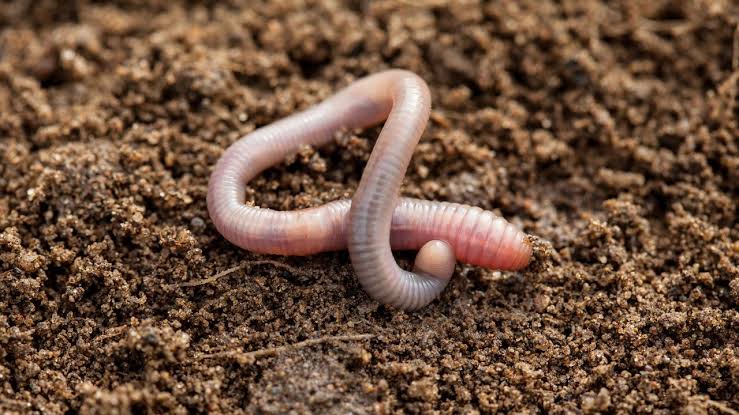
The moving mass turned out to be hundreds of earthworms.
And the strange behavior had a simple explanation: the worms were responding to wet environmental conditions following heavy rain.
There was nothing supernatural about it.
Nothing dangerous.
Just nature doing what nature does.
Yet the experience left a lasting impression because it revealed something easy to forget:
The world around us is constantly alive and moving, even when we can't see it.
Sometimes all it takes is one heavy rainstorm and a strange-looking pile in the yard to remind us.