Chapter 1: Why Are the Veins on Your Hands Becoming More Visible?
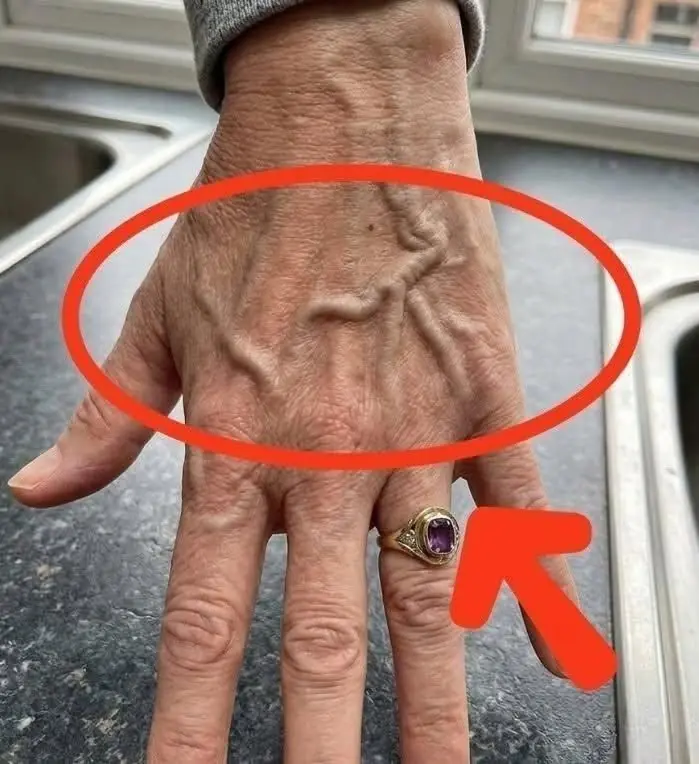
Have you ever looked at the back of your hand and noticed that the veins seem much larger than they were several years ago?
Perhaps they appear blue, green, or slightly purple. Some may look raised above the skin, creating a network of visible lines extending from the wrist toward the fingers.
For some people, these changes happen gradually. Others notice them after exercising, spending time outdoors in warm weather, or losing weight.
Although prominent veins can sometimes raise concerns about circulation, they are not automatically a sign of illness.
In fact, visible veins on the hands are common, particularly as people get older.
Understanding why this happens can help distinguish ordinary physical changes from symptoms that deserve medical attention.
1. Aging Can Make Hand Veins More Noticeable
One of the most common reasons veins become prominent is the natural aging process.
As people grow older, their skin gradually changes.
Collagen and elastin are two important structural proteins that help maintain skin firmness and elasticity.
Over time, their production and organization change.
The skin may become thinner, less elastic, and less able to conceal structures underneath it.
At the same time, the layer of fat beneath the skin can become less substantial.
Because superficial veins lie relatively close to the skin's surface, these changes can make them appear more prominent.
This is particularly noticeable on the backs of the hands, where the skin is naturally relatively thin.
The American Academy of Dermatology explains that age-related loss of fullness in the hands can make veins more noticeable.
American Academy of Dermatology+1
This is generally a normal physical change rather than evidence of poor circulation.
2. Reduced Body Fat Can Make Veins Stand Out
Another reason hand veins may become more visible is a reduction in the amount of fat beneath the skin.
Subcutaneous fat provides natural cushioning and contributes to the fullness of the hands.
When someone loses weight, particularly if they lose a considerable amount of body fat, the veins may become easier to see.
This can happen in younger adults as well as older people.
For example, someone who begins a regular fitness program may notice that the veins on their hands and forearms appear more pronounced.
This does not necessarily mean that their circulation has become worse.
However, unexplained weight loss should not be ignored.
If someone loses a significant amount of weight without changing their diet or activity level, they should consult a healthcare professional to investigate the cause.
3. Exercise Can Temporarily Make Hand Veins Bulge
Physical activity can also make superficial veins more visible.
During exercise, muscles require increased blood flow to support their activity.
Blood circulation changes, and superficial veins may become more noticeable.
This effect is particularly common during activities involving the arms and hands.
Examples include:
-
Weightlifting.
-
Resistance training.
-
Push-ups.
-
Pull-ups.
-
Heavy gardening.
-
Repetitive manual work.
People who exercise regularly may also develop greater muscle definition and lower body fat, making their veins easier to see.
In many cases, the veins become less prominent after the person rests.
Cleveland Clinic identifies intense exercise, particularly weightlifting, as one possible reason for prominent veins in the hands and arms.
4. Hot Weather Can Change How Visible Your Veins Look
Temperature also influences blood vessels.
When the body becomes warm, blood vessels near the skin can widen to help release heat.
This process is called vasodilation.
As superficial veins become more dilated, they may appear larger or more noticeable.
This can happen during:
-
Hot summer weather.
-
Warm showers.
-
Exercise in high temperatures.
-
Spending time in a sauna.
-
Working in a hot environment.
The appearance may change again when the body cools down.
Therefore, someone who notices more prominent veins after spending time outdoors should not automatically assume that a medical problem has developed.
5. Genetics Can Influence the Appearance of Your Hands
Some people naturally have more visible veins than others.
This can be influenced by inherited characteristics, including skin thickness, body composition, and the natural arrangement of superficial blood vessels.
If several family members have prominent hand veins, genetics may contribute to the appearance.
Some individuals have visible veins even when they are young and healthy.
There is no single appearance that defines healthy hands.
The important consideration is whether the veins have changed unexpectedly or are accompanied by other symptoms.
6. Why Veins on the Back of the Hands Are Particularly Noticeable
The back of the hand has relatively little protective soft tissue compared with some other areas of the body.
Superficial veins can therefore be visible even in healthy individuals.
As skin becomes thinner with age, their appearance may become more pronounced.
The veins may look twisted, raised, or interconnected.
In some people, they become particularly visible when the hands are lowered.
When the hands are elevated, the appearance may change because of differences in blood distribution and venous pressure.
This variation can be normal.
7. Visible Veins Do Not Automatically Mean Poor Circulation
One common misconception is that prominent veins always indicate a circulation problem.
In reality, visible veins may simply reflect normal superficial anatomy.
The appearance of a vein does not tell doctors how effectively blood is circulating through the entire vascular system.
A person may have prominent hand veins while having otherwise healthy circulation.
Conversely, someone can have a circulation disorder without obvious veins on the surface of their hands.
Medical assessment considers symptoms, physical examination, medical history, and sometimes imaging tests.
The most important distinction is between veins that have always been visible or gradually become more noticeable and veins that suddenly change appearance alongside pain, swelling, redness, or warmth.