Have you ever climbed into bed at night, only to hear the familiar sound of paws following behind you?
You settle under the blankets.
A few seconds later, your dog jumps onto the bed.
You move over.
Your dog moves closer.
You turn to the other side.
Your dog somehow manages to follow you again.
Eventually, you may find yourself sleeping on the very edge of the mattress while your dog enjoys the most comfortable position in the entire bed.
But why does your dog insist on sleeping beside you?
Is it simply because the bed is warm and comfortable? Is your dog being protective? Or could there be a deeper reason behind this nighttime habit?
The answer isn't necessarily as dramatic as some viral posts suggest. Dogs can sleep beside their owners for several perfectly normal reasons, and the meaning can vary depending on the dog's personality, history, environment, and relationship with its owner.
Still, this simple behavior can tell you something interesting about the bond between you and your dog.

Your Dog May Simply Feel Safe With You
One of the most common explanations is surprisingly simple:
Your dog feels secure when you're nearby.
Dogs are social animals. Throughout their evolutionary history, sleeping close to others could provide warmth, companionship, and a greater sense of security.
Even though a modern family dog doesn't need to worry about predators during the night, some of those social instincts remain.
Your presence may represent safety and familiarity.
When your dog curls up beside you, it may be choosing the place where it feels most comfortable.
Your scent is familiar.
Your breathing is familiar.
Your movements are familiar.
Even the sounds you make while sleeping can become part of your dog's normal nighttime environment.
For some dogs, that familiarity can be extremely reassuring.
Your Scent May Be Comforting
Dogs experience the world through their noses in a way humans simply can't match.
Your scent is one of the strongest and most recognizable smells in your dog's environment.
That means your pillow, blanket, clothing, and especially your body can provide a familiar sensory signal.
When your dog lies next to you, it isn't necessarily thinking, “I need to sleep beside my owner because of a complicated emotional reason.”
It may simply be experiencing the comfort of being close to someone it knows extremely well.
This is particularly noticeable in dogs that are strongly attached to one person in the household.
If your dog follows you from room to room during the day and then chooses your side of the bed at night, the pattern may simply reflect a strong social attachment.
Your Dog May Be Seeking Warmth
Sometimes the explanation is much less emotional.
Your dog may just be cold.
Your bed is warm.
You're warm.
The blankets are warm.
And your dog has figured that out.
Small dogs, dogs with thin coats, older dogs, and dogs living in cooler environments may be particularly interested in warm sleeping spots.
You may notice your dog moving closer to you when the temperature drops.
During warmer nights, the same dog may suddenly decide that the floor is a much better place to sleep.
That change can be a useful reminder that not every behavior has a hidden psychological meaning.
Sometimes a dog chooses your bed because your bed is simply comfortable.
Your Dog May Associate Your Bed With Relaxation
Dogs are creatures of routine.
If your nighttime routine usually involves turning off the lights, getting into bed, and relaxing, your dog can learn to associate that sequence with the end of the day.
Over time, your bed becomes part of a familiar ritual.
Your dog may recognize the cues:
You brush your teeth.
You turn off the television.
You put on pajamas.
You climb into bed.
And your dog knows:
It's time to settle down.
This is one reason dogs can become extremely persistent about bedtime routines.
If you've allowed your dog to sleep beside you for years, your dog may simply regard that arrangement as normal.
It Can Be a Sign of Trust
A sleeping dog is in a vulnerable state.
When a dog chooses to sleep close to someone, it may reflect a level of comfort and trust.
Your dog doesn't have to remain alert to every sound when it feels secure in its environment.
That doesn't mean sleeping beside you is a definitive “test” of trust, nor does it mean dogs that sleep elsewhere don't trust their owners.
Dogs have individual preferences.
Some love physical closeness.
Others prefer having their own space.
But if your dog consistently chooses to curl up beside you, it can certainly be one expression of the bond you share.
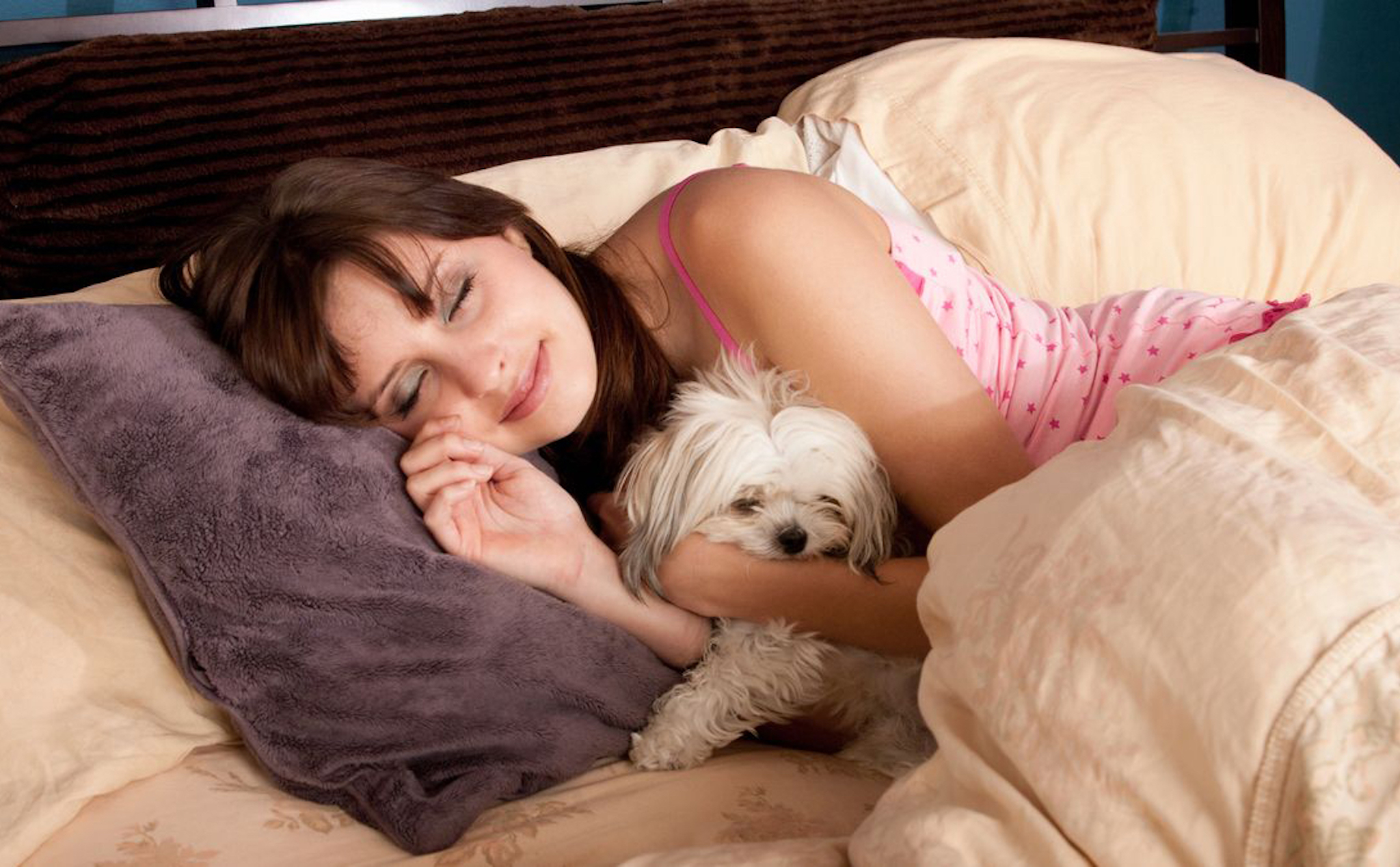
Your Dog May Want to Keep You Company
Dogs don't understand “personal space” in quite the same way humans do.
If you're sitting on the couch, your dog may want to sit beside you.
If you're working at a desk, your dog may lie near your feet.
And if you're sleeping, your dog may decide that the most logical place to be is right next to you.
From your dog's perspective, being together may simply be the natural choice.
This is especially common in dogs that are highly social or have been bred for companionship.
Your dog may not need anything from you.
It may simply enjoy being near you.
What About Protective Behavior?
This is where things can become a little more complicated.
Some dogs appear to be protective of their owners while they're sleeping.
For example, a dog might position itself near the bedroom door, become alert when it hears unfamiliar sounds, or raise its head whenever someone approaches.
Some owners interpret this as their dog “guarding” them.
There can be some truth to that interpretation, but it's important not to exaggerate it.
A dog sleeping beside you doesn't automatically mean it has decided to become your personal security guard.
Dogs can be alert to unfamiliar sounds and movements simply because those things are interesting or potentially relevant to them.
If your dog calmly sleeps beside you, there's probably no reason to assume it's constantly protecting you from danger.
Some Dogs Simply Love Physical Contact
Every dog has its own personality.
Some dogs are independent.
They might sleep at the opposite end of the room and only approach you when they want attention.
Other dogs are what owners affectionately call “velcro dogs.”
They want to be near you almost constantly.
These dogs may lean against your legs, follow you around the house, sit on your feet, or squeeze themselves into the smallest possible space next to you.
For them, sleeping beside you can simply be another form of physical affection.
They may enjoy the warmth and pressure of being close to someone they trust.
Puppies Can Be Especially Attached
If you've ever watched puppies sleeping together, you've probably noticed how often they pile on top of each other.
Sleeping in groups provides warmth and social contact.
When a puppy joins your household, you become part of its new social environment.
The transition can be enormous.
Suddenly, the puppy is separated from its mother and littermates and placed in a completely different home.
Being near you can provide familiarity and reassurance while the puppy adjusts.
That's one reason some puppies strongly resist sleeping alone.
With patience and appropriate training, they can gradually become comfortable with their own sleeping area.
But There Is Another Possibility: Anxiety
Although sleeping beside you is often completely normal, sometimes a dog's need for constant proximity can be associated with anxiety.
The important thing is to look at the whole pattern, not just where your dog sleeps.
For example, a dog experiencing separation-related distress may become extremely upset when you leave.
You might notice:
-
Excessive barking or whining when left alone
-
Destructive behavior
-
Pacing
-
Attempts to escape
-
Excessive drooling
-
Repeatedly following you from room to room
-
Difficulty settling when you're out of sight
-
Extreme excitement when you return
Sleeping beside you alone does not mean your dog has separation anxiety.
But if nighttime closeness is part of a much broader pattern of distress, it may be worth discussing the behavior with a veterinarian or qualified behavior professional.
Pay Attention to Sudden Changes
One of the most important things to remember is that a sudden change in sleeping behavior deserves more attention than a long-standing habit.
Suppose your dog has always slept independently.
Then, suddenly, it starts following you everywhere and refuses to sleep alone.
That change could have many explanations.
Perhaps something in the household changed.
Maybe there are unfamiliar noises.
Perhaps the dog's routine has been disrupted.
Or, in some cases, the dog may not be feeling well.
Dogs can sometimes behave differently when they're experiencing discomfort, illness, or changes associated with aging.
This doesn't mean that wanting to sleep beside you automatically signals a health problem.
It simply means that a noticeable behavioral change should be considered in context.
If the change is persistent or accompanied by other concerning signs—such as reduced appetite, unusual vocalization, difficulty moving, restlessness, vomiting, diarrhea, breathing problems, or other unusual symptoms—a veterinary evaluation is appropriate.
Why Does Your Dog Follow You Even After You Move?
If your dog repeatedly moves closer whenever you shift positions, there may be a simple explanation.
Your dog may have learned that physical contact with you is rewarding.
Perhaps you've petted it whenever it comes closer.
Maybe you've spoken to it softly.
Maybe you've allowed it under the blankets.
Over time, your dog learns:
Being close to my human feels good.
So when you move away, your dog follows.
It's not necessarily trying to annoy you.
It's simply repeating a behavior that has previously produced comfort, attention, warmth, or companionship.
Does Sleeping With Your Dog Make the Bond Stronger?
Sharing a bed isn't required for a strong human-dog relationship.
A dog can have an incredibly close bond with its owner while sleeping in another room.
What matters much more is the quality of your interactions throughout the day.
Training together.
Playing.
Going for walks.
Providing appropriate mental stimulation.
Offering affection.
Maintaining predictable routines.
Respecting your dog's boundaries.
Providing food, water, shelter, and veterinary care.
These are all important components of a healthy relationship.
Sleeping together can be one part of that relationship, but it isn't a requirement.
Should You Let Your Dog Sleep in Your Bed?
That's ultimately a personal decision.
For many households, sharing the bed works perfectly well.
For others, it creates problems.
A dog may move around constantly, snore, shed heavily, wake you up, or take over far more than its fair share of the mattress.
Some people also have allergies or other reasons to prefer separate sleeping arrangements.
If your dog sleeps in your bed and everyone is comfortable with it, there's no universal rule saying you must change the arrangement simply because someone online claims it means something mysterious.
At the same time, it's perfectly reasonable to teach your dog to sleep in its own bed if that's better for your household.
The key is consistency.
If You Want Your Dog to Sleep in Its Own Bed
If your dog is accustomed to sleeping beside you, suddenly shutting it out may be confusing.
Instead, make its own sleeping area attractive.
Choose a comfortable bed.
Place it somewhere quiet.
Use familiar bedding.
Reward your dog for settling there.
Keep the routine predictable.
You can gradually increase the amount of time your dog spends relaxing independently.
The goal isn't to punish your dog for wanting to be close.
The goal is to teach it that being alone can also be safe and comfortable.
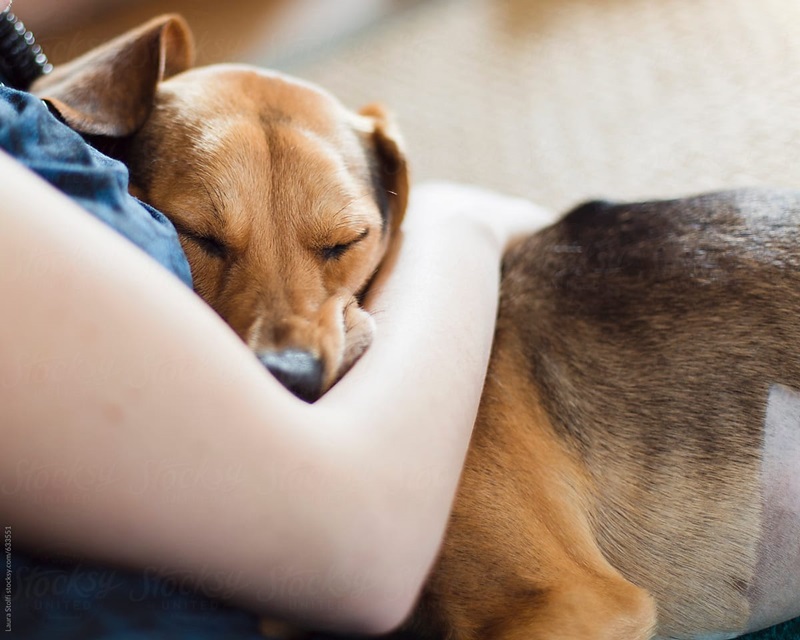
Your Dog May Be Saying Something Simple
When your dog curls up beside you at night, it's tempting to search for some dramatic hidden meaning.
But sometimes the explanation is beautifully simple.
Your dog may be saying:
“This is where I feel comfortable.”
Maybe it's your warmth.
Maybe it's your scent.
Maybe it's the routine.
Maybe your dog simply enjoys your company.
Maybe your presence makes the quiet nighttime hours feel more secure.
Or maybe your dog has discovered that your bed is significantly more comfortable than the expensive dog bed you bought specifically for it.
Probably all dog owners can relate to that last one.
The Real Meaning May Be the Bond You Share
Dogs communicate in countless ways.
They use body language, facial expressions, sounds, movement, proximity, and routine.
Choosing to sleep beside you is just one small piece of that communication.
It can reflect comfort.
Trust.
Warmth.
Routine.
Companionship.
Or simply personal preference.
The most important thing is to look at your dog's behavior as a whole.
A happy dog that eats normally, plays, rests comfortably, interacts normally, and has always preferred sleeping beside you probably isn't sending some frightening hidden message.
It may simply love being close to you.
And perhaps that's the sweetest explanation of all.
After all, when the house becomes quiet, the lights go out, and the entire world seems to slow down, your dog has countless places it could choose to sleep.
Yet it keeps choosing the spot beside you.
Sometimes, your dog isn't asking for anything. It just wants to be near its favorite person.