Social media allows people to share photographs, opinions, fashion inspiration, and personal experiences. It can create supportive communities and help people discover styles that make them feel confident.
However, the same platforms can also encourage constant comparison.
Many images are selected because they attract attention. A photograph may show one flattering pose rather than the full range of how a person looks throughout the day. Lighting, camera distance, clothing, makeup, filters, and editing can all influence the final result.
A viewer may not know how much preparation went into an image. They may see a polished photograph and assume that the person looks exactly the same in every situation.
This can create unrealistic expectations.
The pressure can be especially strong when a particular body type repeatedly receives positive comments, likes, and shares. Users may begin to believe that the most popular silhouette is the one they should try to achieve.
But popularity is not proof of health, and a high number of likes does not establish a universal beauty standard.
Government research on negative body image identifies media, social expectations, peer relationships, and cultural norms as factors that can influence how people view their bodies. It also emphasizes that experiences differ between groups and can change across life stages.
A healthier way to use social media is to pay attention to how particular accounts make you feel. If a page constantly encourages shame, extreme comparison, or fear of normal body features, it may be worth limiting exposure to that content.
People can also look for accounts that show a wider range of body types and focus on activities, skills, friendships, and personal achievements rather than appearance alone.
Social media does not have to become a competition. It can also be a place where people see a wider range of experiences and learn that their own bodies do not need to match a single image.
Chapter 9: Body Positivity Does Not Mean Ignoring Health
The phrase “body positivity” is sometimes misunderstood. Some people believe it means that a person must love every part of their appearance at all times. Others assume it means that health concerns should never be discussed.
Neither interpretation captures the full idea.
Body positivity is generally associated with challenging narrow beauty standards and respecting people regardless of their body size or shape. It encourages people to recognize that appearance should not determine whether someone deserves dignity, respect, or inclusion.
That message can exist alongside sensible health advice.
A person can accept their body while deciding to improve their fitness. Someone can feel comfortable in their current appearance while working with a healthcare professional to manage a medical condition. Another person may want to change certain habits for reasons that have nothing to do with fitting into a fashion ideal.
The key is the reason behind the decision and the way it is pursued.
Health-promoting behavior should not be based on humiliation or self-punishment. Exercise can support strength, mobility, cardiovascular fitness, and mental wellbeing. Balanced eating can provide energy and nutrients. Sleep and stress management can also support health.
These habits are valuable even when they do not produce a dramatic visual transformation.
A person does not have to hate their body before they can care for it. In fact, respect can be a more sustainable starting point than shame.
The question raised by the photograph is therefore not whether viewers should stop caring about appearance. People are allowed to enjoy fashion, beauty, and personal style. The more useful message is that appearance should not become the only measure of a person's value.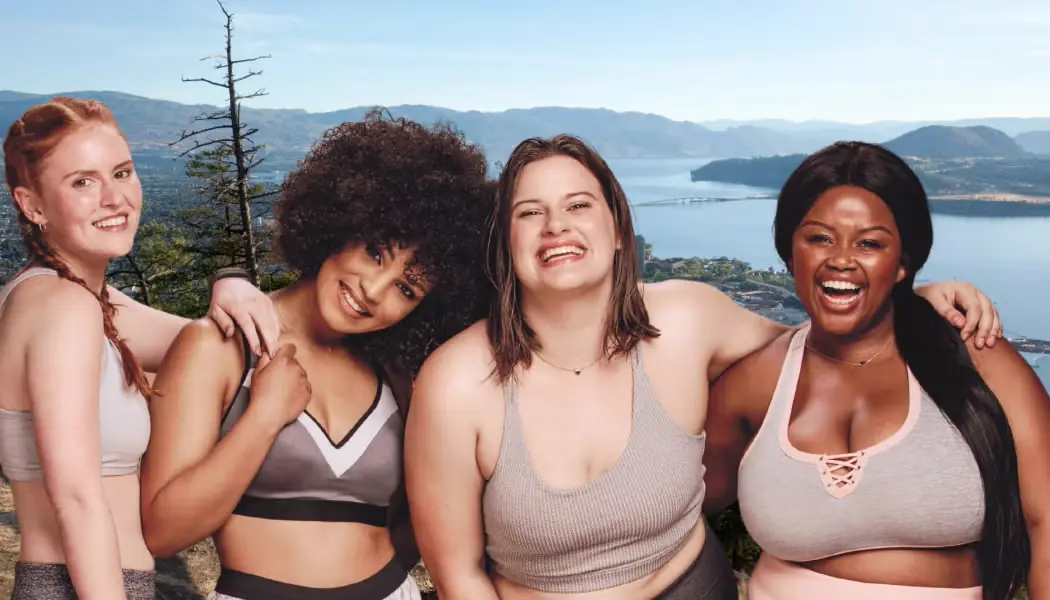
Chapter 10: Body Neutrality—A Different Way to Think About Appearance
Not everyone feels comfortable with the language of body positivity. Some people find it difficult to look in the mirror and say they love every part of themselves.
That is where the idea of body neutrality can be useful.
Body neutrality places less emphasis on whether someone loves or dislikes their appearance. Instead, it encourages them to treat their body with respect and recognize what it does beyond how it looks.
A person may not feel particularly enthusiastic about their stomach, arms, or hips. They can still appreciate that their body allows them to walk, work, rest, communicate, care for others, and take part in activities they enjoy.
This approach can reduce the pressure to maintain a permanently positive attitude about appearance.
It also allows people to experience normal changes without treating every difference as a failure. Bodies change with age, pregnancy, illness, recovery, activity levels, and many other life experiences. A person may have days when they feel confident and days when they feel less comfortable.
Body neutrality does not require pretending those feelings never happen. It encourages people not to let appearance determine their entire sense of self.
Some NHS mental-health guidance describes body neutrality as accepting the body without judgment and focusing more on what it can do rather than how it looks.
For someone who has spent years comparing themselves with other people, this can be a practical shift. Instead of asking, “Do I look better than the woman in the picture?” they might ask, “Am I treating myself with care, and am I able to enjoy my life?”
That is a much more useful question.
Chapter 11: Clothing Should Fit the Person, Not the Other Way Around
The five women in the image are wearing similar dresses. That makes the photograph visually effective, but it also offers an opportunity to discuss fashion and fit.
Clothing is designed around measurements, patterns, and standardized sizing systems. Yet real bodies vary in ways that cannot always be captured by a single size label.
Two women may wear the same numerical dress size but have different proportions. One may need more room through the hips, while another may need a different fit around the bust or waist. A garment that fits one person comfortably may feel restrictive on another.
This is not a failure of the body. It is simply a reminder that clothing is manufactured according to patterns that cannot represent every individual perfectly.
Fashion advice often recommends choosing cuts that highlight certain features or create a preferred visual balance. That can be enjoyable when it is treated as a creative choice.
Someone may like a fitted waist because it makes them feel elegant. Another may prefer a loose silhouette because it feels comfortable. A third may enjoy clothing that creates a straighter outline.
There is no requirement to dress according to a body-shape chart.
The most useful clothing advice is often practical: choose garments that fit comfortably, allow movement, suit the occasion, and make the wearer feel at ease.
A dress should not be treated as a test that determines whether someone's body is acceptable. The purpose of clothing is to serve the person wearing it.
Chapter 12: How Body Shape Can Change Throughout Life
The body someone has at one stage of life may not look exactly the same years later. These changes are normal and can happen for many reasons.
During adolescence, the body develops and proportions change. In adulthood, changes in activity, work routines, pregnancy, recovery, ageing, and other experiences may influence appearance.
Hormonal changes can also affect how the body stores fat and maintains muscle. Menopause, for example, is a life stage during which many women notice changes in weight distribution and body composition.
Pregnancy and the period after childbirth can bring changes to the abdomen, hips, breasts, skin, and other areas. Some changes may be temporary, while others may remain.
Ageing can influence muscle mass, bone density, skin elasticity, and body composition. These changes vary from person to person and are not identical for everyone.
The important point is that a body changing does not mean that someone has failed. It means that the body is responding to time and life experiences.
Beauty standards often place pressure on women to look as though they have never changed. Advertising and social media can create the impression that youth, firmness, and a narrow range of proportions should be maintained indefinitely.
That expectation is unrealistic.
A healthier approach recognizes that bodies have different needs at different stages of life. Someone may focus on strength and mobility at one age, recovery at another, and maintaining independence later in life.