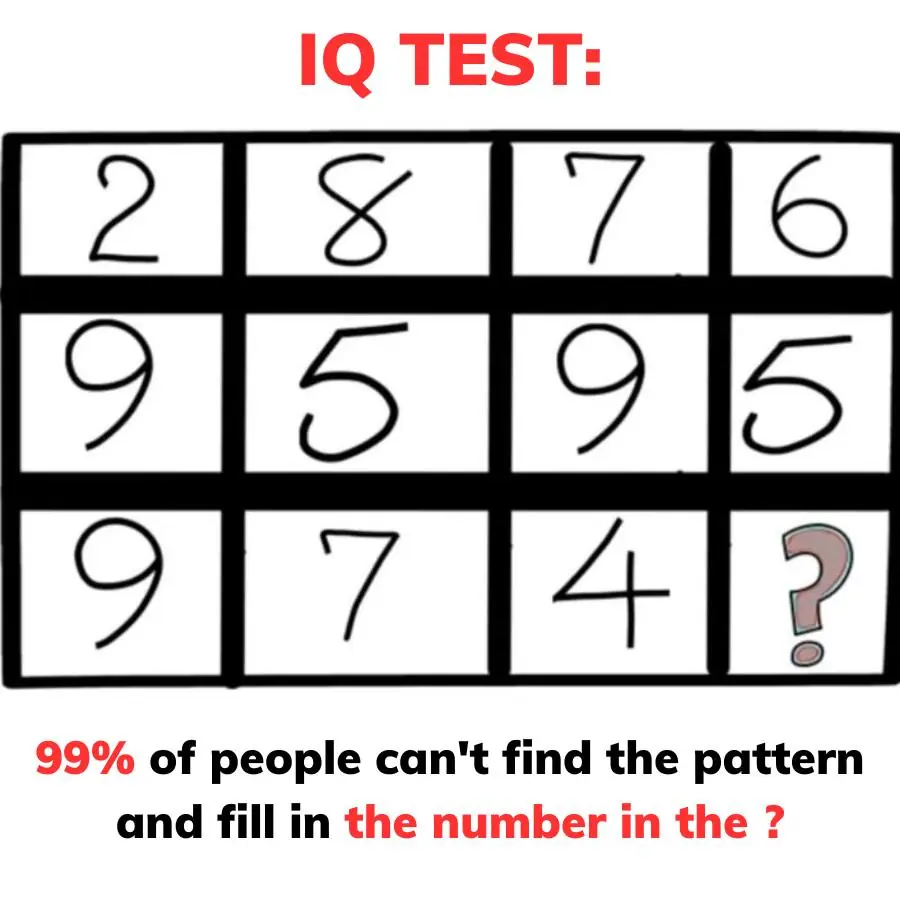
At first glance, this puzzle looks like a simple grid of numbers. But don’t get fooled - this type of challenge is designed to test your pattern recognition, logical reasoning, and attention to detail.
Step 1: Don’t Overcomplicate It
Most people fail this kind of puzzle because they immediately try complex operations - multiplication, sequences, or diagonals. But IQ tests often rely on simple patterns hidden in plain sight.
So instead of jumping into complicated math, start by checking basic relationships.
Step 2: Look Vertically (This Is the Key)
Let’s analyze each column:
- Column 1: 2 + 9 + 9 = 20
- Column 2: 8 + 5 + 7 = 20
- Column 3: 7 + 9 + 4 = 20
Notice something?
All columns add up to the same total: 20.
Step 3: Apply the Same Logic to the Last Column
Now look at the final column:
- 6 + 5 + ? = ?
We already know the pattern: each column must sum to 20
So:
6 + 5 + ? = 20
11 + ? = 20
? = 9
Final Answer: 9
Why This Puzzle Tricks People
This question is a classic example of how the brain tends to overthink simple patterns. Here’s why many people miss it:
- They focus on rows instead of columns
- They assume the pattern must be complex
- They ignore consistency across the grid
In reality, the solution relies on uniformity and balance, not complexity.
What This Says About Your Thinking Style
If you solved it quickly, you likely:
- Think systematically
- Check multiple perspectives (rows vs columns)
- Prefer pattern consistency over assumptions
If it took longer, that’s completely normal. These puzzles are designed to challenge instinctive thinking and force a shift in perspective.