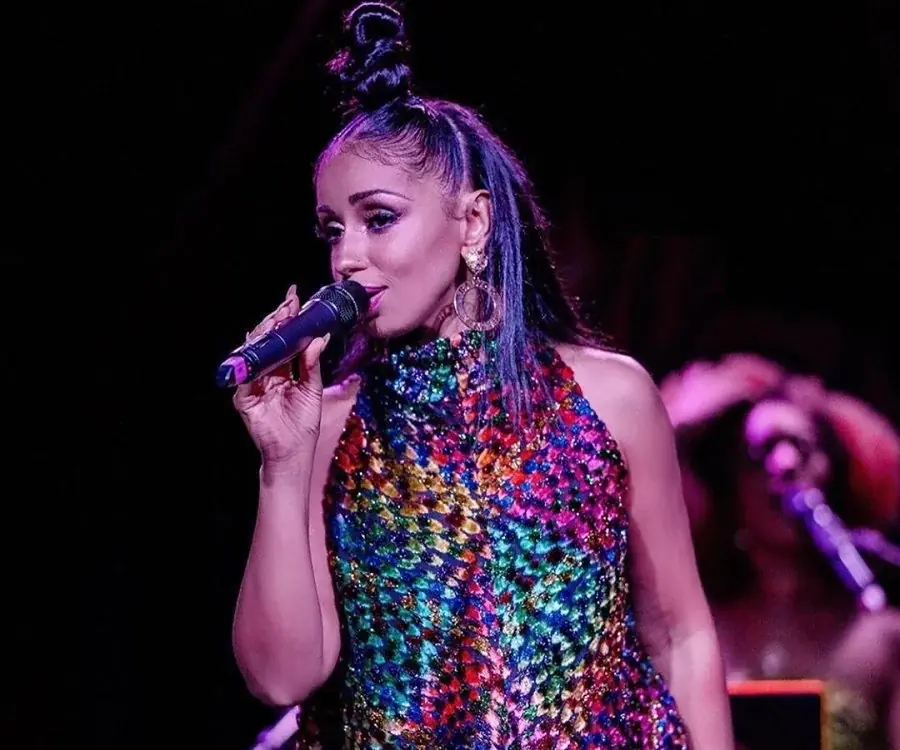
The first is the claim that Mya rejected Jay-Z romantically. There is no reliable public evidence in the material reviewed establishing that Jay-Z pursued her and she turned him down. In fact, Mya publicly denied the affair rumors and said that she and Jay-Z had never been in touch, even when they collaborated musically.
The second is the idea that Mya refused to let career interests dictate her romantic choices. That is supported by her 2018 comments about managers and publicists who encouraged her to date famous men for publicity.
The difference is substantial.
The first claim creates a dramatic story about two celebrities and an alleged romantic rejection. The second describes a real professional boundary that Mya discussed publicly.
A responsible article should not turn the second fact into proof of the first.
It is possible to write an engaging story about Mya's independence without inventing a private encounter or suggesting that a specific romantic proposal occurred.
In fact, the documented story offers a more interesting insight into the pressures that female performers can face.
It asks why an artist's romantic life should become part of a marketing strategy in the first place. It also raises questions about who controls an artist's image, who benefits from public speculation, and why women are so often expected to explain personal choices that male performers may not be asked to discuss in the same way.
These questions remain relevant across the entertainment industry.
How Celebrity Rumors Grow From a Small Connection
The Mya and Jay-Z story also illustrates how a rumor can develop over time.
It began with a recognizable professional connection: two artists had worked together on a song. That collaboration gave fans a reason to associate their names.
Later, an online claim suggested a romantic relationship. The rumor spread during a period of heightened interest in Jay-Z and Beyoncé's marriage.
Once Mya's name entered the discussion, the speculation began attracting more attention.
A claim repeated across multiple websites can create the impression that many independent sources have confirmed it. But that is not necessarily what happened.
Sometimes several websites are simply repeating the same original rumor. The number of pages discussing a claim does not automatically establish its accuracy.
This is one of the central problems with modern celebrity reporting.
A statement can travel from an anonymous post to an entertainment blog, then to a social media account, and eventually into a video or image caption. By the time it reaches a wider audience, the original source may be difficult to identify.
The claim may then be presented as an established fact even though no independent evidence has appeared.
Mya's response in 2014 directly challenged this type of reporting. She criticized sources that circulated allegations without factual support and made clear that she did not accept the story being told about her.
Her experience demonstrates why readers should distinguish between an allegation, a denial, a documented event, and an independently verified fact.
The Role of Old Photographs
The supplied image includes photographs of Mya, Jay-Z, and other well-known entertainers.
Such images can make a story feel more convincing because viewers see recognizable faces together. However, a photograph does not automatically establish the circumstances behind a relationship.
A picture of two celebrities standing beside one another may simply show that they attended the same event. A photograph from a music video or promotional appearance may reflect a professional collaboration.
Even a photograph of two people smiling together does not prove that they were romantically involved.
This is particularly important when older images are reused in modern social media posts.
An image may have been taken years earlier, but a new caption can make it appear as though it relates to a current event. The photograph itself may be authentic while the explanation attached to it is misleading.
Readers should therefore ask three basic questions:
-
When was the photograph taken?
-
What was the original occasion?
-
Does the image actually support the claim in the caption?
If those questions cannot be answered, the picture should not be treated as proof.
Jay-Z's Public Image and His Approach to Controversy
The other major figure in the story is Jay-Z, whose career has been shaped by an unusually wide range of public roles.
He is a rapper, songwriter, producer, entrepreneur, investor, and one of the most influential figures in modern hip-hop.
His public image has often emphasized control, strategy, and careful decision-making. He has built businesses and professional relationships that extend well beyond music, and his name can attract attention even when he is not actively promoting a new record.
The supplied article describes him as someone who frequently avoids direct responses when controversy appears.
There is some truth to the broader observation that Jay-Z has often maintained a relatively private public presence. He has not always responded to every rumor or online accusation through social media or interviews.
However, the claim that he never addresses controversy would be misleading.
In March 2026, GQ published an extensive interview in which Jay-Z discussed his music, family, business interests, and the impact of a civil lawsuit filed against him in late 2024. He described the emotional toll the allegations had taken and said that he had been deeply affected by the experience. The lawsuit was voluntarily dismissed with prejudice months after it was filed. Jay-Z had maintained that the allegations were false.
That interview is an important part of the current picture because it shows that his public approach is not simply permanent silence.
He may choose when to speak, how to speak, and which issues he considers important enough to address. A long-form interview allows him to explain his own perspective rather than responding to every online discussion individually.
This is different from the way social media often expects public figures to behave.
Online audiences frequently want immediate reactions. A celebrity may be criticized for remaining silent for several hours, days, or weeks. Yet a person with a complicated business and public life may prefer to communicate through lawyers, official representatives, or carefully arranged interviews.
That choice does not automatically prove guilt, innocence, agreement, or disagreement with every claim circulating online.
It simply means that public silence should not be treated as evidence.
Why Jay-Z's Silence Can Become a Story of Its Own
Jay-Z's influence creates a particular kind of public attention.
Because he is so well known, his absence from a discussion can become almost as noticeable as a direct statement.
When a controversy appears and he does not immediately respond, people begin asking why.
Some may interpret the silence as a deliberate strategy. Others may find it frustrating. Still others may believe that public figures should not be expected to answer every accusation posted online.
All of these reactions can exist at the same time.
For a celebrity with extensive business interests, public statements can carry consequences beyond entertainment headlines. A response may affect legal proceedings, professional relationships, commercial agreements, and the privacy of family members.
That does not mean every decision to remain quiet is necessarily wise or correct. It means the decision may involve more considerations than an online audience can see.
The distinction between a public relations response and a legal response is also important.
A public relations statement is often designed to communicate a message to fans, journalists, and the general public. A legal response may be intended to address claims through formal procedures and protect the rights of the people involved.
These approaches serve different purposes.
A person who chooses one rather than the other may not be trying to avoid the subject. They may simply be choosing a different channel.
In Jay-Z's case, his March 2026 GQ interview showed that he was willing to discuss difficult subjects at length when he chose to do so.