This process demonstrates why simply inspecting a vegetable cannot establish whether it is safe.
It also explains why improved sanitation is essential.
Preventing human and animal waste from entering ponds and irrigation systems can interrupt the parasite's life cycle.
The World Health Organization identifies unsafe water, inadequate sanitation, and the consumption of contaminated aquatic plants as important factors contributing to foodborne trematode infections.
World Health Organization+1
Why children and older adults deserve extra attention
Children may be more vulnerable to dehydration when they develop prolonged diarrhea or vomiting.
Older adults may also experience more serious consequences from gastrointestinal illness, particularly if they have existing medical conditions.
People with weakened immune systems should be especially careful about food safety.
For these groups, prevention is more effective than waiting until symptoms become severe.
Parents should make sure aquatic vegetables are properly prepared before serving them to children.
Older family members should also avoid consuming raw freshwater plants from uncertain sources.
The objective is not to create fear around traditional foods, but to reduce preventable exposure.
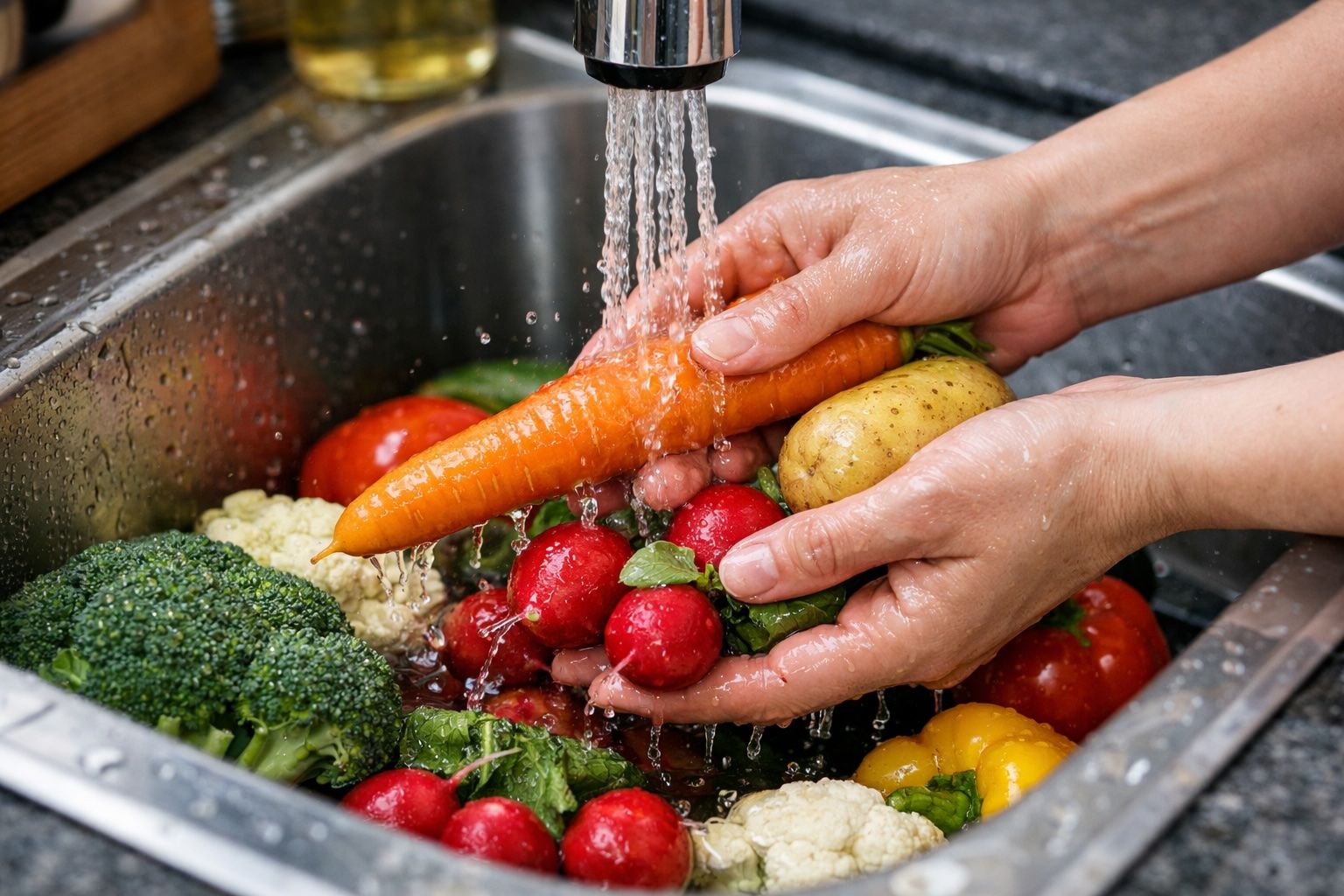
Image 3: Thoroughly washing fresh vegetables under safe running water is an important food-safety practice, although cooking remains essential for certain parasite risks.
Chapter 5: How to Protect Your Family From Parasites When Preparing Vegetables
The good news is that many foodborne parasitic infections can be prevented through relatively simple habits.
Families do not need to stop eating vegetables or abandon traditional recipes.
Instead, they should pay attention to where their food comes from and how it is prepared.
A few practical changes in the kitchen can significantly reduce unnecessary exposure.
1. Cook freshwater plants thoroughly
This is the most important precaution when preparing aquatic plants that may carry infectious flukes.
The CDC recommends avoiding raw or undercooked freshwater plants associated with Fasciolopsis buski.
If people choose to consume these foods, they should cook them thoroughly in boiling water.
Do not assume that briefly dipping a vegetable into hot water is sufficient.
The entire edible portion should be adequately cooked.
Cooking practices should also account for the size, thickness, and type of vegetable.
For unfamiliar aquatic plants, follow reliable local food-safety guidance rather than experimenting with raw preparations.
2. Wash your hands before handling food
Hands can transfer microorganisms from contaminated surfaces to food.
Wash your hands with soap and clean running water before preparing vegetables.
Repeat the process after handling raw meat, using the bathroom, touching soil, or cleaning dirty produce.
Kitchen towels, cutting boards, knives, and food containers should also be kept clean.
These steps are simple, but they help interrupt the movement of harmful organisms between different parts of the kitchen.
3. Use safe water for washing and cooking
Vegetables should be rinsed using water that is safe for drinking.
If the quality of the household water supply is uncertain, appropriate treatment may be necessary.
Boiling water is one established way to make microbiologically unsafe water safer for drinking, although chemical contamination requires different treatment methods.
Do not use water from an untreated pond, river, or irrigation channel to wash vegetables that will be eaten raw.
The water may introduce the very contamination that food preparation is intended to remove.
4. Separate raw and cooked foods
Cross-contamination can happen when cooked vegetables come into contact with contaminated raw ingredients.
Use separate cutting boards or thoroughly wash equipment between different food preparation tasks.
Keep raw aquatic plants away from ready-to-eat foods.
Store cooked food in clean containers and refrigerate it promptly.
These practices are especially important when preparing meals for several family members.
5. Choose reliable sources for aquatic vegetables
If you regularly buy water caltrops, watercress, or other aquatic vegetables, pay attention to their source.
Prefer products from suppliers who follow appropriate cultivation, harvesting, and handling standards.
Avoid harvesting edible plants from polluted rivers, drainage channels, or stagnant ponds with uncertain water quality.
A traditional food may be nutritious, but its safety depends partly on the environment where it was grown.
6. Understand when medical testing may be necessary
If someone has eaten potentially contaminated aquatic plants and later develops persistent abdominal pain, diarrhea, fever, or unexplained digestive problems, they should consult a healthcare professional.
Doctors may ask:
-
What type of food was consumed?
-
Was it eaten raw or cooked?
-
Where was it purchased or harvested?
-
Was there exposure to untreated freshwater?
-
When did the symptoms begin?
-
Have other family members experienced similar symptoms?
These details can help determine whether testing for a parasitic infection is appropriate.
Depending on the suspected organism, testing may involve stool microscopy, blood investigations, or medical imaging.
Do not take antiparasitic medication without medical advice. Different parasites require different treatments, and unnecessary medication can create additional problems.
7. Remember that treatment is available
A parasitic infection is not automatically a lifelong condition.
Fasciolopsiasis is treatable with medication.
Fascioliasis also has an established treatment, with triclabendazole commonly used under medical supervision.
Early diagnosis can help prevent complications and reduce the duration of illness.
People experiencing persistent symptoms should seek professional evaluation rather than relying on herbal remedies or internet treatment suggestions.
The real lesson behind the warning
The image's claim that one bite introduces 100,000 parasites should not be treated as an established scientific fact.
However, the underlying message about contaminated aquatic plants deserves attention.
Some parasites genuinely use freshwater vegetation as part of their life cycle.
People can become infected when they consume contaminated plants without adequate preparation.
The danger is influenced by environmental contamination, sanitation, food handling, and cooking practices—not simply by the appearance of a vegetable.
A healthy diet should include a variety of vegetables, but food safety must remain part of every meal.
Before serving unfamiliar aquatic plants, make sure they come from a reliable source and are prepared appropriately.