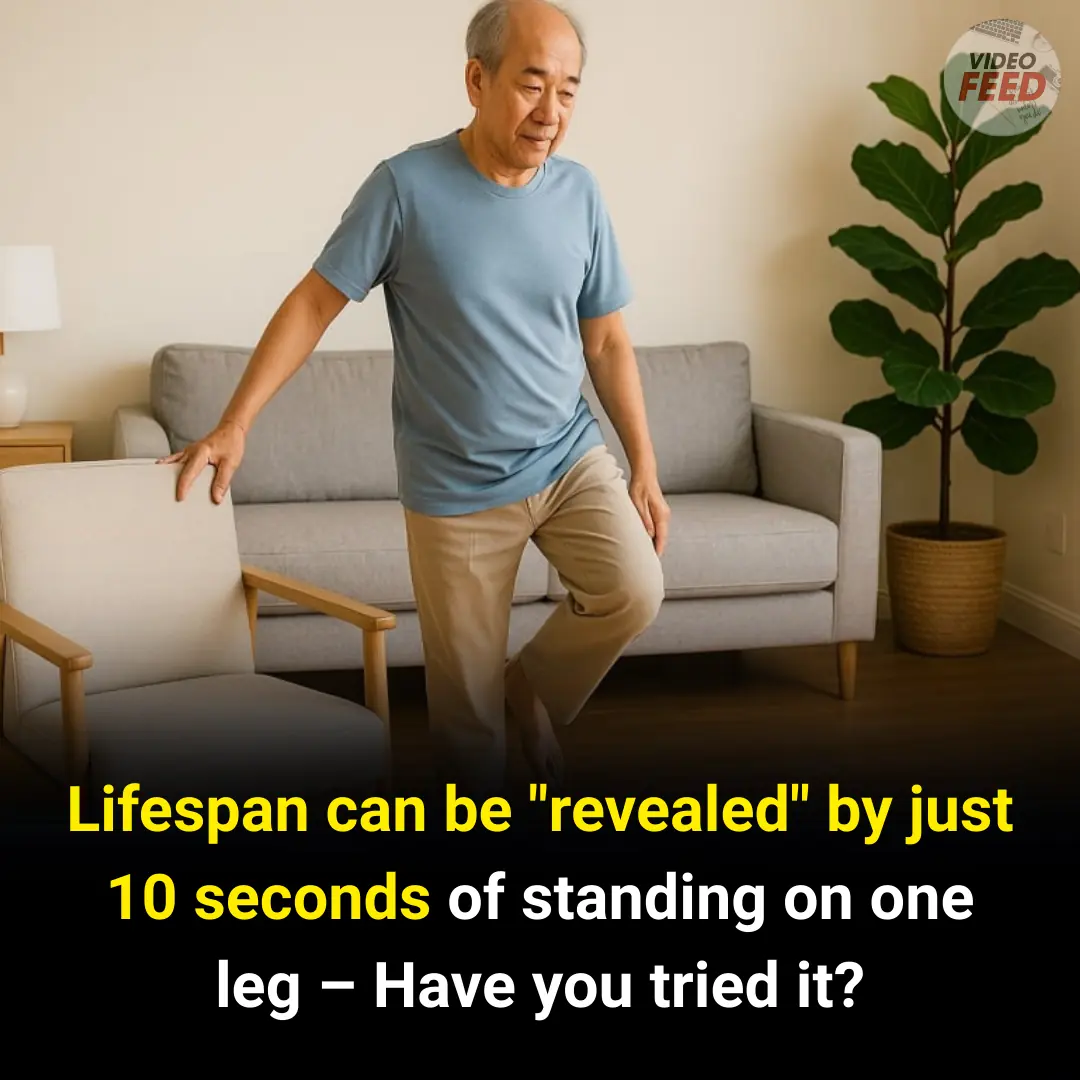
A Small Move, a Big Revelation
No machines, no doctors—just you, a little space, and a bit of time. The one-leg standing test may seem like a child’s game, yet it has become a “key” to assessing adult health.
When standing on one leg, the body is forced to activate multiple systems at once: muscles to stabilize, the inner ear to maintain balance, the eyes to locate in space, and the brain to continuously process and adjust posture. If even one of these systems has an issue—even a minor one—remaining steady for just a few seconds becomes difficult.
That’s why the ability to stand on one leg not only reflects flexibility but also indicates the body’s overall coordination. And the surprising part: it’s linked to longevity.
Standing on one leg for a few seconds each day is not just an exercise—it’s also a simple way to check your health and balance.
When Age Knocks, Balance Is the First to Leave
In our twenties, we can jump and dance all day without a second thought. But by middle age, even a missed step on the stairs can leave us dizzy and unsteady. It’s no coincidence that falls are a leading cause of serious injury in older adults—sometimes even the reason they lose independence in daily life.
Balance naturally declines with age, but if detected early, it can be improved. The one-leg test serves as a gentle reminder: it’s time to pay more attention to your stability—both physically and mentally.
More Than Just Standing—A Reflection of Overall Health
Imagine standing on one leg in a quiet room. Hands on your hips, eyes fixed forward. The first few seconds feel easy. But then, one leg begins to tremble, your body tilts slightly, and you have to put your foot down. Just a few seconds—but the test has already told you a lot.
It may reveal that your musculoskeletal system is weakening, your reflexes are slowing, or simply that you lack practice. Worse, it might be an early signal of hidden health risks you never considered.
The good news is: no result is permanent. If today you last only 5 seconds, with a month of steady practice, that number could easily double.
At any age, improving balance enhances quality of life and reduces the risk of falls.
Make “10 Seconds” a Daily Habit
No one can stop time, but everyone can choose how they age. Small, simple exercises—like balance training, walking, and stretching—when done regularly, not only keep the body flexible but also improve circulation, the nervous system, and even mental health.
You don’t need a gym or fancy equipment. Just spend a few minutes each day standing on one leg, switching legs, or closing your eyes to increase the challenge. Your body will gradually adapt, strengthen, and become steadier. More importantly, you’ll be actively extending your own quality of life.
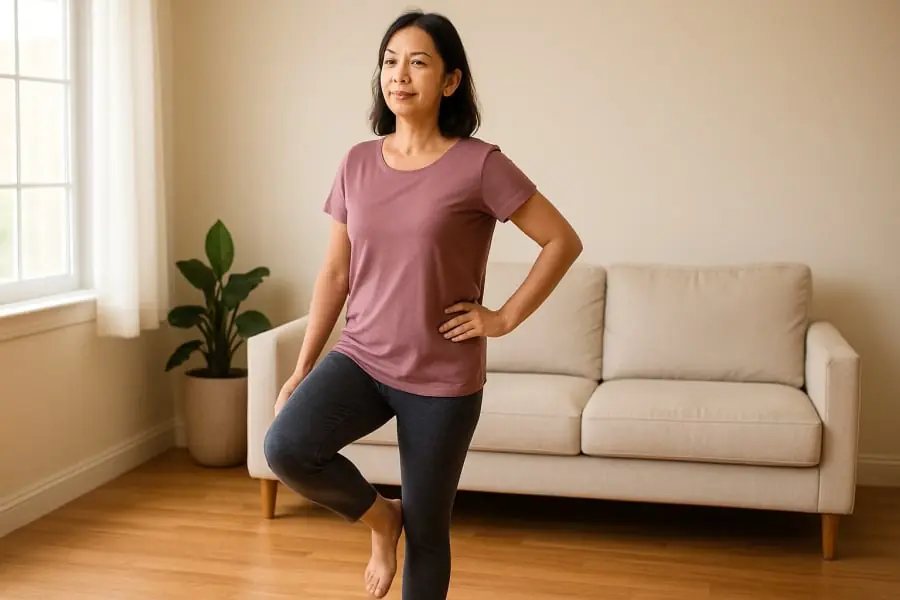
Health Lies in the Little Things
Sometimes, a move that seems trivial can reflect our body more clearly than lab results. Good balance often means your internal systems are functioning smoothly. On the other hand, if you wobble easily, don’t ignore it—take it as a chance to adjust, the sooner the better.
We often wait until illness forces us to change. But if we pay attention to subtle signals—like the one-leg test—we may live healthier, longer lives without waiting until it’s too late.
In the end, try standing on one leg today. No audience, no score needed. Just you, sensing where you are right now—and from there, beginning a gentle, proactive, and caring journey to look after yourself.