Your nails can sometimes reveal clues about what is happening in your body, but most nail changes are not signs of a serious disease. Lines, ridges, spots, or changes in color can result from aging, minor injuries, nail products, infections, medications, nutritional problems, or underlying medical conditions. The important thing is learning which changes are usually harmless and which deserve a closer look.
It is easy to ignore your nails.
You trim them, perhaps paint them, and rarely stop to examine them closely.
But then one day you notice a dark line.
Or several nails suddenly develop ridges.
Maybe one nail becomes yellow.
Perhaps the surface looks unusually rough or develops a strange white mark.
These changes can be surprising, and because nails grow slowly, it may be difficult to know when the change actually began.
The good news is that many nail abnormalities have simple explanations.
However, some patterns are worth discussing with a healthcare professional, especially when a change is new, persistent, rapidly worsening, or affects only one nail.
1. Vertical Ridges Are Often Related to Aging
One of the most common nail changes is the appearance of vertical ridges, sometimes called longitudinal ridges.
These are lines that run from the base of the nail toward the tip.
They become increasingly common with age and often aren't dangerous.
As the nail matrix and surrounding tissues change over time, the nail may become slightly thinner or develop an uneven surface.
Dehydration of the nail plate, repeated exposure to water or chemicals, and minor trauma can also make ridges more noticeable.
If you have always had mild vertical ridges and they are otherwise unchanged, there may be little reason for concern.
But when should you look more closely?
If the ridges appear suddenly, become pronounced, involve many nails, or occur along with changes in color, brittleness, pain, or other symptoms, it may be worth discussing them with a medical professional.
2. Horizontal Grooves Can Tell a Different Story
Lines that run across the nail are different from ordinary vertical ridges.
These horizontal depressions are sometimes called Beau's lines.
They can develop when nail growth is temporarily interrupted.
That interruption can occur after significant illness, high fever, major physical stress, injury to the nail, certain treatments, or other events that temporarily affect the nail-producing tissue.
One interesting feature is that nails grow slowly.
Because of that, a horizontal groove may appear weeks or even months after the event that caused it.
You might look at the nail today and wonder:
“Why is there a line here when I wasn't sick recently?”
The answer may be that the nail is essentially recording something that happened earlier.
If horizontal grooves repeatedly appear across multiple nails without an obvious explanation, professional evaluation can help determine the cause.
3. White Spots Usually Aren’t a Calcium Deficiency
White spots on fingernails are extremely common.
They are often called leukonychia.
People sometimes assume that white spots automatically mean they are deficient in calcium, but that is usually not the explanation.
Minor trauma to the nail—sometimes so small that you don't remember it—can produce a white mark that becomes visible as the nail grows.
For example, a small knock to the nail, aggressive manicure, or pressure around the cuticle may cause a temporary spot.
The mark generally moves toward the tip as the nail grows and eventually disappears when the affected part is trimmed away.
When should white nail changes be evaluated?
If large areas of the nail become white, if many nails change at the same time, or if the color change does not behave like a typical growing-out injury, medical assessment may be appropriate.
4. Yellow Nails Can Have Several Causes
Yellowish nails can result from something as simple as frequent use of dark nail polish.
Pigments can stain the nail plate, particularly when polish is applied repeatedly without a protective base coat.
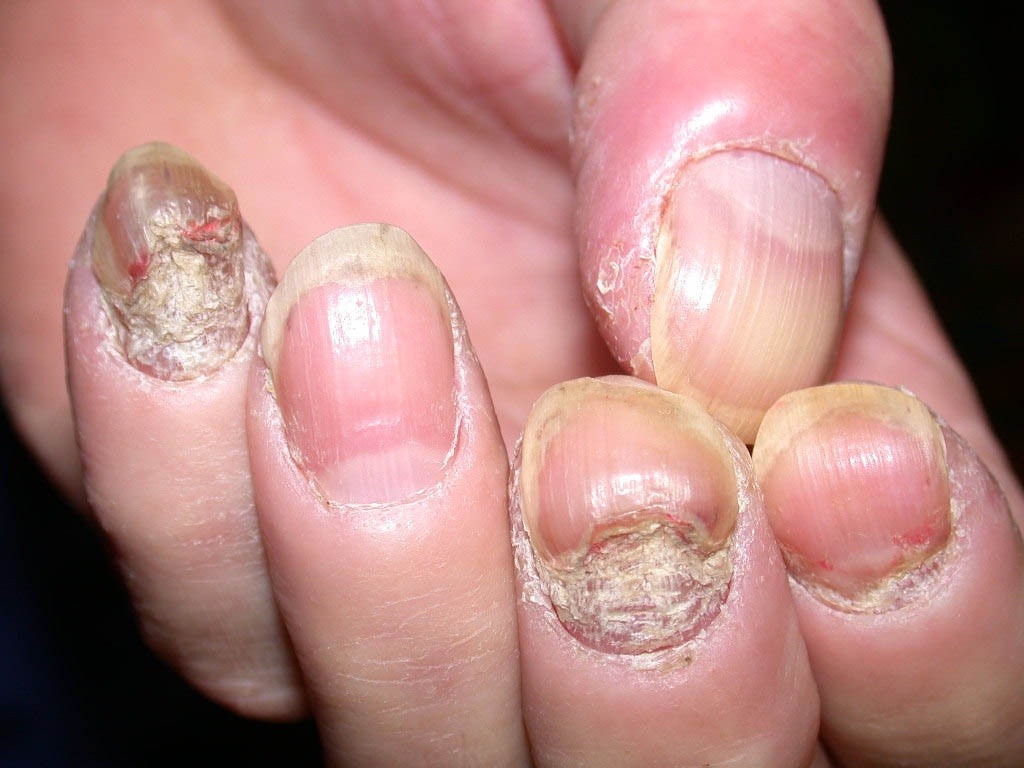
But yellow or yellow-brown nails can also occur with fungal nail infections.
A fungal infection may cause the nail to become:
-
Yellow or brown
-
Thicker
-
Brittle
-
Crumbly
-
Distorted
-
Looser from the nail bed
The condition may start with one nail and gradually spread to others.
Not every thick yellow nail is caused by fungus, however.
Psoriasis and other nail disorders can produce similar changes.
That is why repeatedly treating a discolored nail with over-the-counter products without knowing the cause may not solve the problem.
5. A Nail That Becomes Thick and Brittle Deserves Attention
Nails naturally change with age, but significant thickening or crumbling can have several causes.
Fungal infections are common possibilities.
Repeated trauma, certain inflammatory skin conditions, and other nail disorders can also affect the nail plate.
Toenails are particularly susceptible to repeated pressure from poorly fitting shoes.
A thickened toenail can therefore result from years of mechanical stress rather than infection.
The appearance alone cannot always distinguish these causes.
A healthcare professional can examine the nail and, when necessary, test a sample for fungal infection before recommending treatment.
6. Dark Lines Under a Nail Should Be Evaluated Carefully
A dark vertical line running from the base of the nail toward the tip is called longitudinal melanonychia.
There are many possible explanations.
In some people, these bands are completely benign and may be related to normal pigmentation, genetics, skin tone, age, trauma, or certain medications.
However, a new or changing dark band involving a single nail can sometimes be a warning sign of subungual melanoma, a rare form of skin cancer that develops beneath the nail.
This is one of the nail changes that deserves particular attention.
Warning features can include a band that:
-
Is new or rapidly changing
-
Becomes wider toward the base
-
Has irregular or uneven color
-
Develops blurred or irregular borders
-
Extends onto the surrounding skin
-
Occurs primarily on one nail without an obvious explanation
Not every dark nail stripe is melanoma.
Most are not.
But because the condition can be serious, a suspicious new pigment band should be evaluated rather than ignored.

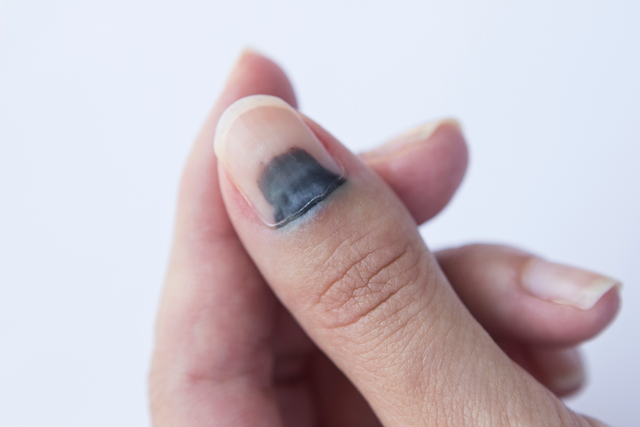
7. A Dark Nail After an Injury May Be a Bruise
Not every dark mark under a nail is caused by pigmentation.
If you recently hit your finger, slammed a door on it, dropped something on it, or otherwise injured the nail, blood can collect beneath the nail plate.
This is called a subungual hematoma.
It may appear red, purple, brown, or nearly black.
The color should gradually move toward the tip as the nail grows.
This growing-out pattern can help distinguish an old injury from some other causes of persistent pigmentation.
However, if you don't remember injuring the nail, the dark area does not move with nail growth, or the appearance continues to change, medical evaluation is sensible.
8. Nails That Become Spoon-Shaped May Have an Underlying Cause
Another unusual nail change is koilonychia, in which the nail becomes unusually thin and curves upward around the edges, creating a spoon-like appearance.
Iron deficiency is one possible cause, although it is not the only one.
Certain systemic illnesses, occupational exposures, inherited conditions, and repeated trauma can also contribute.
If your nails have become noticeably spoon-shaped, particularly if you also have fatigue, weakness, pale skin, shortness of breath, or other symptoms, talk with a healthcare professional.
A blood test may be appropriate to determine whether iron deficiency or another condition is contributing.
9. Clubbed Nails Can Be a Sign That Deserves Medical Attention
Nail clubbing occurs when the fingertips become more rounded and the nails curve more around the ends of the fingers.
The angle between the nail and the surrounding skin may change, and the fingertips can gradually become broader.
Clubbing can occur naturally in some families, but newly developed clubbing can sometimes be associated with underlying heart or lung conditions and certain other diseases.
It is not something that should be diagnosed from a photograph alone.
If you notice a gradual change in the shape of your fingertips and nails, especially if it is new or accompanied by breathing problems or other symptoms, medical evaluation is appropriate.
10. Nails That Become Blue or Purple Need Context
A temporary bluish appearance can sometimes result from cold temperatures.
When the hands warm up, the color should return to normal.
But persistent blue or purple discoloration can sometimes reflect problems with circulation or oxygenation.
If the nails remain blue despite warming, particularly when accompanied by:
-
Shortness of breath
-
Chest pain
-
Confusion
-
Severe weakness
-
Dizziness
urgent medical attention may be necessary.
Do not assume persistent nail discoloration is simply a cosmetic issue.
11. Tiny Red or Brown Lines Under the Nail
You may occasionally notice very thin reddish-brown lines that look like splinters under the nail.
These are known as splinter hemorrhages.
They can result from minor trauma and are often harmless, particularly when only one or a few are present.
However, multiple unexplained splinter hemorrhages—especially when accompanied by fever, feeling unwell, or other symptoms—may deserve medical assessment.
The key is not to panic over one tiny line.
Look at the overall picture.
12. Nail Changes Can Sometimes Occur With Psoriasis
Psoriasis does not affect only the skin.
It can also affect the nails.
Nail psoriasis may cause:
-
Small pits in the nail surface
-
Yellow-brown discoloration
-
Separation of the nail from the nail bed
-
Thickening
-
Crumbling
-
Irregular growth
Some people develop nail changes before they realize they have psoriasis elsewhere on the body.
Others already have obvious skin plaques.
If you notice persistent nail abnormalities and also have scaly patches on your scalp, elbows, knees, or other areas, mention both to your healthcare professional.
13. Nail Changes May Reflect Repeated Trauma
Sometimes the explanation is surprisingly simple.
Your nails may be reacting to what you do with your hands every day.
Repeated tapping, nail biting, aggressive manicures, artificial nails, picking at cuticles, or wearing shoes that constantly press against the toes can all damage nails.
The nail matrix is responsible for producing the nail.
When it is repeatedly traumatized, the nail may grow abnormally.
This is another reason not every unusual line or ridge should immediately be interpreted as an internal disease.
Your daily habits matter.
14. Nutritional Problems Can Affect Nail Appearance
Because nails are made largely of keratin, severe or prolonged nutritional deficiencies can affect their appearance.
Iron deficiency is one example.
Deficiencies involving certain nutrients may also contribute to brittle or abnormal nails, although nail appearance alone cannot reliably diagnose a specific deficiency.
This is important because internet articles sometimes recommend taking large amounts of supplements whenever nails look unusual.
That's not always appropriate.
Excessive supplementation can cause its own problems.
If a nutritional deficiency is suspected, testing and professional guidance are preferable to taking high-dose supplements based solely on appearance.
15. Brittle Nails May Be Related to Everyday Exposure
Nails can become dry and brittle after frequent exposure to:
-
Water
-
Cleaning products
-
Nail polish remover
-
Detergents
-
Acetone
-
Harsh chemicals
Repeated wetting and drying can weaken the nail structure.
People who wash their hands very frequently may notice increased brittleness.
Simple measures such as wearing appropriate protective gloves during cleaning and applying moisturizer to the hands and nails can help.
If brittleness becomes severe or is accompanied by other nail changes, however, the underlying cause should be considered.
What Your Nails Cannot Tell You Reliably
It's tempting to treat the nails like a diagnostic chart.
You may see a line and immediately assume it means a vitamin deficiency.
A pale nail may be interpreted as anemia.
A ridge may be blamed on stress.
A white spot may be attributed to calcium.
But nail appearance alone rarely provides a definitive diagnosis.
The same nail change can have several possible causes.
A healthcare professional considers the entire clinical picture rather than interpreting one visual feature in isolation.
When Should You See a Doctor?
A new nail change is more worth investigating when it is:
Persistent
Progressively worsening
Limited to one nail without an obvious explanation
Associated with pain or swelling
Associated with bleeding or drainage
Accompanied by changes in the surrounding skin
Appearing alongside other unexplained symptoms
You should also seek evaluation for a new dark streak that changes over time, especially if it affects one nail.
Early assessment does not mean the problem is serious.
It simply means you are not leaving an unexplained change to chance.
Don't Ignore Changes Around the Nail, Either
Sometimes the problem isn't actually within the nail itself.
The skin surrounding the nail can become red, swollen, painful, or infected.
A condition called paronychia can develop around the nail after injury, nail biting, manicures, or repeated exposure to moisture.
Signs can include:
-
Redness
-
Swelling
-
Tenderness
-
Warmth
-
Pus or drainage
A worsening infection should be medically evaluated, particularly in people with diabetes or weakened immune systems.
How to Keep Your Nails Healthy
Good nail care doesn't need to be complicated.
Keep nails clean and reasonably short.
Avoid biting them.
Don't aggressively cut or push back the cuticles.
Wear gloves when working with harsh cleaning products.
Wear properly fitted shoes.
Moisturize dry hands and nails.
Give nails breaks from harsh cosmetic treatments if they are becoming brittle.
And most importantly, pay attention to changes rather than trying to “treat” every abnormality with supplements or home remedies.
Take Photos When a Nail Change Appears
One practical habit can make nail changes much easier to monitor.
If you notice something unusual, take a clear photograph.
Take another photo several weeks later under similar lighting.
This can help you determine whether a line is growing out with the nail, whether a discoloration is expanding, or whether the overall appearance is changing.
A photo can also be useful during a medical appointment.
Just remember that photographs are a tracking tool, not a substitute for examination.
The Bottom Line
Lines, ridges, discoloration, and changes in nail texture are extremely common, and most nail changes are not a sign of a serious disease.
Vertical ridges may become more common with age. White spots are often related to minor trauma. Yellow or thickened nails can occur with fungal infections or repeated pressure. Horizontal grooves may reflect a temporary interruption in nail growth.
But certain changes deserve more attention.
A new or changing dark streak on a single nail, persistent blue discoloration, newly developed clubbing, significant nail distortion, unexplained bleeding, or nail changes accompanied by other symptoms should be professionally evaluated.
Your nails don't provide a complete picture of your health, but they can occasionally provide a useful clue.
The goal isn't to panic every time your nails look different. It's to notice meaningful changes, understand that there can be many explanations, and know when a professional opinion is worth getting.