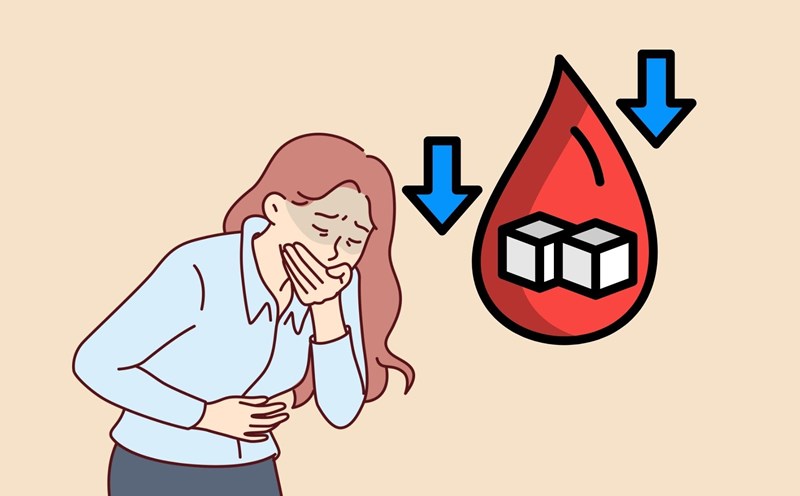
When most people hear the phrase “low blood sugar,” they imagine someone suddenly becoming weak, shaky, or hungry.
Those are certainly common symptoms. But low blood sugar—also called hypoglycemia—can affect the brain, nervous system, and body in many different ways. Some people may feel anxious or unusually irritable. Others may become confused, dizzy, sweaty, exhausted, or develop a headache.
In more severe cases, low blood sugar can interfere with a person's ability to think clearly, speak normally, coordinate movement, or stay conscious.
That's why recognizing the less obvious signs matters.
Hypoglycemia is especially important for people who take insulin or certain diabetes medications, but it can also occur in other circumstances. Skipping meals, drinking alcohol without eating, prolonged exercise, and certain medical conditions or medications can sometimes contribute.
Here are 12 signs of low blood sugar to know, along with what causes them, who is most at risk, and what to do if you suspect your blood sugar is dropping.
What Is Low Blood Sugar?
Blood glucose is one of the body's main sources of energy.
Your brain depends heavily on glucose, and your body maintains blood glucose within a relatively narrow range through hormones and other mechanisms.
When blood glucose falls too low, the body responds by releasing hormones such as epinephrine (adrenaline). This creates many of the early warning symptoms people associate with hypoglycemia.
If glucose continues to fall, the brain may not receive enough energy to function normally. This can lead to confusion, abnormal behavior, seizures, loss of consciousness, and potentially life-threatening complications.
For many people with diabetes, a blood glucose level below 70 mg/dL (3.9 mmol/L) is considered low and is a signal to take action.
However, symptoms don't always occur at exactly the same glucose level. Someone who frequently experiences low blood sugar may develop symptoms at a different level, while someone whose glucose has been chronically high may sometimes feel symptoms even when the number is above 70 mg/dL.
The symptoms and the actual glucose measurement both matter.
1. Shaking or Trembling
One of the classic signs of low blood sugar is suddenly feeling shaky.
Your hands may tremble, or you may feel as though your entire body is vibrating slightly.
This happens partly because falling glucose triggers the release of adrenaline and other counter-regulatory hormones.
You might notice:
-
Shaky hands
-
Trembling legs
-
Internal trembling
-
Muscle weakness
-
A sudden feeling that your body is “off”
It can sometimes be mistaken for anxiety, too much caffeine, or nervousness.
If the shakiness appears suddenly—particularly when you're taking insulin or another glucose-lowering medication—checking your blood sugar can help distinguish between possible causes.
2. Sudden Sweating
Another common but sometimes overlooked sign is unexpected sweating.
You may suddenly become sweaty even though the room isn't particularly warm and you haven't been exercising.
The sweating can occur:
-
On your forehead
-
Around your neck
-
On your palms
-
Across your chest
-
Throughout your body
This is another effect of the body's stress response to falling glucose.
Some people describe it as a sudden wave of clamminess.
If sweating appears alongside shakiness, hunger, rapid heartbeat, or dizziness, hypoglycemia becomes an important possibility—especially for someone using insulin or certain diabetes medications.
3. A Racing or Pounding Heart
Your heart may suddenly beat faster or feel as though it is pounding.
This is another consequence of adrenaline being released when the body senses that blood glucose is falling.
You may notice:
-
A fast heartbeat
-
Heart pounding in your chest
-
Palpitations
-
A sudden feeling of nervousness
Because these sensations can resemble an anxiety or panic response, some people don't immediately realize that their glucose may be low.
If you repeatedly experience unexplained episodes of a racing heart, it's worth discussing them with a healthcare professional rather than assuming they are always caused by blood sugar.
4. Intense Hunger
A sudden, almost urgent feeling that you need to eat immediately can be a sign of falling blood glucose.
This isn't necessarily the same as ordinary hunger.
You might feel:
“I need something to eat right now.”
The brain and body recognize that available glucose is becoming insufficient, triggering signals designed to encourage you to consume food.
This is one reason keeping an appropriate fast-acting carbohydrate source available can be useful for people who are at risk of hypoglycemia.
5. Dizziness or Lightheadedness
Low blood sugar can make you feel dizzy, lightheaded, unsteady, or as though you might faint.
You may feel worse when standing or walking.
However, dizziness has many possible causes, including:
-
Dehydration
-
Low blood pressure
-
Inner-ear disorders
-
Anemia
-
Medication effects
-
Heart problems
-
Lack of sleep
So dizziness alone does not prove that your blood sugar is low.
If you're at risk for hypoglycemia, checking your glucose when symptoms occur can provide useful information.
6. Headache
A headache can sometimes accompany hypoglycemia.
It may develop along with other symptoms such as sweating, hunger, shakiness, dizziness, or difficulty concentrating.
The exact experience varies from person to person.
Because headaches are extremely common and have many potential causes, a headache by itself shouldn't automatically be interpreted as low blood sugar.
But if headaches repeatedly occur around skipped meals or during periods of falling glucose, the pattern is worth discussing with your healthcare professional.
7. Irritability or Sudden Mood Changes
This is one of the signs people may not immediately connect with blood sugar.
Someone experiencing hypoglycemia may suddenly become:
-
Irritable
-
Impatient
-
Anxious
-
Nervous
-
Restless
-
Emotionally overwhelmed
The change can sometimes seem disproportionate to what's happening around them.
That's because the brain is sensitive to changes in glucose availability, while the body's stress hormones can also produce strong emotional and physical sensations.
A person may not realize that their mood has changed.
Family members or coworkers may notice the difference before they do.
8. Trouble Concentrating
Low blood sugar can affect the brain's ability to process information normally.
You may suddenly find it difficult to:
-
Focus on a conversation
-
Read
-
Complete a familiar task
-
Follow instructions
-
Make simple decisions
-
Remember what you were doing
This can feel like a sudden mental “fog.”
For someone who doesn't know they're experiencing hypoglycemia, it may simply seem like they're tired or distracted.
If you're at risk for low blood sugar and suddenly can't concentrate normally, checking your glucose can be important.
9. Blurred or Unusual Vision
Changes in vision can occur during hypoglycemia.
Some people experience:
-
Blurred vision
-
Difficulty focusing
-
Visual disturbances
-
A feeling that their vision isn't quite normal
This happens because the nervous system and visual processing can be affected when glucose levels become too low.
Vision changes should not automatically be blamed on blood sugar, however.
Sudden or significant vision loss requires prompt medical attention because other serious conditions can cause similar symptoms.

10. Confusion or Unusual Behavior
As hypoglycemia becomes more severe, symptoms can shift from the body's early warning signs to brain-related symptoms.
A person may:
-
Become confused
-
Have difficulty answering questions
-
Speak strangely
-
Act unusually
-
Become disoriented
-
Have trouble performing familiar tasks
This is particularly important because the person experiencing hypoglycemia may not recognize what's happening.
Someone nearby may notice the behavioral change first.
If a person with diabetes suddenly seems confused or behaves very differently, checking their blood glucose—if possible and safe to do so—can be extremely important.
11. Weakness, Extreme Fatigue, or Poor Coordination
Low blood sugar can make you feel suddenly exhausted or physically weak.
You may feel as though your body has unexpectedly “run out of energy.”
Some people may also become:
-
Unsteady
-
Clumsy
-
Slow to respond
-
Weak in their muscles
-
Unable to perform normal movements properly
Poor coordination becomes especially concerning if it occurs together with confusion or altered consciousness.
A person with severe hypoglycemia may have difficulty safely walking, driving, or operating machinery.
12. Seizures or Loss of Consciousness
The most severe hypoglycemia can cause neurological symptoms such as seizures or loss of consciousness.
At this point, the situation is an emergency.
A person who is unconscious or having a seizure should not be given food or drink by mouth, because they may choke.
If they have prescribed glucagon and someone is trained to use it, it should be administered according to the prescribed instructions, and emergency medical services should be contacted.
Severe hypoglycemia requires immediate treatment.