In the quiet suburban neighborhood of Oakridge Lane, people took pride in the little things. The lawns were trimmed, the driveways were clean, and most residents went out of their way to maintain the peaceful atmosphere that made the street such a pleasant place to live.
Robert Mitchell had lived there for nearly eighteen years. He was a retired civil engineer in his early sixties, a man who appreciated order, routine, and the satisfaction of seeing a job done properly. His home was modest but beautifully maintained, and the front lawn was easily his favorite part of the property.
Every Saturday morning, Robert could be found outside with his gardening tools. He carefully trimmed the edges, removed weeds, adjusted the sprinklers, and inspected the grass for any signs of disease. It was more than a hobby. After losing his wife several years earlier, tending the garden had become one of the few routines that gave his days a comforting sense of purpose.
His neighbors often complimented the lawn. Some even asked him for gardening advice.
Then Richard Collins moved into the house directly across the street.
Richard was in his late forties, financially successful, and extremely proud of his lifestyle. He drove a silver Mercedes-Benz, wore expensive watches, and seemed to enjoy reminding people how much everything he owned had cost. At first, Robert thought he was simply confident, perhaps a little self-important, but otherwise harmless.
Their relationship began pleasantly enough. Richard introduced himself, exchanged a few friendly words, and even complimented Robert's garden.
The trouble started about three weeks later.
One afternoon, Robert returned from the grocery store and discovered the Mercedes parked halfway across his front lawn. Two deep tire tracks had already pressed into the grass.
He assumed Richard had made a mistake. Perhaps a delivery vehicle had blocked his driveway, or someone had temporarily needed space. Robert waited until the following morning and politely mentioned it.
Richard laughed.
"Relax, Robert. I was only there for a few minutes."
Robert explained that the lawn was private property and asked him not to park there again.
"Sure, sure," Richard replied, already looking at his phone.
Robert accepted the apology and went back to his gardening.
But the incident happened again two days later.
Then again the following week.
Sometimes Richard parked on the grass for ten minutes. Other times, the Mercedes remained there for several hours. On one occasion, Robert came home to find the car sitting directly over a newly repaired section of turf.
Robert tried leaving a polite note beneath the windshield wiper.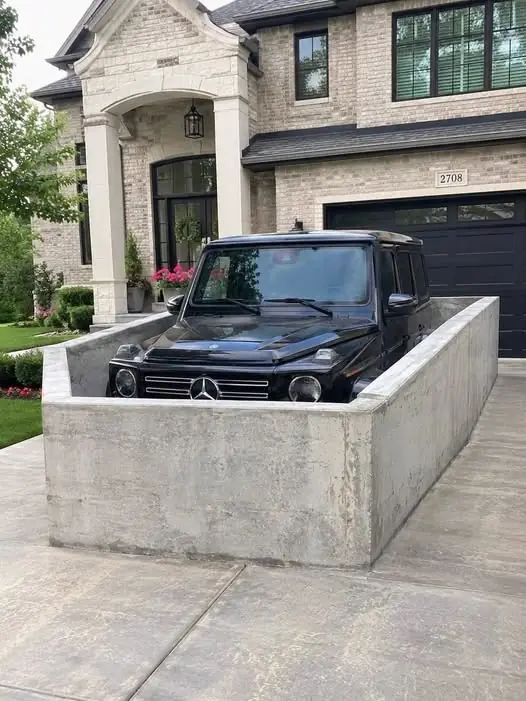
PLEASE DO NOT PARK ON THIS LAWN. PRIVATE PROPERTY.
The note disappeared.
The next morning, Richard parked there again.
Robert decided to speak with him face-to-face. He walked across the street, knocked on the door, and calmly explained that the repeated parking was damaging the grass and creating unnecessary tension between neighbors.
Richard opened the door wearing an expensive dressing gown.
"You're making a huge deal out of nothing," he said.
"It's my property, Richard. I would simply like you to stop parking there."
Richard gave him a dismissive smile.
"Look, it's just grass. You can grow more. Don't be so sensitive."
Robert stared at him for a moment. He had expected an argument, perhaps even an apology, but he hadn't expected such open contempt.
He returned home without raising his voice.
Over the next month, the damage became impossible to ignore. The tire tracks grew deeper, the grass turned brown, and the soil became compacted. One morning, Robert even noticed fresh oil stains near the flower bed.
That was the moment his patience began to disappear.
He photographed the damage, recorded the dates, and contacted the local authorities to ask about his options. He also checked his property documents and reviewed the neighborhood regulations.
The advice he received was frustratingly slow. A parking dispute on private property could become complicated, especially when ownership boundaries and access rights were involved.
Robert was told to document everything and avoid taking matters into his own hands.
He tried.
But Richard seemed to interpret every quiet response as permission to continue.
One Tuesday morning, Robert opened his curtains and saw the Mercedes parked across the same patch of grass once again. The front tires were inches from the flower bed. A fresh brown rut stretched behind the rear wheels.
Richard was sitting inside the vehicle, drinking coffee and scrolling through his phone.
Robert stood at the window for a long moment.
Then he walked into his study, opened a drawer, and took out a folder containing photographs, property records, and every complaint he had documented.
He looked through the papers carefully.
For the first time, he was no longer thinking about repairing the lawn.
He was thinking about how to make Richard understand what it meant to ignore someone else's boundaries.
And by the end of that afternoon, Robert had begun considering an idea so unusual that even his closest friend would struggle to believe it.