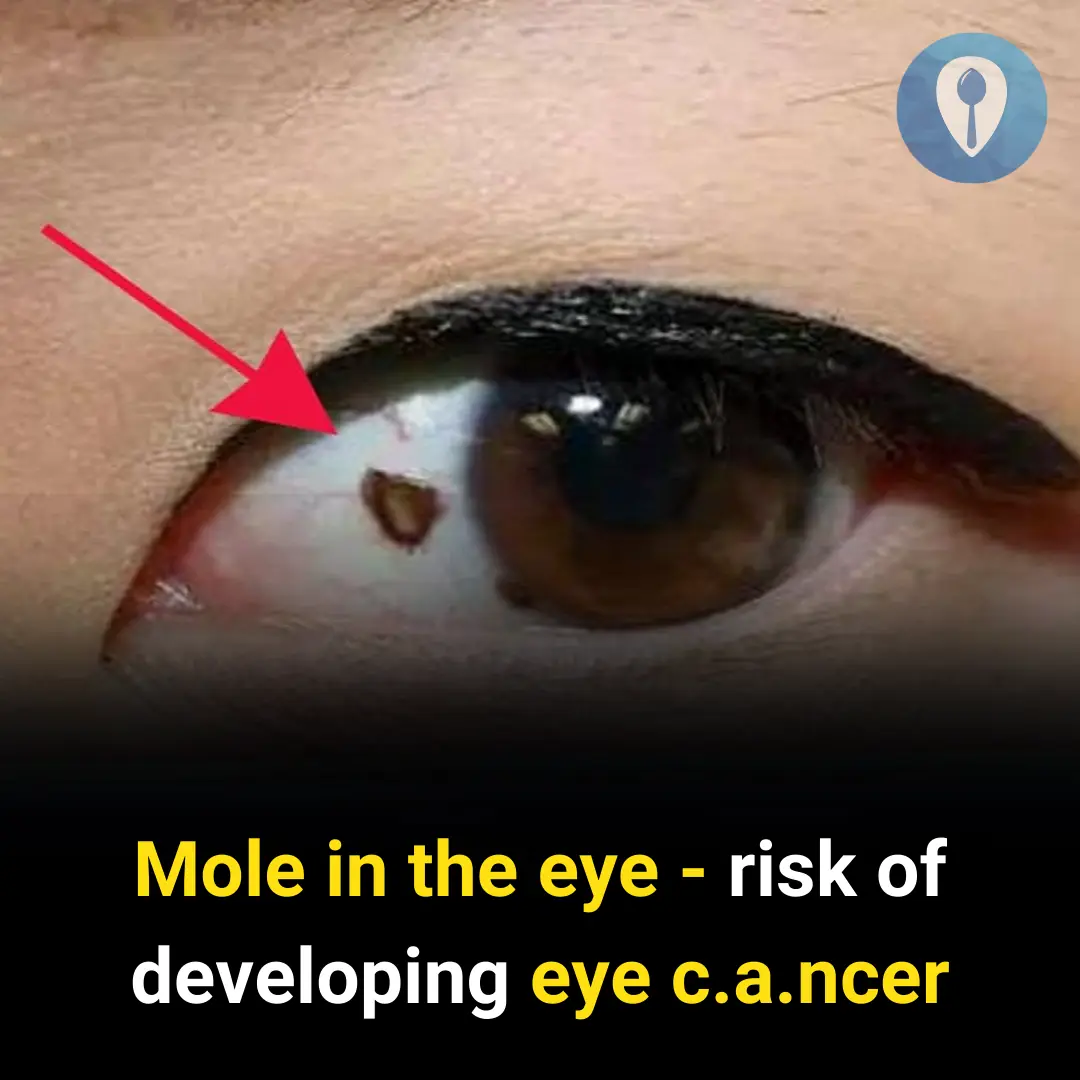
According to Dr. Tang Ngoc Anh, Department of Ophthalmology, Thu Duc District Hospital, Ho Chi Minh City, the most common type of eye cancer in adults is choroidal melanoma, which has a high risk of death.
Choroidal melanoma is a type of melanoma of the eyeball, which develops from pigment cells. In the body, pigment creates color for the skin, hair and iris. Pigment cells can develop into tumors in the skin, develop inside the eye or on the conjunctiva.
A choroidal tumor can be primary, or secondary when the tumor metastasizes from other parts of the body to the choroid. Primary tumors often metastasize through the blood to the liver, lungs, brain, bones and stomach. With secondary tumors, in women it usually originates from breast cancer, while in men it is most common from lung cancer.
Risk factors for developing melanoma include:
- Frequent and long-term exposure to sunlight or artificial light such as from artificial sun loungers.
- People with light-colored irises (blue or green).
- Older people, Caucasians.
- People with certain genetic skin conditions, such as unusual birthmarks.
- People with abnormal skin pigmentation involving the eyelids and hyperpigmentation on the uvea.
- Moles in the eye or on the surface of the eye.
In the early stages, melanoma may not cause any symptoms, and cannot be detected by itself because most tumors develop from a part of the eye that is not visible. Symptoms in the later stages may include blurred vision, distorted vision or blind spots, a feeling of glare, changes in pupil shape.
An ophthalmologist will examine and perform necessary tests such as eye ultrasound, fluorescein angiography, fundus color photography, retinal CT scan, magnetic resonance imaging, biopsy... to diagnose the disease.
Prognosis and treatment depend on two important factors: the degree of invasion and the origin of the tumor. For primary tumors, if the tumor is small and vision is still good, photocoagulation and radiotherapy are the main treatments. If the tumor is large and widespread, enucleation is required, depending on the extent of scleral invasion, orbital tissue dredging is considered. For secondary tumors, systemic treatment is mainly used because the effectiveness of systemic treatment has a significant impact on the patient's ability to preserve vision.
The mortality rate of malignant choroidal tumors can be up to 50% because the tumor often metastasizes, especially to the liver. The average survival time of patients with liver metastases is 5 to 7 months compared to 18 months of survival for other metastatic sites. In cases of choroidal metastases, the response to systemic treatment depends on the response, but in general, the prognosis is not very promising.
Because of its dangerous nature and the fact that melanoma often does not cause symptoms or early signs, regular eye exams are needed to detect and treat the disease promptly.