Boiling water is one of the oldest and simplest ways to make drinking water safer. When done properly, bringing water to a rolling boil can kill many disease-causing microorganisms and remains an important household water-treatment method in situations where microbiological contamination is a concern.
But there is a common misunderstanding: boiling does not make every type of contaminated water completely safe.
The way water is sourced, heated, stored, and handled afterward can all matter.
Some everyday habits may also create unnecessary risks or give people a false sense of security. And when the same kettle, pot, or bottle is used repeatedly by an entire household, a small mistake can affect everyone.
Here are three common habits worth reconsidering.
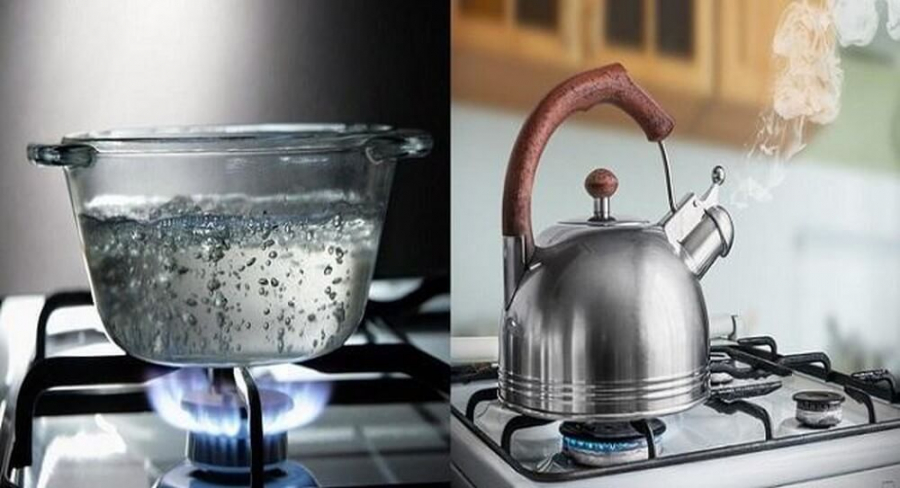
1. Assuming Boiling Removes Every Contaminant
This is perhaps the biggest misconception.
Boiling is highly effective against many bacteria, viruses, and parasites when water is brought to a proper boil and treated appropriately. But boiling is not a universal purification process.
It does not reliably remove many chemical contaminants, heavy metals, salts, or other dissolved substances.
In some situations, boiling can actually concentrate substances that do not evaporate with the water because some water is lost as steam.
That means contaminated water should not automatically be considered safe simply because it has been boiled.
What does boiling actually do?
Heat is particularly useful for controlling biological contamination.
For example, when water is contaminated with certain disease-causing microorganisms, sufficient heating can inactivate them and dramatically reduce the risk of waterborne infection.
However, if the original water contains substances such as certain industrial chemicals, pesticides, heavy metals, or excessive mineral concentrations, boiling may not solve the problem.
This distinction is especially important after:
-
Flooding
-
Natural disasters
-
Chemical spills
-
Plumbing contamination
-
A local water-quality warning
-
Using water from an uncertain source
If authorities issue a “do not drink” or chemical-contamination advisory, simply boiling the water may not make it safe.
Always follow the specific instructions from local water authorities.
2. Repeatedly Reboiling Water Without Thinking About Storage
Another common household habit is repeatedly heating the same water.
You may boil a kettle in the morning, leave the remaining water sitting there, and then boil it again later.
Occasionally doing this is not automatically dangerous.
The popular claim that repeatedly boiling ordinary drinking water suddenly turns it into a dangerous substance is not supported as a general rule.
However, there is a more practical issue that people sometimes overlook:
What happened to the water while it was sitting there?
Water that has been boiled and then left uncovered can be exposed to dust, microorganisms, and other environmental contaminants.
The container itself can also become contaminated if it is not cleaned regularly.
If the same water is repeatedly heated, the process does not necessarily remove every contaminant introduced during storage.
And if water is repeatedly boiled down over a long period, some nonvolatile dissolved substances may become more concentrated as water evaporates.
For ordinary household drinking water, this does not mean that one additional boil is inherently hazardous. But it is still better practice to use fresh water when practical, particularly when preparing drinking water for babies, older adults, or people with weakened immune systems.
3. Forgetting That the Kettle or Container Needs Cleaning
People often focus entirely on the water and forget about the equipment touching it.
A kettle may look clean from the outside while accumulating mineral deposits, scale, residue, or microbial growth in areas that are rarely examined.
Hard-water areas are particularly prone to limescale.
Limescale is primarily made up of mineral deposits, commonly calcium carbonate. It is generally more of a nuisance than a serious poison, but substantial buildup can affect the performance and cleanliness of a kettle.
More importantly, any container that holds water for extended periods should be cleaned appropriately.
This includes:
-
Electric kettles
-
Pots
-
Thermos containers
-
Reusable bottles
-
Water dispensers
-
Storage jugs
A clean container is an important part of safe water handling.
Don't confuse scale with dangerous contamination
A white layer inside a kettle can look alarming.
But mineral scale is not the same thing as toxic contamination.
The exact composition depends on the local water supply.
If your kettle develops scale, follow the manufacturer's cleaning instructions. Depending on the appliance, a suitable descaling solution or another manufacturer-approved method may be recommended.
Avoid mixing cleaning chemicals.
Never combine products containing bleach with acidic cleaners, because dangerous gases can be produced.
The Bigger Problem: Boiling Water and Then Contaminating It Again
There is another issue that deserves attention.
Even if water has been treated correctly, it can become contaminated again after boiling.
Imagine this scenario:
You boil water properly.
You pour it into an unclean container.
The container has residue inside.
You touch the bottle opening repeatedly.
The lid sits on a dirty countertop.
The water is then left at room temperature for a prolonged period.
The original treatment may have been effective, but the handling afterward creates another opportunity for contamination.
This is why safe water treatment and safe water storage go together.
How Long Should Boiled Water Be Kept?
There is no single universal household rule that applies to every situation.
The safest approach is to follow the guidance provided by your local health authority, especially during an official boil-water advisory.
For routine household use, freshly boiled water should ideally be transferred into a clean, covered container and protected from further contamination.
If the water is intended for a specific purpose—such as preparing infant formula—follow the appropriate health guidance rather than relying on general advice from social media.
Infants are more vulnerable to certain infections, and preparation instructions can differ depending on the product and local recommendations.
What About Boiling Water in Plastic?
This is another subject surrounded by exaggerated claims.
Not every plastic container behaves the same way.
Some plastics are designed to tolerate heat, while others are not.
You should never assume that an ordinary plastic bottle is suitable for boiling water simply because it holds drinking water.
Heat can cause inappropriate containers to deform and may affect the materials that come into contact with the water.
If you need to boil water, use cookware or equipment specifically designed for heating water.
For storing hot water, use a container that is explicitly rated for hot liquids.
The safest approach is simple:
Follow the manufacturer's temperature instructions.
Does Boiling Water Make It “Dead”?
You may have encountered claims that boiling water destroys its beneficial properties or turns it into “dead water.”
These claims are misleading.
Heating water can affect dissolved gases and may alter some temperature-sensitive substances, but ordinary boiling does not transform water into a fundamentally different or toxic substance.
The main purpose of boiling drinking water is to control microorganisms, not to create some special form of water.
Likewise, there is no established health benefit to drinking water simply because it has been boiled and allowed to cool.
What Happens When Water Boils?
As water reaches its boiling point, water molecules change from liquid to vapor.
This process is useful for controlling many microorganisms because sufficient heat damages their essential biological structures.
But boiling does not physically remove every substance dissolved in the water.
Think of it this way:
Microorganisms can be inactivated by heat, while many dissolved chemicals remain behind.
That simple distinction explains why boiling is powerful but limited.
It also explains why the source of your water matters.
If your tap water is already regulated and considered safe to drink, boiling it is generally unnecessary for routine daily use unless local authorities recommend otherwise.
What If the Water Looks Cloudy?
Boiling is not a substitute for addressing visibly contaminated water.
If water is cloudy, muddy, or contains visible particles, the first step in an emergency treatment situation may be to allow particles to settle and then filter the water through an appropriate clean material before boiling, according to public-health guidance.
However, filtration and boiling solve different problems.
A filter may remove certain particles or microorganisms depending on its design.
Boiling can inactivate many microorganisms.
Neither method should automatically be assumed to remove every chemical contaminant.
If the water may contain chemicals or fuel, do not assume boiling will make it safe.
Follow local emergency guidance instead.
A Boil-Water Advisory Is Different From a “Do Not Drink” Advisory
This distinction can literally matter for your health.
A boil-water advisory generally means there is concern about microbial contamination and that people should follow instructions for boiling or otherwise treating water.
A do-not-drink advisory related to chemical contamination is different.
Boiling may not remove the chemical hazard and can sometimes concentrate nonvolatile contaminants.
Therefore, if your local authority says not to drink the water, do not substitute your own boiling method unless the authority specifically says that boiling is an acceptable treatment.
Is Reboiled Water Dangerous for Your Kidneys?
Another viral claim suggests that repeatedly boiling water creates dangerous concentrations of minerals that damage the kidneys.
This is far too broad.
For ordinary drinking water, occasional reheating or reboiling is not established as a general cause of kidney disease.
Kidney health is much more strongly influenced by factors such as:
-
High blood pressure
-
Diabetes
-
Certain medications
-
Kidney stones
-
Genetic conditions
-
Cardiovascular disease
-
Previous kidney injury
-
Other chronic medical conditions
However, people with kidney disease may have individualized recommendations concerning fluid, minerals, or water sources.
If you have a diagnosed kidney condition, follow the advice of your healthcare professional rather than generic online claims.
What About Nitrate in Water?
Nitrate provides a useful example of why boiling is not a universal solution.
Nitrate is a naturally occurring and sometimes agricultural contaminant that can enter groundwater and other water sources.
Boiling does not reliably remove nitrate.
Because evaporation reduces the amount of water while leaving nitrate behind, prolonged boiling can potentially increase its concentration.
This is particularly important for households using private wells.
If you rely on well water, regular testing may be appropriate depending on local conditions and public-health recommendations.
And if testing identifies nitrate contamination, use an appropriate treatment method rather than assuming boiling will solve the problem.
Families With Young Children Need Extra Care
Water safety becomes particularly important when a household includes infants.
Young children can be more vulnerable to certain infections and contaminants.
Parents should follow guidance from pediatricians, health authorities, and infant-formula manufacturers when preparing formula.
Do not improvise with questionable water sources.
And never assume that boiling automatically removes every potential contaminant.
If there is a water-quality warning in your area, check the exact instructions for infants and young children because recommendations can be more specific than those for healthy adults.
What Is the Safest Way to Boil Water?
If you are boiling water because of a microbial contamination advisory, follow the instructions provided by your local health authority.
In general, public-health guidance commonly recommends bringing water to a vigorous rolling boil for the specified amount of time, then allowing it to cool safely in a clean, covered container.
The exact guidance can vary depending on the situation, altitude, and local authority.
Avoid relying on vague internet claims such as “a few bubbles are enough.”
If there is an official advisory, follow its exact instructions.
Three Simple Habits to Change
The good news is that safer water handling does not require complicated equipment.
1. Don't assume boiling removes everything
Know what kind of contamination you are dealing with. Boiling is excellent for many microorganisms but does not remove every chemical or dissolved contaminant.
2. Use fresh water when practical
Instead of repeatedly reheating water that has been sitting around for long periods, start with fresh water when convenient.
3. Keep your kettle and storage containers clean
Regularly clean and descale equipment according to the manufacturer's instructions, and store treated water in clean, covered containers.
These simple habits eliminate many unnecessary problems.
The Most Important Rule: Know Your Water Source
Before worrying about whether you boiled water for too long, consider something more fundamental:
Where did the water come from?
If your household receives water from a regulated municipal supply that is currently declared safe, routine boiling may not be necessary.
If you are using a private well, spring water, rainwater, or another nonstandard source, testing and appropriate treatment become much more important.
And during emergencies, always pay attention to official water advisories.
The safest treatment depends on the specific contaminant.
Don't Let Viral Health Warnings Create Unnecessary Fear
Online articles sometimes claim that boiled water becomes toxic, that reboiling automatically creates carcinogens, or that every mineral left behind after boiling is dangerous.
These statements often take a small scientific concept and turn it into a frightening generalization.
The reality is more nuanced.
Boiling water correctly is a valuable public-health tool.
The problem is not that boiling is inherently dangerous.
The problem is assuming that boiling solves every water-quality problem.
Safe drinking water depends on several steps:
safe source → appropriate treatment → clean equipment → proper storage → hygienic handling.
If any part of that chain is overlooked, the final result may not be as safe as expected.
Final Thoughts
Boiling water is simple, effective, and, when done appropriately, an important way to reduce the risk of many waterborne infections.
But boiling is not magic.
It does not remove every chemical contaminant, it does not compensate for an unsafe water source, and it does not protect water from contamination after treatment.
The three habits worth reconsidering are straightforward:
Don't assume boiling removes every contaminant. Don't leave and repeatedly reheat water indefinitely without considering how it has been stored. And don't forget to clean the kettle, pot, bottle, or container holding the water.
For most households, these aren't reasons to fear boiled water. They are simply reminders to handle it intelligently.
And if your local authorities issue a water-quality warning, don't rely on viral advice.
Find out what the warning actually says, follow the recommended treatment method, and remember that the safest water is not merely water that has been heated—it is water that has been appropriately treated, stored, and handled from start to finish.