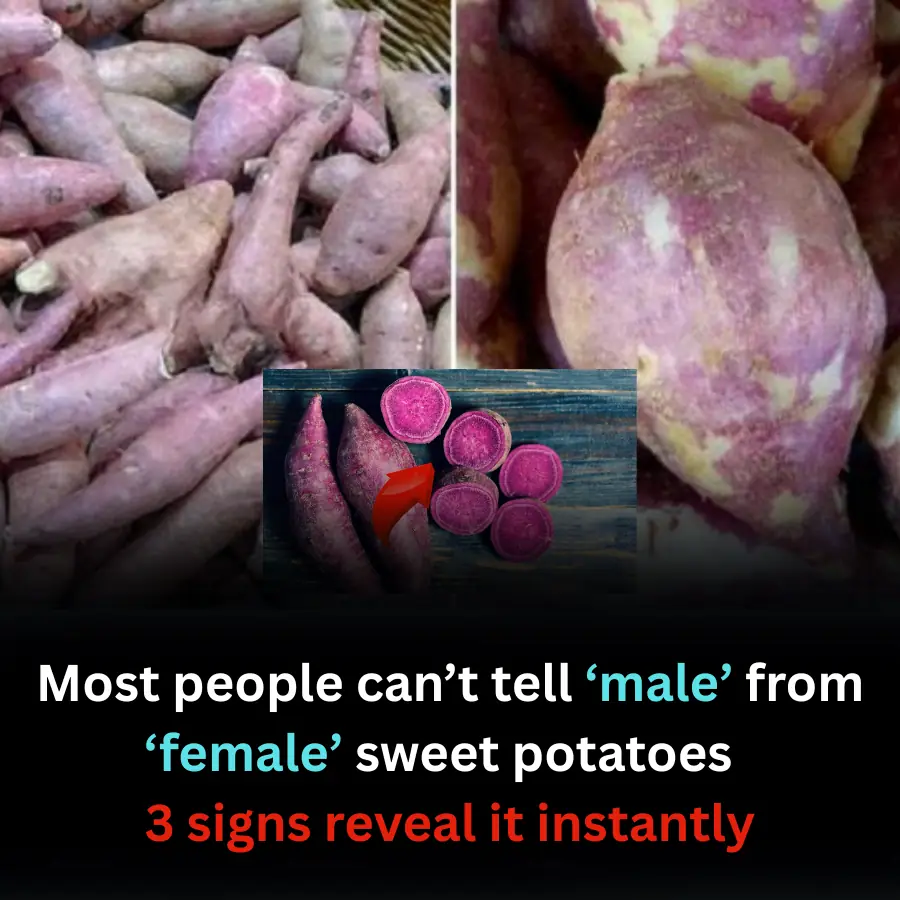
The Science Behind “Male” and “Female” Sweet Potatoes: 3 Simple Tips to Choose the Softest, Sweetest Roots
Many people have eaten sweet potatoes their whole lives without realizing there is a simple, science-based way to distinguish between what the public often calls “male” and “female” sweet potatoes. While these terms are not biological classifications, they reflect real differences in texture, density, and flavor. Understanding these characteristics can help you choose sweet potatoes that are soft, moist, and naturally sweet — without relying on luck.
Why Sweet Potatoes Taste Different
Sweet potatoes vary greatly depending on their water content, fiber structure, and starch composition. These differences affect how they taste after cooking:
-
Some become fluffy and dry.
-
Others turn soft, moist, and sweet.
-
A few remain firm or fibrous even after being steamed or baked.
People often refer to the softer, sweeter ones as “female sweet potatoes,” and the firmer, drier ones as “male sweet potatoes.”
How to Tell the Difference: 3 Science-Based Tips
1. Look at the Shape
-
Slim, elongated, tapering ends tend to have higher moisture content and softer texture.
-
Thick, short, rounder sweet potatoes often contain more fiber and are usually drier.
The shape influences how heat distributes through the root — slender sweet potatoes cook more evenly and soften easily.
2. Examine the Skin Texture
-
Thin, smooth skins typically belong to sweet potatoes with finer flesh and higher sugar levels.
-
Thick, rough, or cracked skins often indicate denser fiber and lower sweetness.
Skin quality also reflects growing conditions and starch maturity.
3. Check the Weight and Firmness
Pick up two sweet potatoes of similar size:
-
The one that feels heavier usually has more water and will be moist and sweet after cooking.
-
The lighter one may be more fibrous and dry.
A firm, heavy sweet potato with no soft spots is the ideal choice.
Why These Tips Matter
Sweet potatoes are rich in beta-carotene, vitamin C, potassium, and dietary fiber. Choosing high-quality ones enhances both nutrition and enjoyment. Using these simple selection tips, you can:
-
Reduce waste by avoiding fibrous or dry roots
-
Improve cooking results
-
Consistently choose sweet potatoes that turn soft, creamy, and sweet
The Bottom Line
You don’t need special tools to identify the best sweet potatoes. A quick assessment of the shape, skin, and weight is often enough to predict texture and sweetness with surprising accuracy.
For many people, learning these small tricks feels like a revelation — something they wish they had known years earlier. But once you know how to choose correctly, every batch of sweet potatoes can come out perfectly soft, sweet, and satisfying.