Warning: Sleeping on Your Right Side Every Night May Affect Your Health
Most people don't give much thought to their sleeping position. Once they find a comfortable spot, they fall asleep and let their body do the rest. However, sleep experts say that the position you sleep in may influence digestion, breathing, circulation, and overall sleep quality.
While sleeping on either side is generally considered healthier than sleeping on your stomach, some studies suggest that consistently sleeping on your right side may not be ideal for everyone—especially those with certain digestive conditions.
Why Sleep Position Matters
Your body continues to work while you sleep. Digestion, circulation, breathing, and tissue repair all occur throughout the night. The position you choose can affect how efficiently some of these processes function.
Although there is no single "perfect" sleeping position for everyone, researchers have identified advantages and disadvantages associated with different sleep postures.
Right-Side Sleeping and Acid Reflux
One of the most commonly discussed concerns about sleeping on the right side involves acid reflux and heartburn.
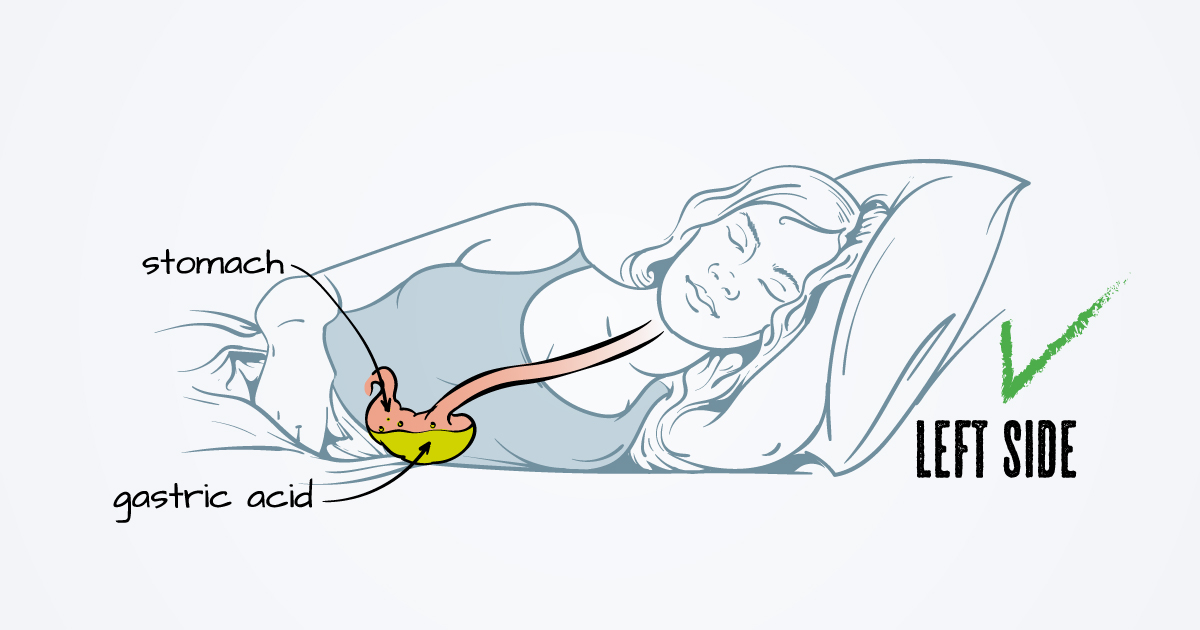
The stomach and esophagus are positioned in a way that may allow stomach acid to move upward more easily when a person lies on their right side. This can increase nighttime reflux symptoms in some individuals. Several studies have found that sleeping on the left side may help reduce acid exposure in the esophagus and improve symptom control for people with gastroesophageal reflux disease (GERD).
If you frequently wake up with a sour taste in your mouth, heartburn, or chest discomfort after sleeping, your sleeping position may be worth discussing with a healthcare professional.
Potential Impact on Digestion
Some experts believe that sleeping on the left side may support the natural movement of food and waste through the digestive tract. Because of the arrangement of internal organs, gravity may assist digestive processes more effectively in this position.
This doesn't mean right-side sleeping is dangerous, but people who experience bloating, indigestion, or reflux may notice improvements by experimenting with a different sleeping position.
What About Heart Health?
There has been considerable debate regarding whether one side is better than the other for heart health.
Current evidence does not show that sleeping on the right side damages the heart. In fact, experts note that there is no strong scientific proof that sleeping on either side causes harm to the heart or brain. However, certain individuals with specific heart conditions may feel more comfortable sleeping on one side than the other.
The most important factor remains overall sleep quality and comfort.
Side Sleeping Has Many Benefits
Whether you sleep on your right side or left side, side sleeping itself offers several potential advantages.
These may include:
- Reduced snoring
- Improved airway support
- Better spinal alignment
- Less pressure on the lower back
- Improved comfort during pregnancy when sleeping on the left side
For many people, side sleeping is considered one of the healthiest overall sleep positions.
Possible Drawbacks of Sleeping on One Side Every Night

Remaining on the same side night after night may create pressure on certain parts of the body.
Some people experience:
- Shoulder pain
- Hip discomfort
- Neck stiffness
- Arm numbness or tingling
- Facial compression and sleep lines
Alternating sides occasionally and using supportive pillows may help reduce these issues.
Tips for Healthier Side Sleeping

If you prefer sleeping on your side, experts recommend:
- Using a pillow that keeps your neck aligned with your spine
- Placing a pillow between your knees
- Choosing a mattress that adequately supports your shoulders and hips
- Avoiding large meals immediately before bedtime
- Monitoring symptoms such as reflux, shoulder pain, or numbness
These small adjustments may improve comfort and reduce strain on the body during the night.
The Bottom Line
Sleeping on your right side is not necessarily harmful, and for many people it is perfectly comfortable. However, individuals who suffer from acid reflux, heartburn, or certain digestive issues may benefit from trying the left-side sleeping position.
Ultimately, the best sleeping position is one that allows you to sleep comfortably, breathe well, maintain good spinal alignment, and wake up feeling rested. If you regularly experience pain, reflux, or disrupted sleep, a simple change in sleeping position could be worth considering.