Every time you finish a bowl of pistachios, there is usually one thing left behind: a pile of empty shells.
For most people, those shells go straight into the trash without a second thought. After all, they look dry, hard, and completely useless once the nut has been removed.
But before you throw them away, consider this: pistachio shells can actually be reused in several practical and creative ways.
They can become part of garden projects, homemade decorations, crafts, composting systems, natural materials, and even experimental sustainable products. Their hard structure makes them surprisingly versatile.
That does not mean pistachio shells are some kind of miracle household material, nor does every popular internet “hack” involving them work as advertised. But with the right approach, something normally considered kitchen waste can have a second life.
Here are some of the most interesting ways to make use of those leftover shells.
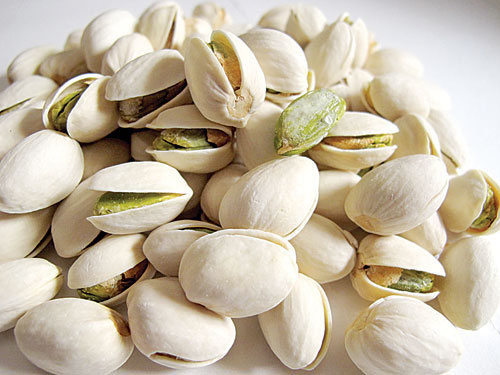
1. Use Pistachio Shells as Garden Mulch
One of the simplest ways to reuse pistachio shells is in the garden.
Because the shells are hard and slow to break down, they can be used as a coarse organic mulch around suitable plants.
A layer of crushed or whole shells can help cover exposed soil and may reduce direct evaporation from the surface. It can also provide a physical layer between the soil and the surrounding environment.
However, there is an important detail many people overlook.
Pistachio shells from commercially prepared nuts may contain significant amounts of salt, depending on how the nuts were processed.
Salt can accumulate in soil and potentially harm sensitive plants if large quantities of salted shells are used.
For gardening, unsalted shells are preferable.
If you only have salted shells, rinse them thoroughly and allow them to dry before considering garden use. Even then, it is better to use them sparingly rather than dumping a large quantity around plants.
And remember that pistachio shells break down relatively slowly, so they should be viewed more as a long-lasting surface material than a quick source of nutrients.
2. Add Them to Compost—With a Little Patience
Pistachio shells are organic material, which means they can eventually break down.
But they are much tougher than many common kitchen scraps.
A banana peel may decompose relatively quickly, while a hard pistachio shell can remain recognizable for considerably longer.
If you want to add pistachio shells to a compost pile, crushing or breaking them into smaller pieces can help increase the surface area exposed to moisture and microorganisms.
The smaller the pieces, generally speaking, the easier it is for biological processes to work on them.
They should be mixed with other compost materials rather than making up a large percentage of the pile.
A healthy compost system needs a balance of different materials, moisture, oxygen, and appropriate conditions.
So instead of thinking of pistachio shells as a magic compost ingredient, think of them as another form of carbon-rich organic material that can contribute to the overall mix.
3. Turn Them Into Natural-Looking Decorations
This is where pistachio shells become surprisingly interesting.
Their curved shape makes them useful for decorative crafts.
With some imagination, individual shells can be arranged to resemble:
-
Flower petals
-
Leaves
-
Scales
-
Small birds
-
Butterflies
-
Decorative borders
-
Wreaths
-
Wall art
-
Table decorations
A collection of shells can be glued onto a suitable backing material and painted or left in its natural color.
For example, several shells can be arranged in overlapping circles to create the appearance of flowers.
Once painted, they can become colorful decorative pieces for frames, vases, greeting cards, or seasonal decorations.
The advantage is that the basic material is something you would normally throw away.
Instead of buying an entirely new craft material, you are giving kitchen waste another purpose.
4. Make a Pistachio Shell Flower Arrangement
One particularly popular craft idea is transforming pistachio shells into flowers.
The basic concept is simple.
Several shells are positioned with their curved sides facing outward and their narrower ends pointing toward the center. When enough shells are arranged together, they can create a layered flower-like shape.
You can leave the shells natural for a rustic appearance or paint them in different colors.
Adding a stem and leaves can turn individual shell flowers into a decorative arrangement.
The result can look surprisingly sophisticated despite being made from something that normally ends up in the garbage.
This is also an inexpensive project for people who enjoy handmade decorations.
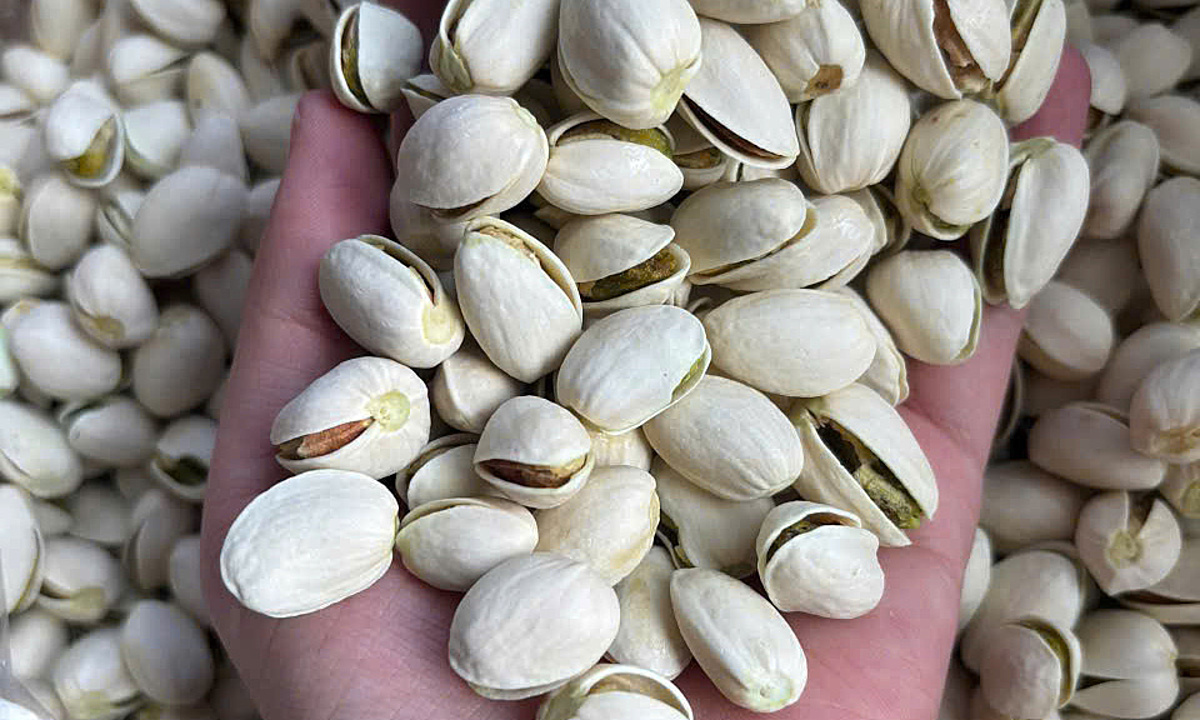
5. Use Them for Creative DIY Projects
Pistachio shells can become useful whenever a project calls for small, lightweight, naturally curved pieces.
They can be incorporated into:
Picture frames:
Glue shells around the border of a plain frame to create a textured, natural appearance.
Decorative bowls:
Shells can be used as an external decorative element on suitable craft surfaces.
Holiday decorations:
Painted shells can become ornaments or small decorative pieces.
Mosaics:
Different shell shapes can be arranged into patterns.
Wall art:
Hundreds of shells can be combined to create flowers, trees, abstract designs, or geometric patterns.
The key is not to expect the shell itself to function as a structural building material.
Its real advantage is its shape, texture, and availability.
6. Use Crushed Shells in Certain Outdoor Projects
Once crushed, pistachio shells can provide a rough, lightweight granular material.
In some gardening and landscaping situations, small quantities of clean crushed shells may be used as a decorative surface material.
They can create a natural-looking texture around pots, planters, or non-sensitive outdoor areas.
However, crushed shells should not automatically be treated as a replacement for gravel, stone, or professionally designed drainage materials.
Their performance depends on the application.
If the goal is serious drainage, structural support, or erosion control, use a material specifically designed for that purpose.
Pistachio shells are better suited to small-scale decorative or experimental applications.
7. Their Hard Structure Makes Them Interesting as a Sustainable Material
There is a much bigger story behind pistachio shells.
Scientists and researchers have investigated agricultural and food-processing wastes—including nut shells—as potential raw materials for useful products.
The reason is simple.
A pistachio shell is not simply “nothing.”
It is a plant-derived material with a relatively hard, lignocellulosic structure.
Researchers have explored various nut shells for applications involving:
-
Activated carbon
-
Adsorbent materials
-
Biochar
-
Fuel and biomass applications
-
Composite materials
-
Other value-added products
These are generally industrial or research applications, not something you should attempt casually in your kitchen.
For example, producing activated carbon can involve controlled heating and chemical or physical processing. It is very different from simply burning a handful of shells.
Still, the research demonstrates an important principle:
Food waste can sometimes become a useful raw material rather than simply becoming garbage.
8. Pistachio Shells Can Be Useful for Teaching Children About Recycling
There is another benefit that has nothing to do with money.
Pistachio shells can be a great educational material.
Children can use them for art projects while learning about waste reduction and reuse.
Instead of explaining recycling only as an abstract concept, you can demonstrate it directly.
A pile of discarded shells becomes flowers.
Flowers become a wall decoration.
The project turns something destined for the trash into something useful.
That simple transformation can teach an important lesson:
Not everything that looks like waste has reached the end of its useful life.
9. Don't Assume Every Viral Pistachio Shell Hack Is True
This is where some caution is necessary.
Social media is full of claims about unusual household uses for food scraps.
Some are reasonable.
Others are exaggerated.
You may encounter claims that pistachio shells can automatically repel every kind of pest, dramatically improve soil, replace commercial filtration materials, cure health conditions, or perform other extraordinary functions.
Such claims should be treated skeptically.
A material being natural does not automatically make it effective.
And the fact that something has been used in an experiment does not mean it has been proven effective in an ordinary household.
The most reliable uses are generally the simple ones:
crafting, appropriate garden applications, composting, and reuse as an organic material.
10. Be Careful With Salted Pistachio Shells
This is probably one of the most important practical considerations.
Many pistachios are roasted and seasoned with salt.
If you collect the shells from salted pistachios, don't automatically place them around your favorite plants.
Excess salt can interfere with plant water uptake and contribute to soil salinity.
If you want to reuse them in the garden, clean them first.
A practical approach is to:
-
Separate the shells from other food waste.
-
Rinse them thoroughly if they are salted.
-
Allow them to dry completely.
-
Crush them if you want faster decomposition.
-
Use them in moderation.
For sensitive plants, containers, or valuable garden beds, it is better to avoid introducing uncertain amounts of salt altogether.
Unsalted shells are the better option.
11. Never Treat Pistachio Shells as a Replacement for Fertilizer
Another common misunderstanding is assuming that adding any organic material to soil will immediately feed plants.
That's not how it works.
Pistachio shells are relatively tough and decompose slowly.
They do not provide the same immediate nutrient availability as a properly formulated fertilizer.
Their potential value in a garden is more related to their physical properties and eventual decomposition than to acting as a powerful plant food.
If your plants have a nutrient deficiency, use a fertilizer appropriate for the plant and soil conditions rather than relying on pistachio shells.
Think of the shells as a supplementary organic material, not a miracle fertilizer.
12. Why Their Slow Breakdown Can Actually Be Useful
At first, the slow decomposition of pistachio shells may sound like a disadvantage.
But it can also be useful.
Materials that break down slowly can remain physically present in soil or compost for longer periods.
This is one reason hard plant materials have attracted interest in sustainable-material research.
The shell's durability comes from its structural components, which resist rapid biological breakdown.
If you want something to disappear quickly, pistachio shells are not ideal.
But if you want to experiment with a durable organic material, their toughness becomes an advantage.
13. Don't Burn Them Indoors
Because pistachio shells are plant material, someone might assume they can simply be thrown into a fireplace or wood-burning stove.
That is not necessarily a good idea.
Burning household food waste can produce smoke, odors, and particulate matter, and improper combustion can create indoor air-quality problems.
Unless a heating appliance is specifically designed and approved for the relevant biomass fuel, don't use kitchen waste as an improvised fuel source.
And never burn shells in an enclosed space.
If shells are being used for biomass or fuel production, that is a controlled application requiring appropriate equipment and conditions.
14. Keep Them Clean Before Reusing Them
If you are saving pistachio shells for crafts or gardening, basic cleanliness matters.
Shells can retain food residue, salt, oil, and seasoning.
If stored in a warm, damp environment, leftover organic material can encourage mold or unpleasant odors.
The easiest solution is simple:
Clean them and dry them thoroughly.
For crafts, completely dry shells are especially important because moisture can interfere with adhesives and paint.
For storage, keep them in a dry container with good airflow rather than sealing damp shells inside a bag.
15. A Simple Way to Start Reusing Pistachio Shells
You don't need a complicated system.
The next time you eat pistachios, keep a small container nearby.
Place the shells inside rather than immediately throwing them away.
Once you have collected enough, separate them according to what you want to do.
For crafts: clean, dry, and sort the shells by size.
For compost: crush them and mix them with other compost materials.
For garden decoration: use clean, preferably unsalted shells sparingly.
For experiments: research the specific application before attempting anything involving heat, chemicals, or combustion.
This turns a small amount of kitchen waste into a reusable resource.
The Bigger Lesson Behind Pistachio Shells
Perhaps the most interesting thing about pistachio shells isn't any single use.
It's the idea behind them.
Modern households throw away enormous quantities of organic material every day.
Fruit peels, coffee grounds, eggshells, vegetable scraps, nut shells, and other leftovers often disappear into trash bins without anyone considering whether they could be reused.
Not everything can or should be repurposed.
But some materials have surprising second lives.
Pistachio shells are a perfect example.
Their hard structure, unusual shape, and natural appearance make them useful for creative projects. Their organic composition gives them potential roles in composting and gardening when used appropriately. And their material properties have even attracted scientific interest in broader waste-to-resource applications.
None of this means you need to start saving every shell in your kitchen.
It simply means that “waste” is sometimes a matter of perspective.

Before You Throw Them Away, Think Twice
The next time you finish a bag of pistachios, look at the pile of shells sitting on the table.
What normally looks like garbage can become a craft material, a compost ingredient, a garden accessory, or simply an opportunity to reduce household waste.
The important thing is to use them realistically.
Unsalted shells are generally better for garden applications.
Crushing them can help with composting.
Cleaning and drying them makes them better for crafts.
And claims about extraordinary health, pest-control, or environmental benefits should be approached with caution unless they are supported by good evidence.
The humble pistachio shell isn't a miracle product.
But it doesn't have to be trash, either.
Sometimes, the most useful things in our homes are the things we have become accustomed to throwing away.
So the next time you crack open a pistachio, don't be so quick to toss the shell. You may already have the raw material for your next little garden project, craft idea, or waste-reduction experiment sitting right in your hand.