Most Women Miss These 6 Silent Signs of Ovarian Cancer
Six subtle changes may be easy to dismiss as aging, digestive trouble, or everyday discomfort—but persistent symptoms deserve attention.
It may begin with something that seems almost too ordinary to worry about. A woman notices that her stomach feels unusually swollen by the end of the day. She eats only a small meal but feels uncomfortably full. A few weeks later, she finds herself rushing to the bathroom more often than usual. Perhaps there is a dull ache low in her abdomen, or a pressure in her pelvis that comes and goes.
Most people would not immediately connect these changes with ovarian cancer. They might blame a heavy meal, stress, constipation, hormonal fluctuations, or simply getting older. And in many cases, those explanations really are responsible. But when symptoms are new, persistent, frequent, or gradually becoming worse, ignoring them can delay an important medical conversation.
Ovarian cancer is often described as a disease with subtle warning signs because its symptoms can resemble common digestive, urinary, and reproductive health problems. There is no single symptom that proves a woman has the disease. Nor does experiencing bloating or pelvic discomfort mean that cancer is present. The challenge is recognizing a pattern that is unusual for the individual woman and making sure it is properly assessed.
The illustration accompanying this article highlights discomfort in the lower abdomen and pelvic region, as well as changes that may be overlooked in daily life. These images are reminders to pay attention—not diagnostic tools. A picture cannot tell whether a person has ovarian cancer, and a list of symptoms cannot replace a medical examination.
So what are the six warning signs women should know? Why can they be mistaken for ordinary health problems? And when should someone stop waiting for the discomfort to disappear and speak with a healthcare professional?
The answers begin with understanding where ovarian cancer develops and why its early symptoms can be so difficult to recognize.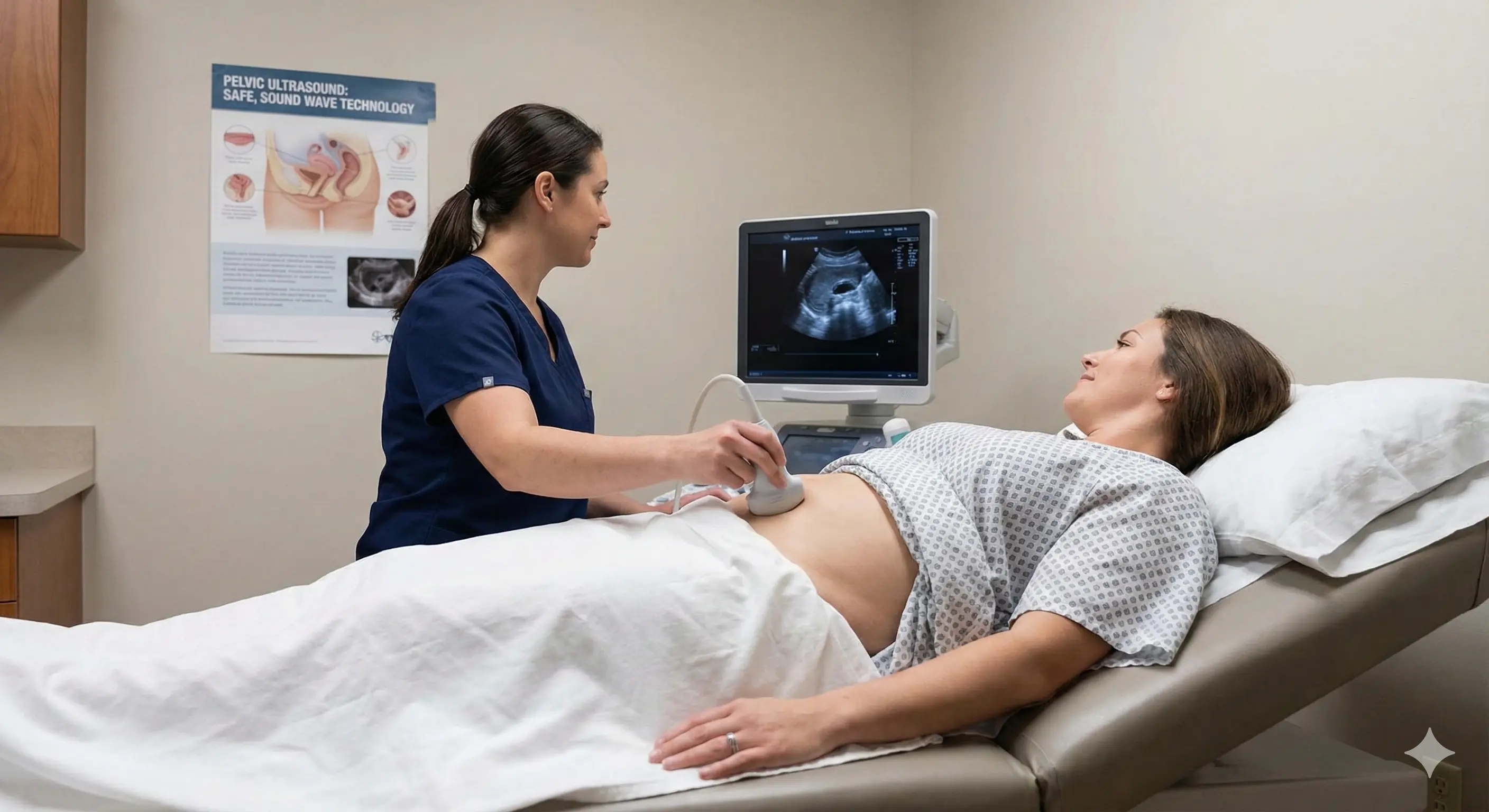
Why Ovarian Cancer Can Be Difficult to Recognize
The ovaries are two small organs located in the pelvis, one on each side of the uterus. They play important roles in reproduction and hormone production. Before menopause, they release eggs during the menstrual cycle and produce hormones such as estrogen and progesterone.
Ovarian cancer develops when abnormal cells in or around the ovaries begin growing uncontrollably. The term is often used broadly, but cancers affecting the ovaries, fallopian tubes, and the lining of the abdominal cavity can be closely related. In fact, many cancers historically called ovarian cancers are now understood to begin in cells near the end of the fallopian tubes.
There are different types of ovarian cancer, and they do not all behave in exactly the same way. Epithelial ovarian cancers are the most common group. Other, less common forms can arise from cells involved in producing eggs or from the tissues that support the ovaries and make hormones.
One reason the disease can be difficult to identify is that the ovaries are located deep within the pelvis. A small abnormal growth may not create an obvious lump that a woman can feel. Some women experience no noticeable symptoms in the earliest stages. Others develop symptoms that are vague and easily confused with more common conditions.
For example, abdominal bloating can be caused by constipation, food intolerance, irritable bowel syndrome, or changes in diet. Pelvic pain may be associated with menstrual problems, ovarian cysts, endometriosis, urinary infections, or digestive conditions. Frequent urination may be related to a bladder infection, diabetes, fluid intake, or an overactive bladder.
This overlap is why ovarian cancer symptoms can be overlooked. A woman may seek help for one complaint, receive treatment for a common condition, and assume that the problem has been explained. If the symptom continues, however, it deserves another look.
The American Cancer Society identifies persistent bloating, pelvic or abdominal pain, difficulty eating or feeling full quickly, and urinary urgency or frequency among the most common symptoms associated with ovarian cancer. It emphasizes that these symptoms are also frequently caused by non-cancerous conditions. What matters is whether they are persistent, frequent, worsening, or different from a woman's usual experience.
The six signs below are not a checklist for diagnosing cancer at home. They are reasons to pay closer attention to changes in the body and, when appropriate, discuss them with a healthcare professional.
1. Persistent Bloating or a Swollen Abdomen
Bloating is one of the most frequently reported symptoms associated with ovarian cancer. It is also one of the easiest to dismiss.
Almost everyone experiences bloating at some point. It may happen after eating a large meal, consuming foods that produce gas, drinking carbonated beverages, or experiencing constipation. Some women notice bloating around their menstrual periods or during hormonal changes. In these situations, the discomfort may be temporary and improve as the underlying cause settles.
The pattern becomes more important when the swelling is unusual for the person experiencing it.
A woman might notice that her abdomen feels full even when she has not eaten much. Her waistband may become tighter, or clothes that normally fit comfortably may feel restrictive around the middle. She may wake up with a relatively comfortable abdomen but experience increasing swelling as the day goes on. In some cases, the feeling becomes more frequent and does not disappear in the way ordinary digestive bloating usually does.
Ovarian cancer can be associated with abdominal swelling for several reasons. A growing mass in the pelvis or abdomen may contribute to pressure and discomfort. In some cases, fluid can accumulate inside the abdominal cavity, a condition known as ascites. This fluid buildup can make the abdomen visibly enlarged and may be accompanied by a feeling of heaviness or tightness.
However, abdominal swelling has many possible explanations. Constipation, digestive disorders, liver disease, heart conditions, and other medical problems can also cause fluid retention or enlargement. A swollen abdomen should therefore never be interpreted as proof of ovarian cancer.
The key question is whether the change is persistent and unexplained.
If a woman notices that her abdomen is becoming increasingly swollen, especially when the change is new and accompanied by pelvic pain, reduced appetite, or feeling full quickly, she should discuss it with a healthcare professional. It is particularly important not to dismiss a change simply because it does not cause severe pain.
The Centers for Disease Control and Prevention advises women to pay attention to bloating and other unusual symptoms. If symptoms other than unusual vaginal bleeding persist for two weeks or longer and are not normal for the individual, medical advice is recommended.
A useful habit is to observe the pattern rather than trying to judge the symptom from one uncomfortable afternoon. Is the swelling happening repeatedly? Is it becoming more noticeable? Does it occur even when eating habits have not changed? Are other symptoms appearing at the same time?
These details can help a doctor understand what is happening.
2. Pelvic Pain, Pressure, or Persistent Lower Abdominal Discomfort
Pain in the lower abdomen or pelvis is another important symptom. Some women describe it as a dull ache, while others experience pressure, heaviness, cramping, or discomfort that seems to sit deep inside the lower belly.